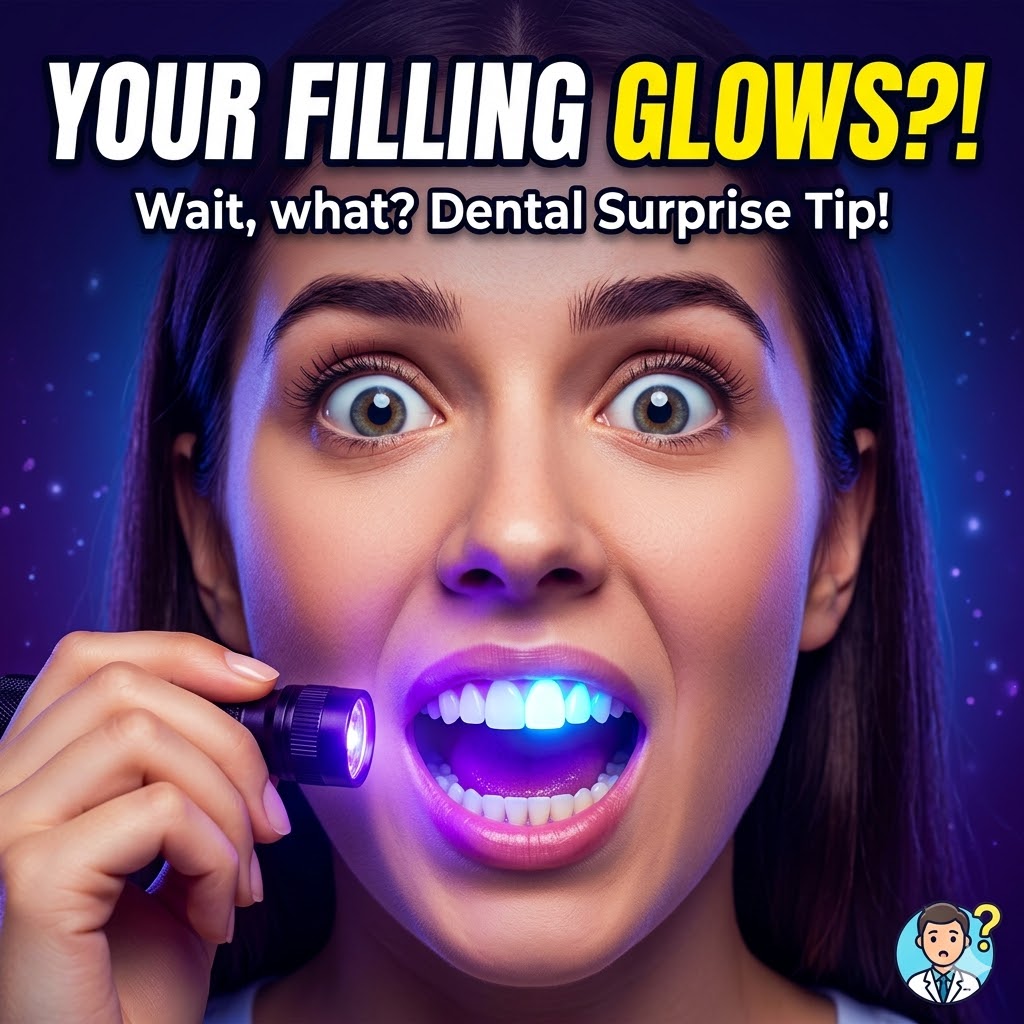
Have you ever been at a nightclub, a cosmic bowling alley, or a Halloween party, only to look in the mirror and notice that one of your teeth is glowing much brighter than the rest? Or perhaps, even worse, one tooth looks completely dark, as if it’s missing entirely? If you have composite bonding or dental fillings, you might have experienced this startling phenomenon firsthand.
Recently, viral videos on platforms like TikTok have highlighted this exact scenario, showing individuals under UV or black lights with mismatched glowing smiles. But what causes this “glow-in-the-dark” surprise? A dental expert in a recent viral video broke it down perfectly, and it all comes down to a fascinating scientific concept: fluorescence.
In this article, we will dive deep into the science of tooth fluorescence, explore why dental materials react differently to black lights, and discuss what you can do to ensure your smile looks perfectly natural under any lighting condition.
What is Composite Bonding?
Before we get into the glowing details, it is helpful to understand what composite bonding actually is. Composite bonding is a highly popular and versatile cosmetic dental procedure. Dentists use a tooth-colored composite resin material to repair decayed, chipped, fractured, or discolored teeth. It is also frequently used to close small spaces between teeth or to make teeth look longer and more uniformly shaped.
Unlike porcelain veneers, which often require significant preparation of the natural tooth, composite bonding is relatively non-invasive. The resin is applied directly to the surface of the tooth, meticulously molded to the desired shape, and then hardened using a special curing light. Under normal daylight or standard indoor lighting, a skilled cosmetic dentist can color-match this resin so perfectly that it is virtually indistinguishable from your natural enamel. However, when you step into a room illuminated by a black light, that seamless illusion can sometimes shatter.
The Science of Fluorescence
To understand why your bonded tooth might suddenly stand out, we need to understand the physics of fluorescence. As the doctor in the video explains, fluorescence occurs when an object is struck by light—specifically invisible ultraviolet (UV) light—absorbs that energy, and then immediately emits it back out as visible light.
This is the exact same physical process that makes white t-shirts, neon clothing, and certain types of paint shine brightly in a dark, UV-lit room. The object absorbs the high-energy UV rays and reflects back a lower-energy visible light, creating that signature “glow.”
Natural Teeth vs. Dental Materials
Here is where human biology meets cosmetic dentistry. Human teeth are naturally fluorescent. The inner layer of your tooth, known as the dentin, contains organic compounds that naturally fluoresce under UV light, typically emitting a pale blue or bright white glow. Your tooth enamel, the hard outer shell, also has some fluorescent properties, though to a slightly lesser degree than the dentin. This inherent natural fluorescence is what gives healthy human teeth their vitality and bright, lifelike appearance even in natural daylight.
When a dentist repairs a tooth with composite resin, they are essentially replacing a piece of that naturally fluorescent organic structure with a synthetic material. Dental manufacturers create composite resins using a complex mixture of plastics, glass, or ceramic fillers. To make these synthetic materials mimic the look of natural teeth, manufacturers add special fluorescent agents to the resin mixture.
The Spectrum of Glowing: Bright, Dark, or Matched
The mismatch you see under a black light happens because it is incredibly difficult to perfectly match the exact fluorescent properties of natural human teeth with synthetic dental materials. As the dentist points out, the reaction of your filling under a black light will usually fall into one of three distinct categories:
-
Higher Fluorescence (The Bright Glow): Many modern composite fillings have a higher level of fluorescence than natural teeth. Manufacturers sometimes overcompensate with fluorescent additives to make the fillings look brighter and more vital in normal, everyday light. As a result, when exposed to a black light, these fillings will absorb more UV light and shine significantly brighter than the surrounding natural teeth, creating a localized neon glow.
-
Lower Fluorescence (The Dark Spot): Conversely, some older composite materials, or specific types of resin used purely for structural purposes rather than cosmetic ones, lack sufficient fluorescent agents. When UV light hits these materials, they do not emit any visible light back. To an observer, the bonded area will appear dull, dark, or even completely black, making it look like you have a severe gap or a missing tooth.
-
Exact Match (The Invisible Repair): The holy grail of cosmetic dentistry is a composite material that possesses the exact same fluorescent properties as the patient’s natural dentin and enamel. When a dentist uses one of these premium, highly matched resins, the bonded tooth will absorb and emit UV light at the exact same rate as the rest of your smile. In this best-case scenario, your dental work remains completely undetectable, even under a black light.
How to Prevent the “Glowing Tooth” Surprise
If you are planning to get cosmetic composite bonding or need a visible cavity filled, and you frequently visit venues with UV lighting, you do not have to give up your social life or hide your smile. Communication with your dentist is the ultimate key.
During your consultation, simply mention that you are concerned about how the bonding will look under a black light. Many cosmetic dentists are well aware of this phenomenon and specifically stock high-quality, premium composite resins that are engineered to closely mimic the natural fluorescence of human teeth. While standard restorative fillings might prioritize sheer durability and basic color-matching under normal light, true cosmetic-grade resins prioritize the overall lifelike vitality of the tooth across all possible lighting environments.
Conclusion
The viral videos of mismatched, glowing teeth under black lights serve as a fascinating reminder of the complex intersection between biology, physics, and cosmetic dentistry. While composite bonding remains an incredible, minimally invasive tool for restoring confidence and fixing smiles, the subtle science of fluorescence reveals the synthetic nature of these repairs when the lights go out. By understanding why this “glow” happens and communicating your aesthetic lifestyle needs to your dentist, you can ensure your smile remains naturally radiant—whether you are walking in the bright afternoon sunshine or dancing under the neon glow of a UV light.