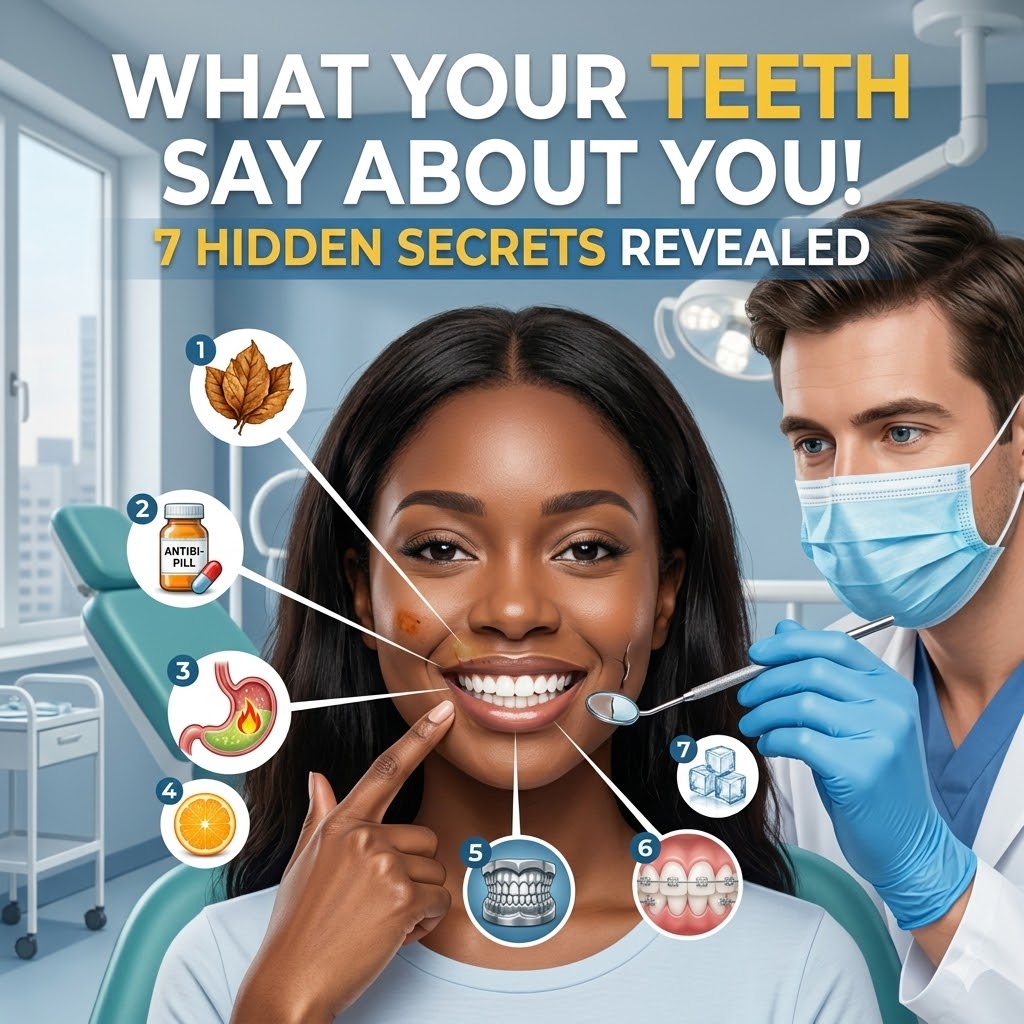
When you sit in the dental chair and open wide, you might assume your dentist is only looking for cavities, plaque buildup, or the occasional sign that you haven’t been flossing enough. However, the human mouth is actually a comprehensive mirror reflecting your overall physical health, past medical history, and even your daily stress levels. Dental professionals are trained to identify subtle oral clues that point to systemic issues elsewhere in the body. From the texture of your gums to the color and shape of your enamel, your teeth tell a complex story. Here are seven surprising things your dentist can discover about you simply by examining your mouth.
1. White Patches on Gums: The Smokeless Tobacco Clue
If your dentist spots localized, thick white patches on your gums, specifically in areas where the cheek meets the gumline, it is a strong indicator of smokeless tobacco use, such as snus or chewing tobacco. This condition occurs because the mucous membranes in your mouth react defensively to the constant irritation and chemicals present in the tobacco. Over time, the tissue thickens and turns white. Dentists monitor these patches very closely, as long-term use of smokeless tobacco significantly increases the risk of developing more severe oral health issues.
2. Gray Banding: The Lasting Mark of Childhood Antibiotics
Sometimes, teeth develop dark gray or brown horizontal bands that do not respond to traditional teeth whitening treatments. This stubborn, intrinsic staining is a classic sign of tetracycline exposure. Tetracycline is a powerful antibiotic, but if it is administered to children while their adult teeth are still developing under the gums, the drug physically binds with the calcium in the teeth. As a result, once the adult teeth erupt, they carry these permanent gray bands. Your dentist can spot this instantly and will know it is a remnant of your childhood medical history rather than a sign of poor oral hygiene.
3. Yellow Backs of Teeth: Acid Reflux and Eating Disorders
Enamel is the hardest substance in the human body, but it is highly vulnerable to chronic acid exposure. If the front of your teeth looks perfectly white but the backs (the lingual surfaces facing your tongue) are yellow, smooth, and eroded, your dentist will likely suspect an issue involving stomach acid. This pattern of erosion is a hallmark sign of Gastroesophageal Reflux Disease (GERD) or acid reflux, where stomach acid silently washes over the teeth. Similarly, it is a primary dental indicator of eating disorders like bulimia, where frequent vomiting exposes the teeth to highly corrosive gastric acids, stripping away the white enamel to reveal the yellow dentin underneath.
4. Swollen, Bleeding Gums: Severe Vitamin C Deficiency
While mild bleeding during flossing is common and usually points to early gingivitis, severely inflamed, deep red, and heavily bleeding gums can indicate something more systemic: a severe Vitamin C deficiency. Historically known as scurvy, this condition is not just a disease of the past; it still occurs today in individuals with highly restrictive diets. Vitamin C is crucial for the production of collagen, which keeps your gum tissues strong and healthy. Without it, the structural integrity of your gums collapses, leading to dramatic inflammation and bleeding that your dentist will immediately recognize.
5. Worn and Flattened Edges: High Stress and Teeth Grinding
If the biting edges of your teeth are noticeably worn down, chipped, or perfectly flat, you are likely suffering from bruxism—the medical term for clenching and grinding your teeth. Bruxism most commonly happens subconsciously while you sleep and is heavily linked to high stress levels and anxiety. The immense pressure generated by grinding can exert hundreds of pounds of force on your teeth, leading to micro-fractures, jaw pain, and enamel loss. When a dentist sees these worn edges, they know you might be carrying a heavy mental load and will likely recommend a protective night guard.
6. White Spots: Excess Fluoride or Poor Orthodontic Hygiene
Chalky white spots on the smooth surfaces of your teeth can mean one of two things. First, it could be fluorosis, which occurs when you are exposed to too much fluoride during the years your teeth are developing. Second, and more commonly in young adults, these spots are signs of decalcification caused by poor brushing habits while wearing braces. If plaque is allowed to sit around orthodontic brackets, the bacteria produce acids that leach minerals right out of the enamel, leaving behind permanent, frosty-looking white scars once the braces are removed.
7. Deep Vertical Cracks: The Ice Chewing Habit
Chewing on ice might seem like a harmless habit, but it is a nightmare for your dental health. Ice is incredibly hard, and the extreme cold causes your tooth enamel to contract rapidly. When you combine this sudden temperature shift with the immense biting force required to crush ice, it creates the perfect storm for deep, vertical fractures. If you visit the clinic complaining of sharp pain when you bite down, and your dentist sees these telltale cracks, they will almost certainly ask if you have a habit of crunching on ice cubes.