Smokeless tobacco products, particularly snus, have surged in popularity over recent years. Often marketed as a cleaner, smoke-free alternative to traditional cigarettes or vaping, many users assume that because they aren’t inhaling harmful smoke into their lungs, their health is fully protected. However, your mouth tells a completely different story.
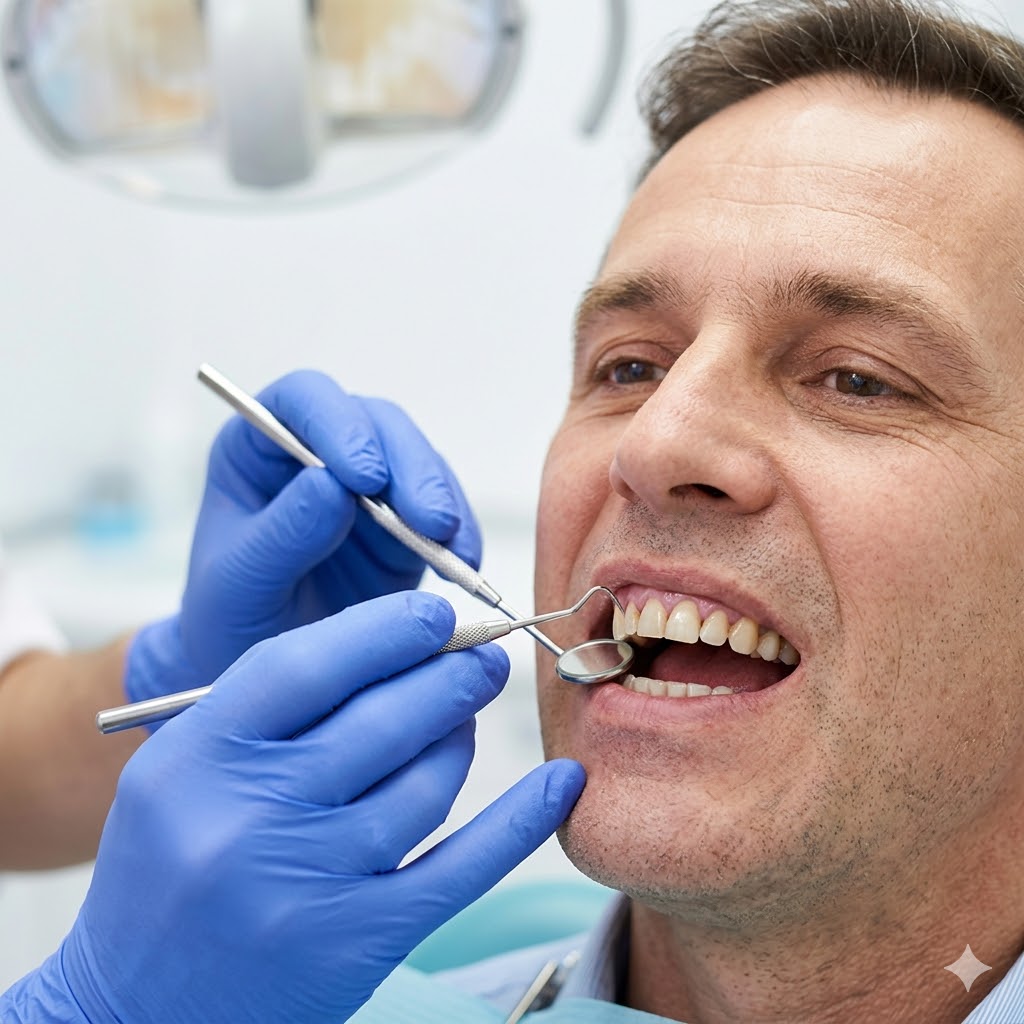
When you sit in the dental chair, there are no secrets. Dental professionals are highly trained to recognize the specific, localized damage caused by resting a pouch of snus against your gums. If you use snus, your dentist will almost certainly know—even if you brush your teeth before your appointment.
Here is an in-depth look at exactly how dentists can tell if you are a snus user, the serious oral health conditions it causes, and why this “safe alternative” is anything but harmless for your smile.
1. The “Snus Dipper’s Lesion” (White Patches on the Gums)
One of the most immediate and glaring signs of snus use is the presence of thick, white, or grayish patches on the gums and the inside of the lip. This is commonly referred to as a “snus dipper’s lesion” or oral keratosis.
When you place a snus pouch in the same spot repeatedly (usually under the upper lip), the delicate mucosal lining of your mouth acts to defend itself against the constant chemical irritation and physical friction. Just as your hands develop calluses from lifting weights, your gums develop a tough, keratinized layer to protect against the tobacco.
While this white patch is a defensive mechanism, it is a glaring red flag for any dental professional. In many cases, these lesions are reversible if the habit is stopped, but they require close monitoring, as chronic cellular changes can sometimes lead to more severe conditions, including leukoplakia.
2. Severe and Localized Gum Recession
Gum recession is a hallmark sign of snus use. The gums are remarkably sensitive, and the physical presence of the pouch, combined with the harsh chemicals and high pH levels of the tobacco, acts as an aggressive irritant.
Over time, this irritation causes the gum tissue to literally pull away and retreat from the tooth. Because snus users typically favor one specific spot to hold their pouches, dentists will observe severe, localized gum recession in just one or two teeth, while the rest of the mouth looks relatively normal.
This is incredibly dangerous for your dental health. Once gum tissue recedes, it does not grow back. The recession exposes the root of the tooth, which is not protected by hard enamel. This leads to extreme tooth sensitivity, structural weakness, and a highly increased risk of root decay. Fixing severe gum recession often requires painful and expensive gum graft surgeries.
3. Isolated Plaque Buildup and Gum Disease
The presence of a snus pouch alters the natural environment of your mouth. It restricts the natural flow of saliva to that specific area. Saliva is your mouth’s natural defense mechanism; it washes away food particles, neutralizes plaque acids, and helps remineralize enamel.
Without the protective flow of saliva, the area where the snus is held becomes a breeding ground for bacteria. Dentists frequently see heavy, isolated plaque and tartar buildup exactly where the pouch sits. This excessive plaque rapidly leads to localized gingivitis and periodontitis (advanced gum disease). If left untreated, this localized gum disease will destroy the bone supporting the tooth, ultimately leading to tooth loss.
4. Oddly Placed Tooth Decay (Cavities)
Traditional cavities usually form in the deep grooves of your molars or in between teeth where flossing is neglected. However, snus users often present with tooth decay in very strange, atypical locations—specifically on the smooth front surfaces of the teeth or right at the gum line where the pouch rests.
Many snus products, especially flavored varieties, contain hidden sugars and sweeteners to mask the bitter taste of tobacco. When you hold a sugary pouch against your teeth for hours a day, you are essentially bathing that specific tooth in a highly acidic, sugar-rich environment. This rapidly breaks down the enamel, causing aggressive cavities in places that are highly visible and difficult to restore seamlessly.
5. Stubborn Tobacco Staining
Even white snus, which is marketed as being less prone to staining, can leave its mark. Traditional snus leaves a very distinct, dark brown, or yellow stain on the teeth. Because the pouch sits against the teeth for prolonged periods, the tar and nicotine penetrate the microscopic pores of the dental enamel.
Dentists can easily differentiate between standard coffee or tea stains and tobacco stains. Snus stains tend to be deeply ingrained and concentrated around the gum line of the specific teeth where the pouch is held. These stains are notoriously stubborn and often cannot be removed with regular brushing or even standard professional cleanings, sometimes requiring intensive cosmetic whitening treatments.
6. Painful Gum Ulcers and Chemical Burns
The chemicals in snus are highly concentrated. Depending on the brand, the pH level can be quite alkaline to facilitate the rapid absorption of nicotine into the bloodstream. This harsh chemical environment can literally burn the soft tissues of the mouth.
Dentists frequently spot painful, red, raw ulcers right where the pouch is usually placed. These chemical burns make eating, drinking, and speaking uncomfortable. Chronic ulceration is a sign that the mucosal lining is breaking down, leaving the area highly susceptible to secondary bacterial infections.
7. The Threat of Oral Cancer
Perhaps the most alarming consequence of long-term snus use—and the primary reason your dentist screens your mouth so carefully—is the increased risk of oral cancer.
While snus is not smoked, it still contains tobacco-specific nitrosamines (TSNAs), which are known carcinogens. The continuous, direct contact of these cancer-causing chemicals with the oral mucosa over years and decades significantly elevates the risk of developing malignant tumors in the mouth, lips, and throat.
During a routine exam, your dentist isn’t just looking for cavities; they are performing a comprehensive oral cancer screening. The chronic inflammation, cellular changes (like the white patches mentioned earlier), and persistent ulcers caused by snus are all factors that can trigger the mutation of healthy cells into cancerous ones.
The Verdict: Can Your Smile Recover?
The oral cavity is incredibly resilient, but it has its limits. If you currently use snus, the best thing you can do for your oral health is to stop.
What happens when you quit?
-
Within weeks: The white patches (dipper’s lesions) often begin to resolve, and the mucosal lining returns to a normal, healthy pink. Ulcers will heal, and localized inflammation will decrease.
-
What requires treatment: Unfortunately, gum recession is permanent. The exposed roots will need to be monitored and potentially treated with bonding or gum grafting. Any tooth decay that has developed will require fillings, and deep staining may require professional whitening.
If you are a snus user, it is imperative that you maintain a rigorous schedule of dental checkups. Be honest with your dentist about your habits. They are not there to judge you; they are there to help mitigate the damage, provide targeted preventative care, and catch severe complications—like oral cancer—before they become life-threatening.
A smoke-free alternative does not mean a consequence-free alternative. Protect your smile, monitor your gums, and listen to what your dentist is telling you.