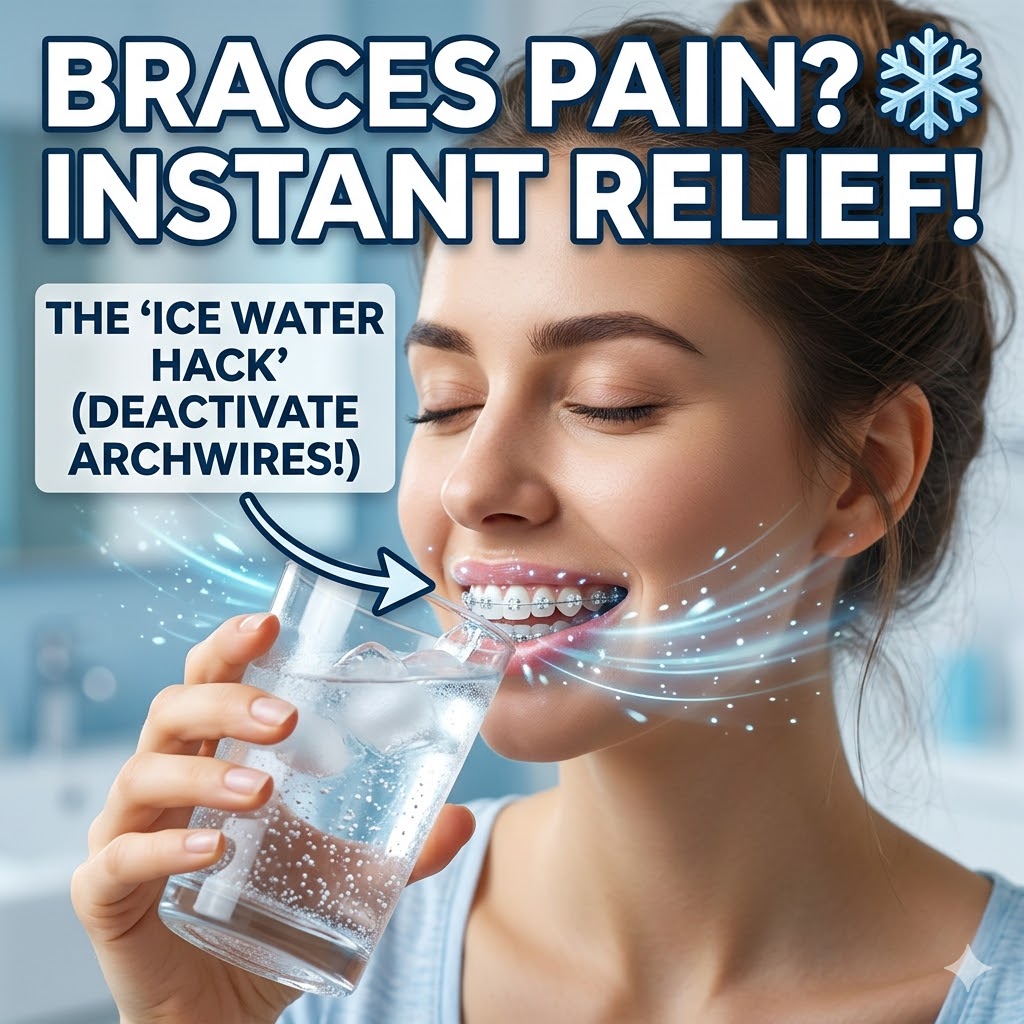
Are you struggling with new braces pain? Discover the top three orthodontist-approved tips to relieve discomfort, including a surprising ice water hack and the best ways to protect your mouth.
Getting braces is a fantastic step toward achieving a healthy, aligned, and confident smile. However, anyone who has ever sat in the orthodontist’s chair knows that the first few days—and especially the first week—can be incredibly uncomfortable. As your teeth begin to shift into their new positions, the pressure can cause aching, soreness, and sensitivity.
If you are currently experiencing the dreaded “new braces ache,” you are not alone. The discomfort is a completely normal part of the process, signaling that your orthodontic hardware is doing exactly what it was designed to do. Fortunately, you do not have to just suffer through it.
Here is a comprehensive guide to the top three, scientifically-backed tips to relieve braces pain quickly and effectively, ensuring your journey to a perfect smile is as smooth as possible.
The Science of Braces Pain: Why Does It Hurt?
Before diving into the solutions, it helps to understand exactly why your teeth are aching. Your teeth are not rigidly fixed into your jawbone; they are suspended by a complex network of tissues called the periodontal ligament. When the brackets and wires of your braces apply continuous pressure to your teeth, it stretches and compresses these microscopic muscle fibers and ligaments.
This tension triggers an inflammatory response, which is what causes the dull ache you feel in your jaw. Additionally, the interior of your mouth—your cheeks, lips, and tongue—is lined with sensitive soft tissue that isn’t used to resting against metal brackets or wires. It takes time for the mouth to adapt, but in the meantime, you can utilize the following three highly effective strategies to find relief.
1. Utilize Paracetamol for Muscle Relaxation
When the dull, throbbing ache of moving teeth sets in, over-the-counter pain relief is often your best first line of defense. However, not all painkillers are created equal when it comes to orthodontic discomfort.
Paracetamol (also known as acetaminophen in some regions) is highly recommended for managing braces pain.
-
How it works: Because your teeth are essentially held in place by tiny muscle fibers and ligaments, the pressure of the braces causes these fibers to become tense and inflamed. Paracetamol is highly effective at reducing this specific type of pain without acting as a heavy anti-inflammatory. (Some orthodontists advise against heavy NSAIDs like Ibuprofen in excess, as inflammation is actually a necessary part of the tooth movement process).
-
Pro Tip: If you know you have an adjustment appointment coming up, consider taking a dose of paracetamol about an hour before you sit in the chair. This allows the medication to enter your system and proactively combat the pain before the new, tighter wires begin to take their toll.
2. The Ice Water Hack: Deactivating Your Archwires
This second tip is perhaps the most fascinating and least understood trick in the orthodontic playbook. When you are in pain, drinking ice water is incredibly soothing, but the science behind why it works goes far beyond basic numbing.
Drinking and swishing ice-cold water works significantly better than simply holding an ice cube against your braces. * The Science of Thermal-Activated Wires: Modern orthodontic archwires are incredibly advanced. Most are made from a Nickel-Titanium (NiTi) alloy that is “thermal-activated.” This means that the wire is actually triggered and stiffened by the natural heat inside your mouth. When the wire warms up to your body temperature, it attempts to return to its original, perfect “U” shape, which is what pulls your teeth into alignment.
-
How Cold Water Helps: When your teeth are aching immensely, you can temporarily pause this continuous pulling force. By taking a glass of ice water and thoroughly swishing it around your mouth, you rapidly drop the temperature of the metal wires. This sudden chill effectively deactivates the thermal wire, causing it to instantly soften and become flexible.
-
Instant Relief: This temporary deactivation relieves the intense pulling tension on your teeth, providing immediate, soothing relief to your strained periodontal ligaments. As your mouth naturally warms back up, the wire will slowly reactivate and continue its job.
3. Protect Soft Tissues with Orthodontic Wax
While the movement of the teeth causes a deep, dull ache, the brackets themselves often cause a sharper, more localized pain. When you first get braces, the metal or ceramic brackets can feel incredibly sharp against the soft, sensitive tissues of your inner lips and cheeks. This friction can quickly lead to painful mouth sores, cuts, and ulcers.
Orthodontic wax (or dental silicone) is an absolute lifesaver during the first few weeks.
-
How to Apply: Pinch off a small, pea-sized amount of the wax and roll it between your clean fingers to warm it up and make it pliable. Identify the specific bracket or protruding wire that is causing the irritation. Ensure the bracket is as dry as possible (you can gently dab it with a clean tissue), and then firmly press the ball of wax over the sharp edge, molding it to create a smooth, protective barrier.
-
When to Use It: Keep a small container of wax with you at all times—at school, at work, and especially while sleeping. At night, your mouth produces less saliva, and your cheeks rest heavily against your teeth, making it a prime time for cuts to develop. A barrier of wax or dental silicone will allow your inner cheeks to heal and gradually build up a natural tolerance (or minor callus) to the hardware.
Final Thoughts on Your Orthodontic Journey
The first week with braces is undeniably the hardest, but it is important to remember that the intense discomfort is temporary. Your mouth is incredibly resilient and will adapt to the new hardware much faster than you might expect.
By keeping paracetamol on hand, utilizing the thermodynamic properties of your archwires with ice-cold water, and generously applying orthodontic wax to sharp brackets, you can effectively manage the pain. Stick to soft foods like yogurt, mashed potatoes, and smoothies during these sensitive days, and keep your eyes on the final goal. The temporary ache will be entirely worth it the day those braces come off, revealing a perfectly aligned, healthy smile.