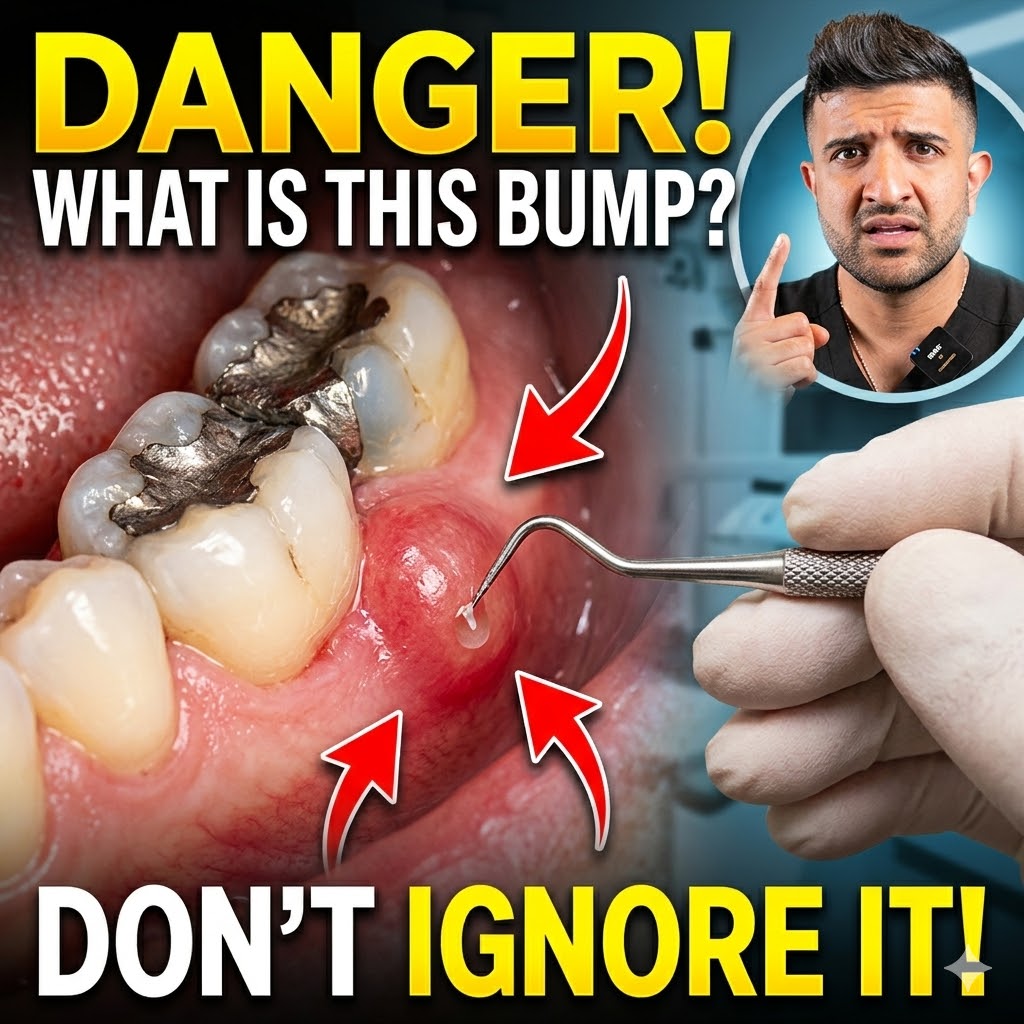
If you have ever felt a strange, pimple-like bump on your gums, your first instinct might be to ignore it or, worse, try to pop it. However, as recent viral dental videos have highlighted, that small, seemingly harmless bump is often a red flag for a much deeper issue hiding beneath the surface of your smile.
Known medically as a parulis—or more commonly as a gum boil—this little lesion is your body’s way of sending out an SOS. But what exactly is causing it, and why is it so important to get it checked out by a professional? Let’s dive into the anatomy of a dental infection and uncover why you should never ignore a bump on your gum.
What is a Gum Boil (Parulis)?
A gum boil is essentially a localized collection of pus that forms on the gum tissue. It usually looks like a small, swollen, red, or yellowish bump resembling a pimple. While it might appear to be a superficial skin issue, a gum boil is actually the endpoint of a drainage pathway (called a fistula or sinus tract) that originates from an infection deep within the jawbone or the root of a tooth.
When your body fights off a bacterial infection in the mouth, white blood cells rush to the area. As these cells die off, they form pus. If this pus gets trapped inside the enclosed space of your tooth and jawbone, pressure builds up. Eventually, the infection bores a tiny tunnel through the bone and gum tissue to find a way out, culminating in that visible boil.
The Root of the Problem: How the Infection Starts
To understand the boil, we have to look at how the infection begins in the first place. The process usually follows a specific pathway:
-
The Breach: It almost always starts with a compromise in the tooth’s hard outer layers (enamel and dentin). This can be caused by a deep cavity, a cracked tooth, dental trauma, or even a failing, old filling (as seen in the video).
-
Entering the Pulp: Once bacteria penetrate the protective layers, they enter the dental pulp—the innermost chamber of the tooth that houses the nerves and blood vessels.
-
The Journey Down the Root: The bacteria multiply and work their way down the hollow canals of the tooth roots.
-
The Exit Strategy: Because the bacteria and the resulting pus have nowhere else to go within the confined space of the tooth, they spill out of the tip of the root (the apex) and into the surrounding jawbone.
-
The Eruption: The body attempts to relieve the incredible pressure of the trapped pus by creating a drainage tract that erupts on the surface of the gums as a boil.
Common Signs and Symptoms
How do you know if you are dealing with a standard canker sore or a serious dental abscess? Look out for these telltale signs:
-
A Pimple-Like Bump: A swollen, fluid-filled sac on the gums, usually near the root of a tooth.
-
Pain and Tenderness: The area is often highly sensitive to touch. The affected tooth may also throb or ache, especially when chewing or applying pressure.
-
A Bad Taste or Odor: If the boil ruptures and drains, you may experience a sudden, foul, salty taste in your mouth and noticeably bad breath.
-
Temperature Sensitivity: The tooth may be extremely sensitive to hot or cold foods and beverages.
-
Fever and Swelling: In severe cases, the infection can cause your face or jaw to swell, accompanied by a fever.
Important Note: Sometimes, a draining gum boil can actually relieve the pressure, causing the pain to temporarily disappear. Do not let this fool you; the infection is still active and requires treatment.
Why You Should Never “Pop” a Gum Boil
It can be incredibly tempting to squeeze or pop a gum boil to relieve the pressure, much like you would a pimple. Do not do this. Popping a gum boil does not cure the underlying infection; it only temporarily removes the pus at the surface. The bacteria are still thriving deep inside the tooth root and the bone. Furthermore, using unsterilized fingers or household tools to pop the boil can introduce new, dangerous bacteria into the wound, risking a severe secondary infection that could spread to your bloodstream, face, or neck.
Professional Treatment Options
If you spot a gum boil, your first step should be scheduling an appointment with your dentist. Because the root cause is a dead or dying nerve inside the tooth, antibiotics alone will not solve the problem. The source of the infection must be physically removed.
Depending on the severity of the infection and the condition of the tooth, your dentist will typically recommend one of two main treatments:
-
Root Canal Therapy: This is the most common way to save the tooth. The dentist will clean out the infected pulp from the inside of the tooth and roots, disinfect the area, and seal it completely to prevent future infections.
-
Tooth Extraction: If the tooth is too severely decayed or fractured to be saved, the dentist will need to remove it entirely to stop the infection from spreading to neighboring teeth and bone.
Prevention is Your Best Defense
The best way to deal with a dental abscess is to prevent it from happening in the first place. Maintaining a strict oral hygiene routine—brushing twice a day, flossing daily, and attending regular dental checkups—is crucial. Regular X-rays and exams allow your dentist to spot early signs of decay, failing fillings, or microscopic cracks long before they turn into painful, pus-filled infections.