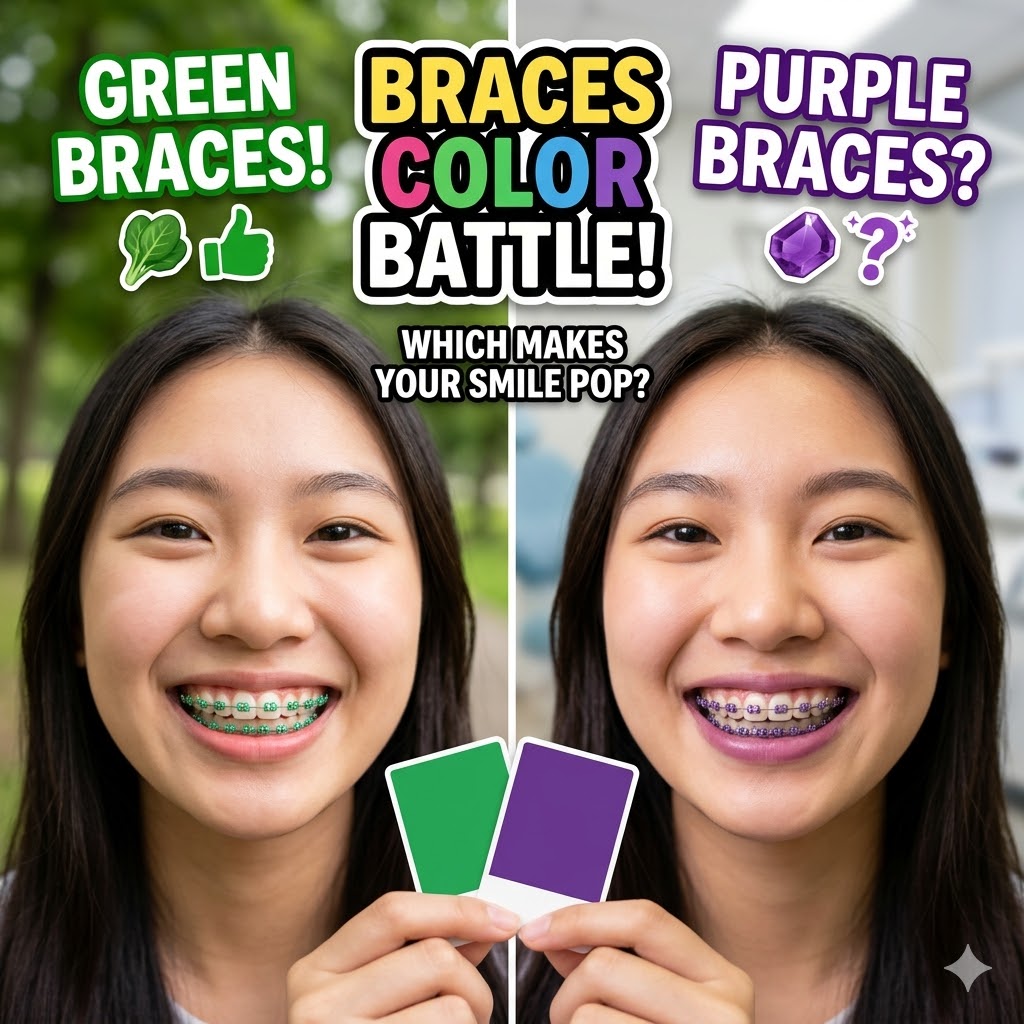
Getting braces is a major milestone in your orthodontic journey toward a perfect, healthy smile. While the initial thought of metal brackets and wires might seem intimidating, there is one aspect of the process that patients look forward to the most: choosing the color of their elastic bands. Every four to six weeks, during your adjustment appointments, you have the opportunity to customize your smile.
But with a whole rainbow of options available at the orthodontist’s office, making a decision can be surprisingly difficult. Should you go for something bright and flashy, or something subtle and sleek? In this article, we are putting two popular choices head-to-head to see which one comes out on top: Green vs. Purple.
Here is everything you need to know about how these colors affect the appearance of your teeth and which one ultimately takes the trophy.
Why Your Braces Color Matters
Choosing a color for your braces is not just about picking your favorite shade. The color of the elastic ligatures (the tiny rubber bands that hold the wire to the bracket) plays a significant role in how your smile looks on a daily basis.
The bands sit directly against your teeth, meaning they create an optical illusion based on color theory. Certain colors can make your teeth look brilliantly white, while others can draw attention to natural yellow undertones or, worse, mimic the appearance of poor oral hygiene. Understanding the visual impact of these colors is the secret to rocking your metal braces with total confidence.
The Bold Choice: Green Braces
In the red corner of our color comparison, we have green. Green is a highly requested color, especially around holidays like Christmas or St. Patrick’s Day, or for patients who simply love bright, earthy tones.
The Pros of Green:
-
Bright and Colorful: Green is undeniably fun. It showcases a vibrant personality and adds a pop of color to your smile.
-
Highly Customizable: You can mix and match green with other colors (like red in the winter or yellow in the spring) to create festive patterns.
The Cons of Green:
-
The “Food Illusion”: The biggest drawback of green braces is a major one. From a distance, or in photos, green elastic bands can easily look like you have food stuck between your teeth. Because green is the color of spinach, lettuce, and herbs, people might mistake your colorful bands for leftover lunch.
-
Tonal Clashes: Light green and neon green bands can sometimes make the natural enamel of your teeth look slightly yellow by comparison, as they do not provide enough dark contrast to make the white of your teeth pop.
The Smile Brightener: Purple Braces
In the blue corner, we have purple. Purple is rapidly becoming one of the most recommended colors by orthodontists and dental professionals alike. Whether you opt for a deep plum, a vibrant violet, or a soft lilac, purple brings a lot of aesthetic benefits to the table.
The Pros of Purple:
-
The Whitening Effect: This is the most significant advantage of choosing purple. If you look at a standard color wheel, purple sits directly across from yellow. Because they are on opposite sides of the color spectrum, purple helps to neutralize and counteract yellow tones. When you wear purple bands, they create an optical illusion that makes your teeth look significantly whiter and brighter.
-
Seamless Blending: Darker shades of purple tend to blend in beautifully with the gray and silver tones of traditional metal brackets. This creates a more cohesive, less distracting look across your smile.
-
Stain Resistance: Darker colors like purple are much less likely to show stains from foods and drinks (like coffee, tea, or tomato sauce) between your orthodontic visits.
The Cons of Purple:
-
Less “Pop”: For younger patients who want their braces to be as visible and loud as possible, dark purple might feel a bit too subtle. However, this is easily solved by choosing a brighter, more neon shade of violet.
The Science of Smiles: Color Theory in Orthodontics
The reason purple wins in the whitening department all comes down to basic color theory. If you want your teeth to look their absolute best during your orthodontic treatment, you should lean toward darker, cooler colors.
Colors like deep purple, navy blue, and dark plum provide a stark contrast against the natural color of your teeth. This contrast tricks the eye into perceiving the teeth as lighter than they actually are. On the flip side, colors like yellow, gold, and brown should generally be avoided. They can easily make teeth appear stained or highlight natural plaque buildup. Similarly, clear or white bands, which seem like a safe and invisible choice, are notorious for staining easily and turning a dull yellow after just a few meals.
Final Verdict: Who Takes the Trophy?
When weighing the pros and cons in the ultimate head-to-head battle, purple braces are the clear winner every time. While green is a fun, bright, and colorful option, the risk of it looking like food stuck in your teeth is a heavy price to pay for your aesthetics. Purple not only avoids this embarrassing pitfall but actively works to improve the look of your smile by blending well with the metal hardware and utilizing color theory to make your teeth look sparkling white.
The next time you find yourself sitting in the orthodontist’s chair, staring at the color wheel, you can confidently point to the purple bands knowing you are making the best choice for a radiant, picture-perfect smile.