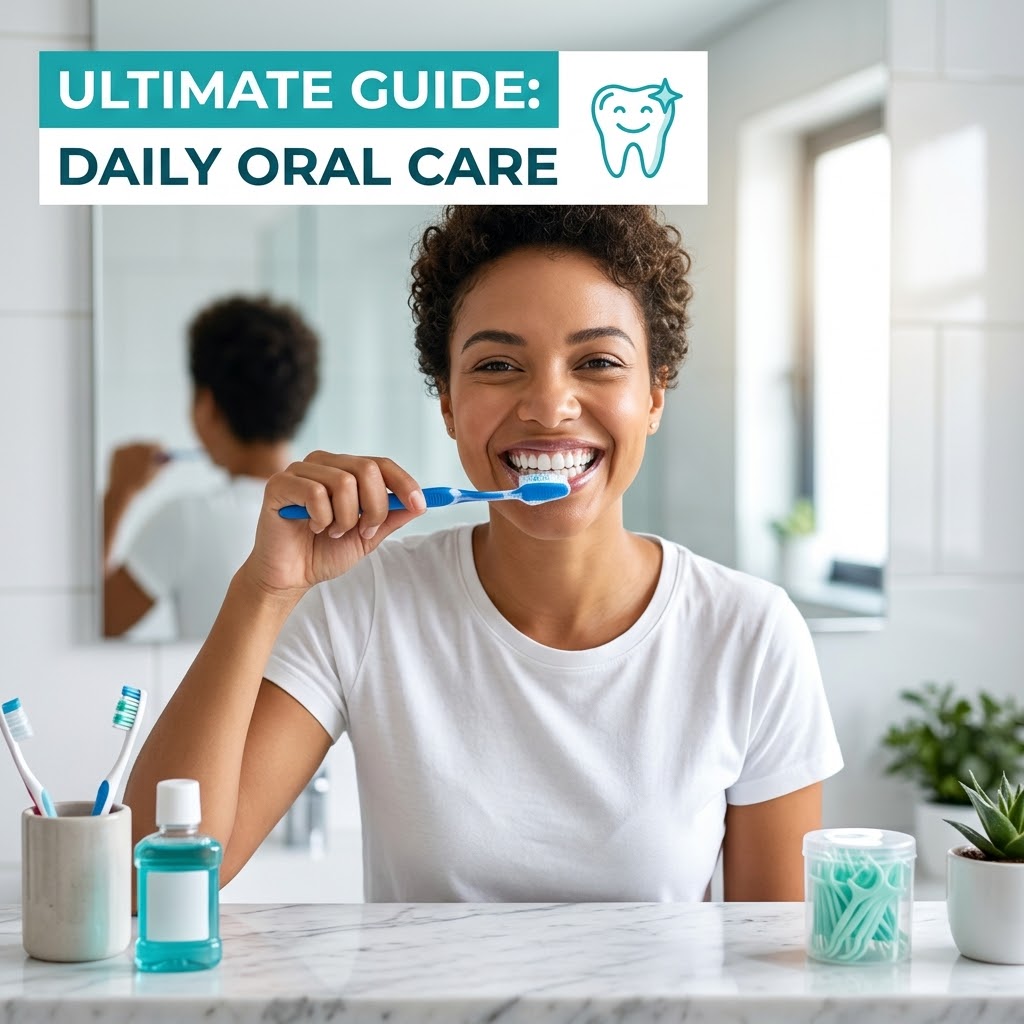
A bright, healthy smile is a great confidence booster, but good oral hygiene goes far beyond just aesthetics. Taking care of your teeth and gums is a crucial part of your overall well-being. Poor oral health has been linked to various systemic issues, including heart disease and diabetes.
Fortunately, maintaining excellent oral hygiene doesn’t have to be complicated. By building a consistent daily routine, you can keep your teeth strong, your gums healthy, and your breath fresh. Here is your essential guide to daily oral care.
1. Brush Twice a Day, the Right Way
Brushing is the foundation of any good oral care routine. It removes plaque—a sticky film of bacteria that causes cavities and gum disease.
-
Frequency: Brush at least twice a day, ideally in the morning and right before bed.
-
The Right Tools: Use a soft-bristled toothbrush to avoid damaging your gums and enamel. Pair it with a fluoride toothpaste to help strengthen your teeth and prevent decay.
-
Technique: Spend a full two minutes brushing. Hold your brush at a 45-degree angle to your gums and use gentle, circular motions. Don’t forget to brush the outer, inner, and chewing surfaces of all your teeth.
-
Replacement: Change your toothbrush (or brush head if using an electric one) every three to four months, or sooner if the bristles become frayed.
2. Never Skip the Floss
Brushing alone only cleans about 60% of the surface of your teeth. The rest of the spaces between your teeth can only be reached with floss.
-
Why it Matters: Flossing removes trapped food particles and plaque from between your teeth and under the gumline, areas where your toothbrush simply can’t reach.
-
How Often: Floss at least once a day. It doesn’t matter if you do it morning or night, as long as you do it thoroughly. If traditional string floss is difficult to use, try floss picks or a water flosser.
3. Clean Your Tongue
Have you ever noticed a white or yellowish coating on your tongue? That is a buildup of bacteria, dead cells, and food debris, which is a leading cause of bad breath (halitosis).
-
The Fix: Use a tongue scraper or gently brush your tongue with your toothbrush every time you brush your teeth. Start from the back and pull forward to remove the bacteria.
4. Rinse with Mouthwash
While not a substitute for brushing and flossing, an antimicrobial mouthwash is a great addition to your routine.
-
Benefits: Mouthwash can help reduce plaque, prevent or control gingivitis, and leave your mouth feeling incredibly fresh. Look for a mouthwash that contains fluoride for added cavity protection.
🦷 Diet and Lifestyle Tips for Optimal Oral Health
What you put into your body plays a massive role in the health of your mouth. Keep these tips in mind:
-
Limit Sugary and Acidic Foods: Bacteria in your mouth feed on sugar, producing acids that erode tooth enamel. Limit candies, sodas, and sweet pastries.
-
Drink Plenty of Water: Staying hydrated is excellent for your overall health, but it also helps wash away food particles and keeps your saliva levels high. Saliva is your mouth’s natural defense against tooth decay.
-
Eat Crunchy Fruits and Vegetables: Foods like apples, carrots, and celery act as natural toothbrushes. Chewing them stimulates saliva production and helps scrub away plaque.
-
Avoid Tobacco Products: Smoking or chewing tobacco significantly increases your risk of gum disease, tooth decay, and oral cancer.
Don’t Forget Your Dentist!
Even with a perfect home care routine, professional help is essential. Make sure to visit your dentist every six months for a routine check-up and professional cleaning. Your dentist can spot early signs of trouble—like microscopic cavities or early gum disease—before they become painful, expensive problems.