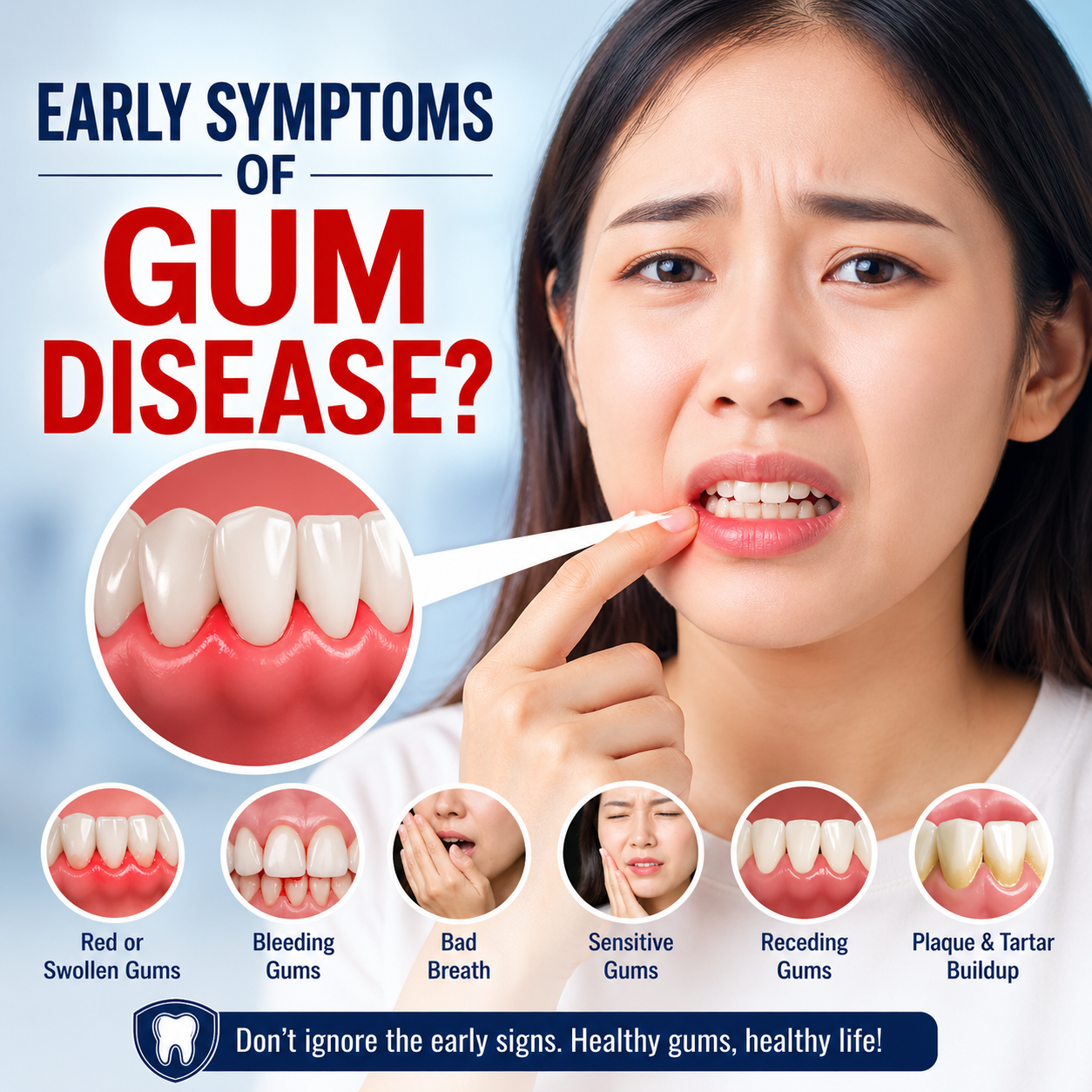
Gum disease, also known as periodontal disease, is a common oral health condition that affects millions of people worldwide. It begins subtly and can progress into serious dental problems if left untreated. Recognizing the early symptoms is crucial for preventing long-term damage and maintaining a healthy smile.
What Is Gum Disease?
Gum disease is an infection of the tissues that support your teeth. It is primarily caused by plaque—a sticky film of bacteria that forms on teeth. If not removed through proper oral hygiene, plaque can harden into tartar, leading to inflammation and infection of the gums.
Early Warning Signs of Gum Disease
1. Red or Swollen Gums
Healthy gums should be firm and pink. One of the earliest signs of gum disease is redness or swelling caused by inflammation.
2. Bleeding Gums
If your gums bleed when brushing or flossing, it is not normal. This is often an early indicator of gingivitis, the mildest form of gum disease.
3. Persistent Bad Breath
Chronic bad breath (halitosis) can result from bacteria buildup in the mouth, which is commonly associated with gum disease.
4. Tender or Sensitive Gums
Gums may feel sore or uncomfortable, especially when eating or brushing.
5. Receding Gums
You might notice your teeth appearing longer than usual. This happens when gums begin to pull away from the teeth.
6. Plaque and Tartar Buildup
Visible yellow or brown deposits along the gum line can lead to irritation and infection if not professionally cleaned.
Why Early Detection Matters
Catching gum disease early can prevent it from progressing into periodontitis—a severe condition that can damage the bone supporting your teeth and eventually lead to tooth loss. Early-stage gum disease is usually reversible with good oral hygiene and professional care.
How to Prevent Gum Disease
- Brush your teeth at least twice a day
- Floss daily to remove plaque between teeth
- Use an antibacterial mouthwash
- Visit your dentist regularly for check-ups and cleanings
- Maintain a healthy diet and avoid smoking
Conclusion
Gum disease often starts silently, but the early signs are easy to spot if you know what to look for. Paying attention to changes in your gums—such as bleeding, swelling, or bad breath—can help you take action before the condition worsens. Protect your oral health by practicing good hygiene and seeking dental care when needed.