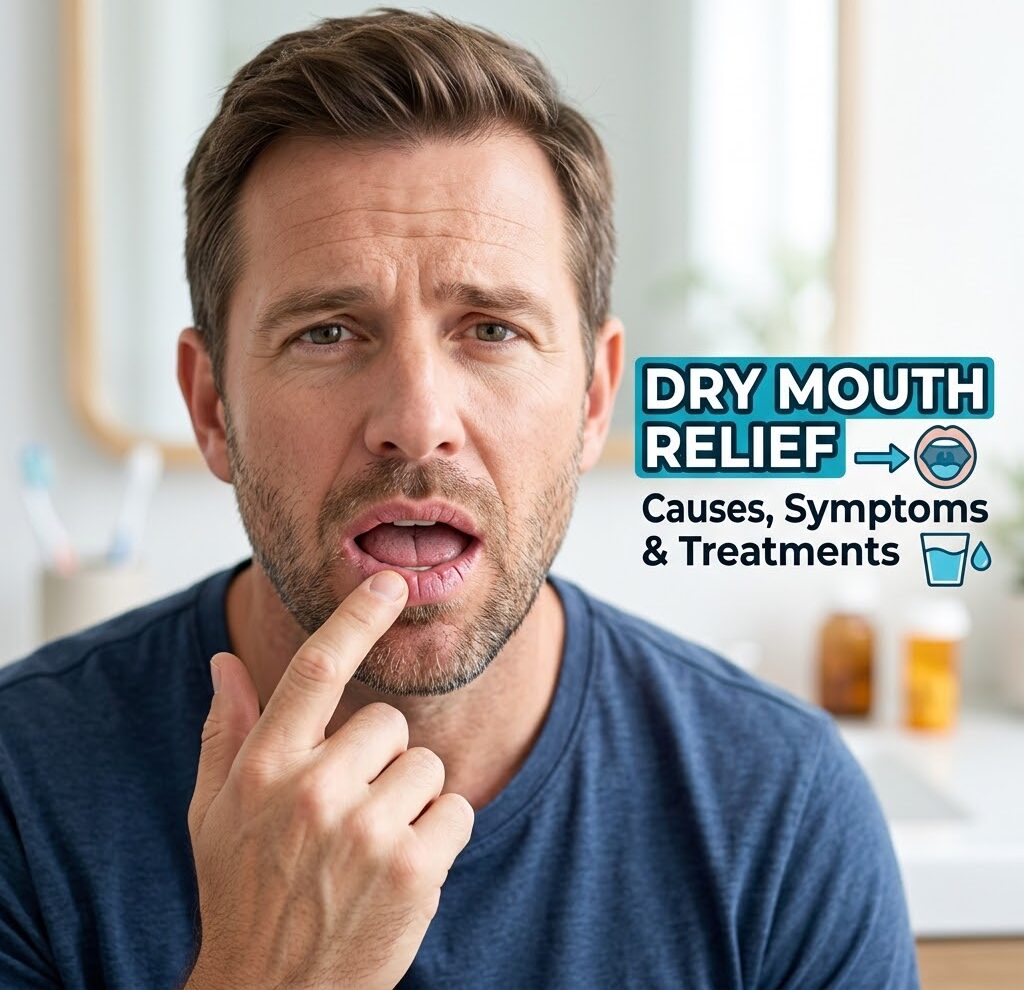
Dry mouth (technically known as Xerostomia) occurs when your salivary glands cannot produce enough saliva to keep your mouth sufficiently moist. Saliva is crucial because it helps digest food, prevents tooth decay, reduces bad breath, and controls the growth of bacteria.
Below is detailed information regarding the causes, symptoms, and ways to manage dry mouth:
🔍 Main Causes of Dry Mouth
This condition can be triggered by a variety of factors, including:
-
Medications: This is the most common cause. Over 400 types of medications, such as blood pressure drugs, antihistamines, painkillers, and antidepressants, can cause dry mouth as a side effect.
-
Aging: Older adults are more prone to facing this issue due to physical changes in the body, inadequate nutrition, and the use of multiple medications.
-
Health Conditions: Diabetes, Sjogren’s syndrome (an autoimmune disorder), strokes, and oral yeast infections (thrush).
-
Cancer Treatments: Chemotherapy and radiation therapy directed at the head and neck area can damage the salivary glands.
-
Lifestyle Factors: Smoking, chewing tobacco, and heavy alcohol consumption can severely worsen dry mouth symptoms. Breathing through the mouth (especially while sleeping) is also a major contributing factor.
⚠️ Symptoms You May Notice
If you are suffering from dry mouth, you might experience:
-
A dry, sticky feeling in your mouth or throat
-
Thick or stringy saliva
-
Difficulty chewing, swallowing, or speaking
-
Bad breath (Halitosis)
-
Cracked lips or sores inside the mouth
-
A dry, red, or rough-feeling tongue
💡 Treatments and Home Care
Treatment largely depends on the underlying cause. However, you can practice the following methods to relieve symptoms and protect your oral health:
1. Increasing Mouth Moisture:
-
Drink plenty of water: Sip water frequently throughout the day and drink water with your meals to assist in chewing and swallowing.
-
Chew sugar-free gum: It is best to choose gums containing Xylitol, as it helps stimulate saliva production and actively prevents tooth decay.
-
Use Artificial Saliva: You can purchase over-the-counter oral moisturizers (available as mouthwashes, gels, or sprays) at most pharmacies.
2. Lifestyle and Habit Changes:
-
Limit caffeine and alcohol: Coffee, tea, and alcoholic beverages dehydrate the body and make your mouth feel even drier.
-
Quit smoking: Tobacco use significantly decreases saliva production.
-
Use a humidifier: Place a humidifier in your bedroom at night to add moisture to the air, which is especially helpful if you tend to breathe through your mouth while sleeping.
3. Strict Oral Hygiene:
-
Because you lack the natural saliva needed to wash away bacteria, your risk for tooth decay is significantly higher. You must brush your teeth at least twice a day using a fluoride toothpaste and floss daily.
4. Consult with a Doctor:
-
If you suspect that a medication you are taking is the root cause, consult your doctor. They may be able to prescribe a different medication or adjust your current dosage.