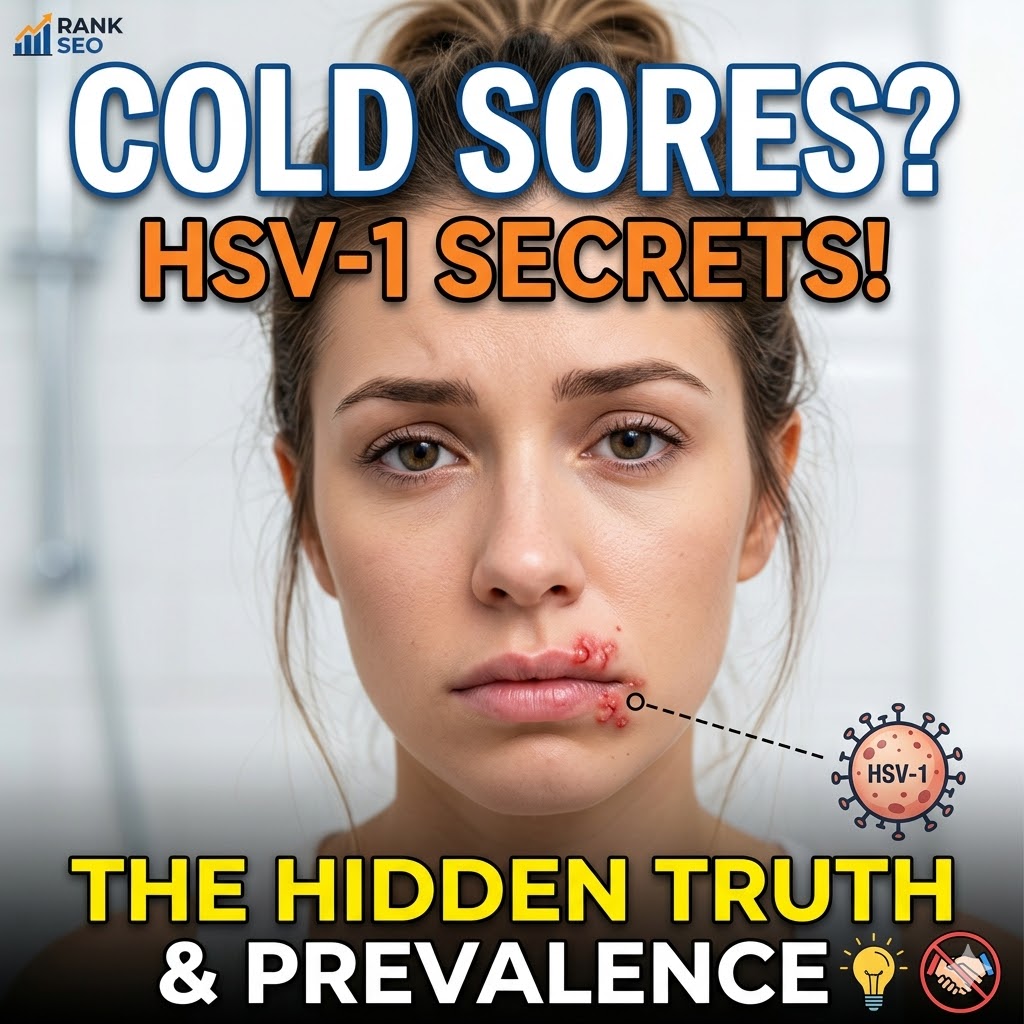
A recent viral video perfectly captures a common but rarely discussed reality: a young woman experiencing a severe facial breakout after kissing someone new. The caption, “When the first guy you kiss in a year gives you herpes,” highlights a deeply stigmatized, yet overwhelmingly prevalent medical condition. While the imagery of widespread blisters across the lips and chin can be alarming, the medical facts behind oral herpes tell a story of a virus that most of the population already carries.
Understanding the science behind cold sores, the virus that causes them, and the triggers that bring them to the surface is essential for proper health management and breaking the social stigma surrounding the condition. Here is a comprehensive look at the Herpes Simplex Virus 1 (HSV-1).
What is HSV-1?
The blisters shown in the video, commonly known as cold sores or fever blisters, are caused by the Herpes Simplex Virus 1 (HSV-1). It is important to distinguish this from HSV-2, which is typically associated with genital herpes, though both strains can affect either area depending on the point of transmission.
HSV-1 is a highly contagious viral infection that primarily affects the oral and facial regions. Once a person contracts the virus, it never truly leaves the body. Instead, after the initial outbreak resolves, the virus retreats and lies dormant in the trigeminal nerve ganglion—a cluster of nerve cells located near the ear. It remains “asleep” there until specific internal or external factors trigger it to wake up, travel back down the nerve pathways to the skin, and cause a new cold sore.
The Surprising Prevalence of Oral Herpes
When people hear the word “herpes,” there is often an immediate sense of panic or judgment. However, as the medical professional in the video points out, the statistics paint a very different picture.
Between 65% to 85% of the global population carries the HSV-1 virus. To put this into perspective, if you are in a room with ten people, it is highly likely that at least seven of them have the virus sleeping in their system.
The primary reason this condition remains so hidden and stigmatized is that a significant portion of carriers are entirely asymptomatic. Many people contract HSV-1 during childhood—often from a harmless kiss on the cheek from a relative or sharing a drink—and never experience a single cold sore in their lifetime. Their immune systems keep the virus permanently suppressed. Because they show no symptoms, they are completely unaware that they carry the virus and can potentially pass it on to others.
How is HSV-1 Transmitted?
HSV-1 is transmitted through direct contact with the virus. The most obvious risk occurs when a person has an active, visible cold sore. The fluid inside the blisters is highly concentrated with the virus.
Common modes of transmission include:
-
Kissing: Direct skin-to-skin contact with the mouth area.
-
Sharing Personal Items: Using the same lip balm, cosmetics, razors, or towels.
-
Sharing Food and Drink: Drinking from the same glass or sharing eating utensils.
However, the virus can also be transmitted even when no visible sores are present. This process is known as asymptomatic shedding. The virus briefly becomes active on the surface of the skin without causing a blister, making it entirely possible to catch or pass on HSV-1 without any warning signs. This is likely how the individual in the video contracted the virus; her partner may have appeared completely asymptomatic at the time.
Identifying Cold Sore Triggers
For those who do experience symptomatic outbreaks, cold sores rarely appear randomly. They are usually preceded by specific triggers that temporarily weaken the body’s local or systemic defenses, allowing the dormant virus to activate.
As noted by the doctor, common triggers include:
-
A Compromised Immune System: This is one of the most frequent catalysts. If your body’s defenses are lowered, the virus takes advantage of the weakness.
-
Illness and Fever: Getting a cold, the flu, or another infection forces the immune system to divert its resources, which is why these blemishes are historically called “fever blisters.”
-
Sunlight (UV Exposure): Intense ultraviolet light from the sun or tanning beds can damage the skin and suppress local immune responses on the lips, triggering an outbreak.
-
Stress and Fatigue: High levels of physical or emotional stress elevate cortisol levels, which can suppress immune function over time.
-
Hormonal Changes: Many women report cold sore outbreaks corresponding with their menstrual cycles or other hormonal shifts.
-
Physical Trauma: Dental work, lip injections, or even minor injuries to the mouth can aggregate the nerves and awaken the virus.
The Lifecycle of a Cold Sore
A typical cold sore outbreak lasts anywhere from one to two weeks and progresses through several distinct stages:
-
The Tingle (Prodrome Stage): Often, individuals will feel an itching, burning, or tingling sensation on their lip a day or two before anything becomes visible.
-
The Blister Stage: Small, fluid-filled blisters begin to form on the surface of the skin.
-
The Weeping Stage: The blisters rupture, leaving shallow, open sores that ooze fluid. This is the most contagious and painful stage.
-
The Crusting Stage: The sores dry out and develop a yellowish or brownish crust/scab.
-
The Healing Stage: The scab eventually flakes off, and the skin heals, usually without leaving a scar.
Managing Outbreaks and Minimizing Spread
While there is no permanent cure for HSV-1, there are effective ways to manage the condition, reduce the severity of outbreaks, and protect others.
-
Antiviral Medications: Prescription oral antivirals (like Valacyclovir) or topical creams can significantly shorten the duration of an outbreak if taken at the very first sign of a tingle.
-
Protecting the Lips: Using a lip balm with high SPF can prevent UV-triggered outbreaks.
-
Boosting Immunity: Maintaining a healthy lifestyle with adequate sleep, a nutrient-rich diet, and regular exercise helps keep the immune system strong enough to suppress the virus.
-
Practicing Good Hygiene: During an active outbreak, it is crucial to avoid touching the sore, wash hands frequently, and strictly avoid kissing or sharing items that touch the mouth.
Breaking the Stigma
The shock value of viral videos showcasing extreme HSV-1 reactions stems directly from the societal stigma attached to the word “herpes.” The reality is that HSV-1 is an incredibly common, manageable skin condition. It is not a reflection of poor hygiene or moral failing; it is simply a highly successful virus that has adapted to live alongside human beings for thousands of years. By understanding the triggers, practicing safe habits during outbreaks, and educating others on the statistics, we can foster a more informed and empathetic approach to oral health.