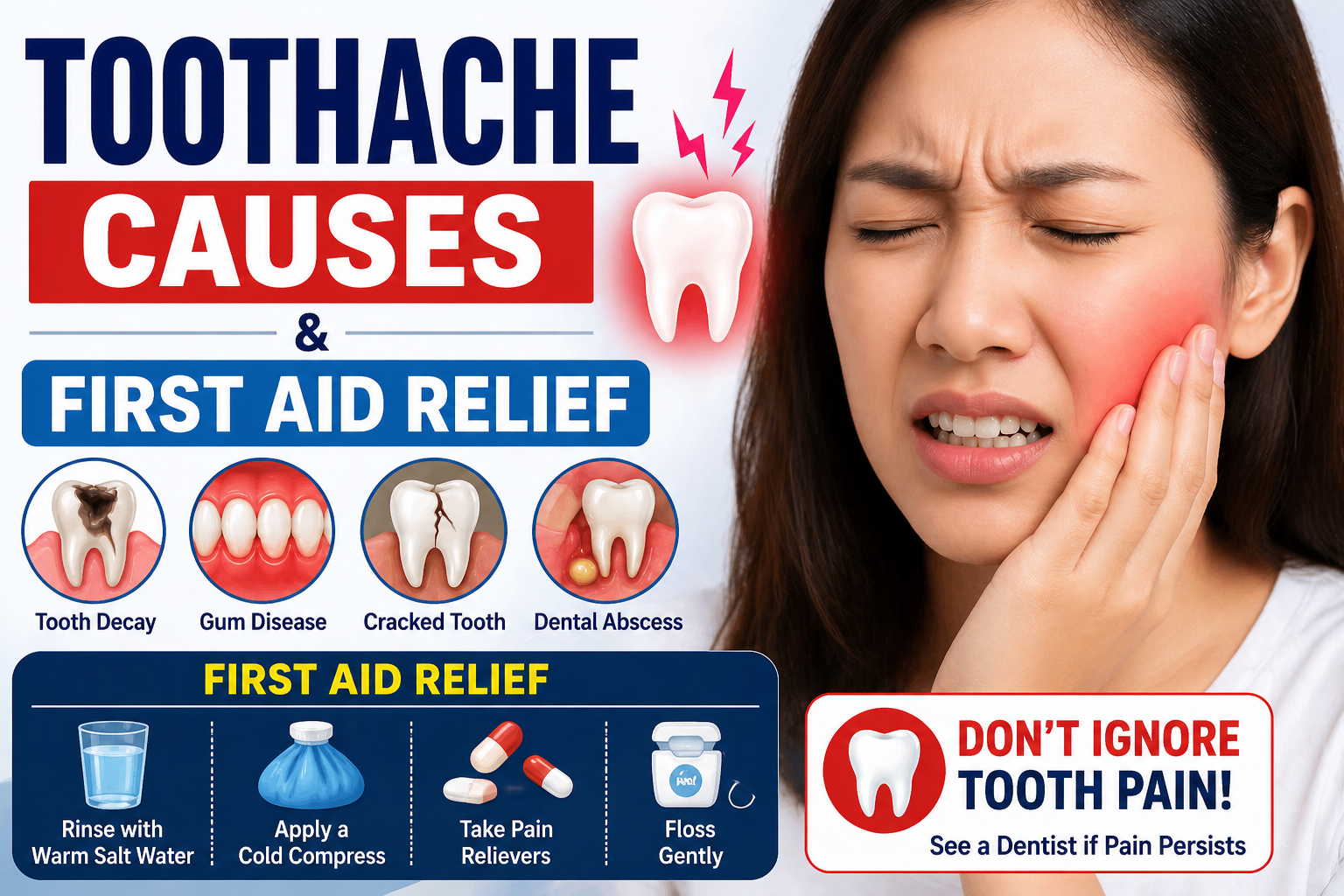
A toothache can range from mild discomfort to severe, throbbing pain that interferes with eating, sleeping, and daily activities. It is one of the most common dental problems and can affect people of all ages. While some toothaches may be temporary, others can signal a serious underlying dental issue that requires professional treatment. Understanding the common causes of tooth pain and knowing how to manage it initially can help protect your oral health and prevent complications.
Common Causes of Toothache
1. Tooth Decay (Cavities)
Tooth decay is the leading cause of tooth pain. When bacteria in the mouth produce acids, they gradually erode the tooth enamel, creating cavities. If left untreated, decay can reach the inner layers of the tooth, causing pain and sensitivity.
2. Gum Disease
Inflamed or infected gums can lead to tooth discomfort. Gum disease may cause swelling, tenderness, and pain around the affected teeth.
3. Tooth Sensitivity
Some people experience sharp pain when consuming hot, cold, sweet, or acidic foods and beverages. This often occurs when the protective enamel wears down or when gum recession exposes the tooth roots.
4. Cracked or Fractured Tooth
A cracked tooth can cause pain, especially when chewing or biting. Cracks may result from injury, grinding, or biting hard objects.
5. Dental Abscess
A dental abscess is a serious infection that develops around the root of a tooth or in the gums. It often causes severe, persistent pain, swelling, fever, and sometimes a bad taste in the mouth.
6. Impacted Wisdom Teeth
Wisdom teeth that do not fully erupt can become trapped beneath the gums, causing pain, swelling, and infection.
7. Teeth Grinding (Bruxism)
Grinding or clenching your teeth, especially during sleep, can strain the teeth and jaw muscles, leading to soreness and tooth pain.
First Aid for Toothache Relief
While first aid measures can help reduce discomfort, they are not a substitute for professional dental care.
Rinse with Warm Salt Water
Mix half a teaspoon of salt in a glass of warm water and rinse your mouth gently. This can help reduce inflammation and cleanse the affected area.
Apply a Cold Compress
Place a cold compress or ice pack on the outside of your cheek for 15–20 minutes at a time. This helps reduce swelling and numb the pain.
Take Over-the-Counter Pain Relievers
Medications such as ibuprofen or acetaminophen can provide temporary relief. Always follow the dosage instructions on the label.
Floss Carefully
Sometimes food particles trapped between teeth can cause pain. Gently floss around the affected tooth to remove any debris.
Avoid Trigger Foods
Stay away from very hot, cold, sugary, or acidic foods and drinks, as they may worsen the pain.
What Not to Do
- Do not place aspirin directly on the gums or tooth, as it can burn the tissue.
- Do not ignore severe or persistent pain.
- Do not attempt to drain an abscess yourself.
When to See a Dentist Immediately
Seek urgent dental care if you experience:
- Severe or worsening pain
- Swelling of the face or gums
- Fever
- Difficulty swallowing or breathing
- Pus or discharge around the tooth
- Pain lasting longer than one or two days
Preventing Toothaches
- Brush twice daily with fluoride toothpaste
- Floss every day
- Limit sugary foods and drinks
- Visit your dentist regularly for checkups and cleanings
- Wear a mouthguard if you grind your teeth
- Address dental problems early before they worsen
Final Thoughts
A toothache is often your body’s way of signaling that something is wrong. While home remedies can offer temporary relief, it is essential to identify and treat the underlying cause. Prompt dental care can prevent more serious complications and help you maintain a healthy, pain-free smile.