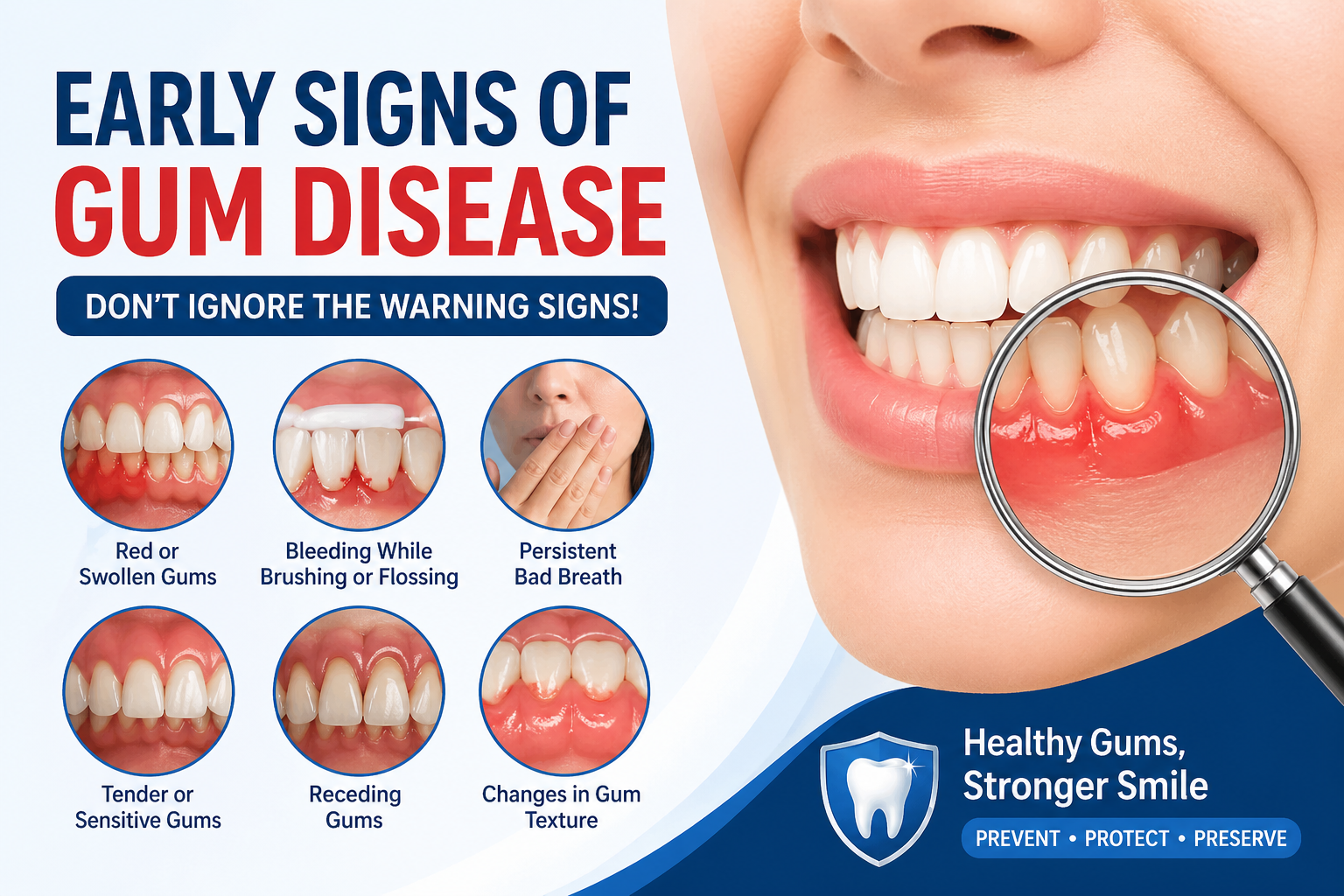
Gum disease, also known as periodontal disease, is one of the most common oral health problems affecting people of all ages. It often begins silently, without causing significant pain or discomfort. Because of this, many individuals may not realize they have gum disease until it has progressed to a more serious stage. Recognizing the early warning signs is essential for preventing long-term damage to your gums, teeth, and overall oral health.
What Is Gum Disease?
Gum disease is an infection of the tissues that support your teeth. It usually starts with the buildup of plaque—a sticky film of bacteria that forms on the teeth and along the gumline. If plaque is not removed through regular brushing, flossing, and professional cleanings, it can harden into tartar, leading to inflammation of the gums.
The earliest stage of gum disease is called gingivitis. At this stage, the condition is still reversible with proper oral care and professional treatment. If left untreated, gingivitis can progress into periodontitis, a more severe form of gum disease that can result in tooth loss.
Early Signs of Gum Disease
1. Red or Swollen Gums
Healthy gums should appear firm and pink. If your gums look red, puffy, or swollen, it may be an early indication of inflammation caused by bacterial buildup.
2. Bleeding While Brushing or Flossing
One of the most common warning signs of gum disease is bleeding gums. If you notice blood when brushing, flossing, or eating hard foods, it is important not to ignore it.
3. Persistent Bad Breath
Chronic bad breath, also known as halitosis, can be caused by bacteria trapped beneath the gumline. If bad breath persists despite regular brushing and mouthwash use, gum disease may be the underlying cause.
4. Tender or Sensitive Gums
Gums that feel sore, tender, or uncomfortable when touched may be showing early signs of infection or inflammation.
5. Receding Gums
If your teeth appear longer than usual or your gums seem to be pulling away from your teeth, gum recession may be occurring. This can expose the tooth roots and increase sensitivity.
6. Changes in Gum Texture
Healthy gums are firm and resilient. Gums that become soft, shiny, or spongy may indicate the onset of gum disease.
Why Early Detection Matters
Detecting gum disease early can help prevent more serious complications, including:
- Tooth mobility or tooth loss
- Bone loss around the teeth
- Gum recession
- Increased risk of systemic health issues, such as heart disease and diabetes complications
Early treatment is often simple and highly effective, typically involving professional dental cleaning and improved oral hygiene habits at home.
How to Prevent Gum Disease
- Brush your teeth twice a day with fluoride toothpaste
- Floss daily to remove plaque between teeth
- Use an antimicrobial mouthwash if recommended by your dentist
- Visit your dentist regularly for checkups and professional cleanings
- Avoid smoking or using tobacco products
- Maintain a healthy, balanced diet
When to See a Dentist
If you notice any of these early symptoms, schedule a dental appointment as soon as possible. Prompt treatment can stop gum disease in its tracks and protect your smile for years to come.
Final Thoughts
Gum disease is common, but it is also preventable and treatable—especially when caught early. Paying attention to the health of your gums is just as important as caring for your teeth. By recognizing the early signs and seeking professional care, you can maintain a healthy smile and avoid more serious dental problems in the future.