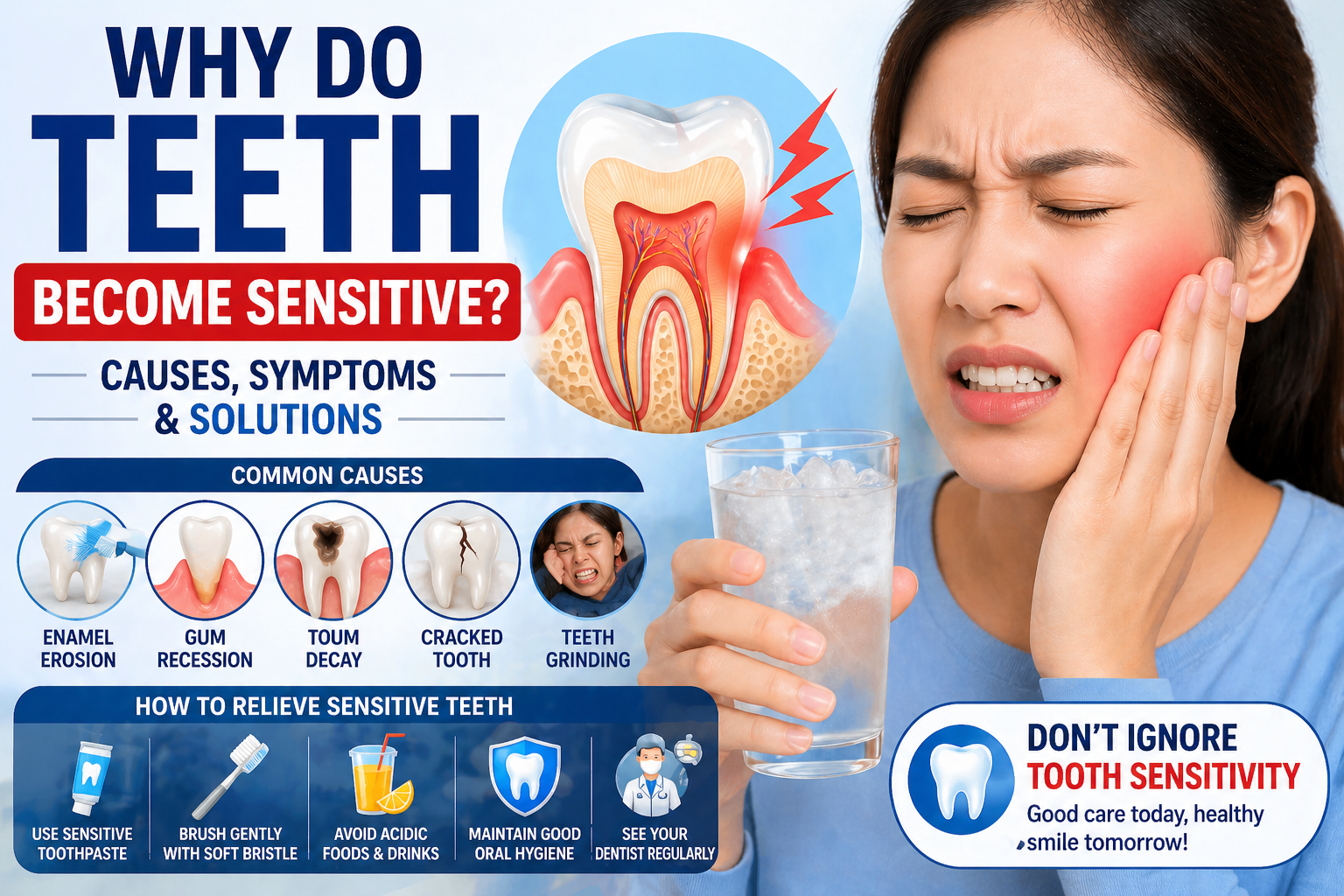
Tooth sensitivity, also known as dentin hypersensitivity, is a common dental condition that affects millions of people worldwide. It is characterized by a sudden, sharp pain or discomfort in one or more teeth when exposed to certain triggers, such as hot, cold, sweet, or acidic foods and drinks. In some cases, even breathing in cold air can cause discomfort.
Although tooth sensitivity is usually not a serious condition, it can significantly affect your quality of life and may be a sign of an underlying dental problem that requires attention.
What Causes Tooth Sensitivity?
Beneath the hard outer layer of your teeth, called enamel, lies a softer layer known as dentin. Dentin contains tiny channels called tubules that lead directly to the tooth’s nerve center. When the enamel wears down or the gums recede, these tubules become exposed, allowing external stimuli to reach the nerves and cause pain.
Common Causes of Sensitive Teeth
1. Enamel Erosion
Frequent consumption of acidic foods and beverages, such as citrus fruits, soda, and sports drinks, can gradually wear away tooth enamel.
2. Aggressive Brushing
Brushing too hard or using a hard-bristled toothbrush can erode enamel and damage gum tissue over time.
3. Gum Recession
As gums recede, the roots of the teeth become exposed. Since tooth roots are not protected by enamel, they are more sensitive to temperature changes.
4. Tooth Decay or Cavities
Cavities can create openings in the enamel, exposing the dentin and increasing sensitivity.
5. Cracked or Chipped Teeth
A damaged tooth can expose the inner layers, making it more vulnerable to pain and sensitivity.
6. Teeth Grinding (Bruxism)
Grinding or clenching your teeth can wear down enamel and contribute to sensitivity.
7. Recent Dental Procedures
Some people experience temporary sensitivity after treatments such as teeth whitening, fillings, crowns, or professional cleanings.
8. Gum Disease
Inflamed or receding gums caused by periodontal disease can expose the tooth roots and lead to sensitivity.
Common Triggers
People with sensitive teeth often experience discomfort when consuming:
- Hot foods or beverages
- Cold drinks or ice cream
- Sweet foods
- Acidic foods and drinks
- Cold air
How to Reduce Tooth Sensitivity
- Use a toothpaste specifically designed for sensitive teeth
- Brush gently with a soft-bristled toothbrush
- Avoid overly acidic foods and beverages
- Wear a mouthguard if you grind your teeth
- Maintain good oral hygiene
- Visit your dentist regularly for checkups
When to See a Dentist
You should consult a dentist if:
- Sensitivity is severe or persistent
- Pain affects only one tooth
- Symptoms appear suddenly
- Home remedies do not provide relief
- Sensitivity interferes with eating or drinking
Treatment Options
Depending on the cause, your dentist may recommend:
- Desensitizing toothpaste
- Fluoride treatments
- Dental bonding
- Gum grafting for receding gums
- Treatment for cavities or cracked teeth
- A custom night guard for teeth grinding
Final Thoughts
Sensitive teeth are common, but they should not be ignored. In many cases, simple lifestyle changes and proper dental care can greatly reduce discomfort. However, persistent sensitivity may indicate an underlying dental issue that requires professional evaluation. If you experience ongoing tooth sensitivity, schedule a visit with your dentist to determine the cause and receive the appropriate treatment.