In today’s visually driven world, a bright, white smile is highly sought after. Social media platforms are flooded with trends, tips, and products promising a Hollywood-level smile in record time. However, a recent viral video from a dental professional serves as a stark warning: not all teeth whitening methods are created equal, and chasing quick results with unregulated products can lead to severe, irreversible damage to your oral health.
If you are considering brightening your smile, it is crucial to understand the profound difference between safe, dentist-prescribed whitening treatments and the perilous world of ultra-strong, over-the-counter peroxide gels.
The Allure and the Danger of “Super Strong” Peroxide
The core ingredient in almost all effective teeth whitening products is a bleaching agent, typically hydrogen peroxide or carbamide peroxide. When applied to the teeth, these chemicals penetrate the porous enamel to break down complex stain molecules, resulting in a whiter appearance.
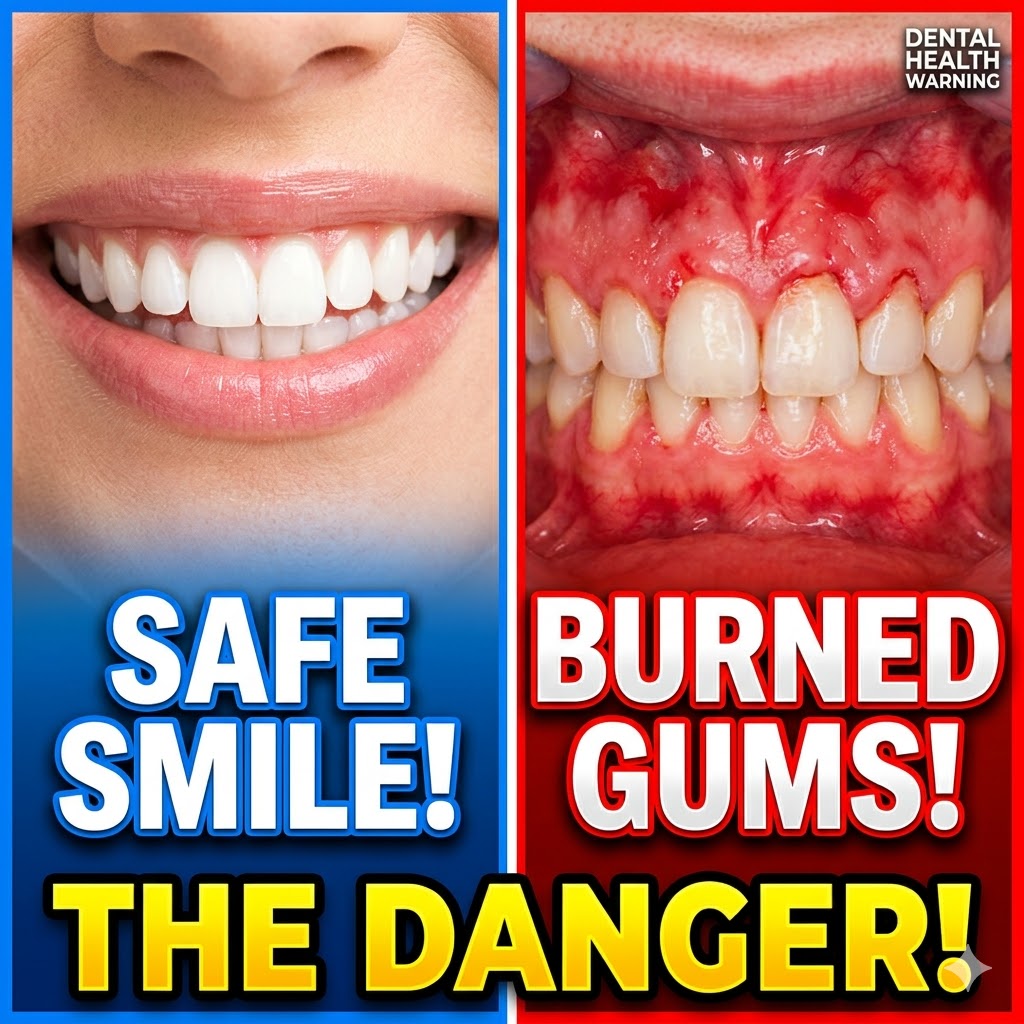
The problem arises when consumers, eager for immediate results, seek out “super strong” peroxide gels online or from unregulated beauty salons. In the warning video, the contrast is clear. We see the ideal outcome: healthy, naturally white teeth. But we are immediately shown the grim reality of what happens when things go wrong: severe chemical burns on the gums.
When peroxide concentrations are excessively high—often far beyond the legal limits allowed for non-dentist professionals—the chemical acts as a corrosive agent. If this potent gel comes into contact with the delicate gingival tissue (your gums), it doesn’t just tingle; it burns.
Understanding Chemical Burns on Gums
A chemical burn from teeth whitening is a serious dental injury. When high-strength peroxide sits on the soft tissue of the gums, it essentially oxidizes the cells, leading to localized tissue death.
The symptoms of a chemical burn on the gums include:
-
Blanching and Whitening: The gums may temporarily turn stark white, which is the immediate sign of chemical oxidation.
-
Severe Redness and Inflammation: Once the white slough peels away, the underlying tissue is often raw, angry red, and highly inflamed.
-
Intense Pain and Sensitivity: The burned area will be incredibly tender, making eating, drinking, and basic oral hygiene painful.
-
Gum Recession: In severe cases, the tissue damage is permanent. The gums may recede, exposing the sensitive roots of the teeth. This not only causes chronic pain but also compromises the structural integrity of your teeth, potentially leading to tooth loss over time.
The Safe Alternative: Dentist-Prescribed Whitening
So, how do we achieve the bright smile we want without risking the health of our gums? The answer lies in professional, dentist-prescribed teeth whitening systems.
As highlighted by dental professionals, the gold standard for at-home teeth whitening involves two non-negotiable components: safe whitening gel and custom-made whitening trays.
1. Controlled, Safe Whitening Gel
Dentists prescribe gels with a carefully calibrated concentration of peroxide. Brands like Boutique Whitening, often recommended by dental professionals, offer a balance between efficacy and safety. These gels are designed to lift stains predictably over a period of days or weeks, rather than attempting to blast them away in a single, dangerous session. Furthermore, professional gels often contain added desensitizing agents, such as potassium nitrate, to protect the nerve of the tooth during the whitening process.
2. Custom-Made Whitening Trays
This is arguably the most critical factor in preventing chemical burns. When you purchase a one-size-fits-all whitening kit from a drugstore or an online retailer, the trays (or strips) do not conform perfectly to your unique dental anatomy. As a result, when you bite down, the bleaching gel inevitably oozes out over the edges and rests directly on your gums.
When you visit a dentist, they take precise physical or digital impressions of your teeth. From these molds, a dental laboratory creates bespoke whitening trays that fit your teeth like a second skin. These trays are designed to hold the gel exactly where it needs to be—on the enamel—and feature a tight seal at the gumline to prevent any dangerous leakage.
Why You Should Always Consult a Dentist First
Before starting any whitening regimen, a thorough dental examination is essential. A dentist will ensure that your teeth and gums are healthy enough to withstand the bleaching process. If you have undiagnosed cavities, exposed roots, or active gum disease (gingivitis or periodontitis), applying any whitening gel can cause excruciating pain and exacerbate existing problems.
A dental professional will also help set realistic expectations. Whitening removes stains from natural teeth, but it will not change the color of existing crowns, veneers, or composite fillings. Your dentist can help you navigate these nuances to ensure an even, natural-looking result.
Conclusion: Prioritize Health Over Hype
While the desire for a radiant smile is completely understandable, it should never come at the cost of your oral health. The shocking images of chemically burned gums are a necessary wake-up call. Shortcuts, unregulated ultra-strong gels, and poorly fitting DIY trays are simply not worth the risk of permanent tissue damage and chronic pain.
If you are looking to enhance your smile, view it as a medical procedure rather than a casual cosmetic fix. Invest in a consultation with your dentist, utilize custom-made trays, and use prescribed, regulated gels. By choosing the professional route, you can confidently achieve the bright, beautiful smile you desire—safely and sustainably.