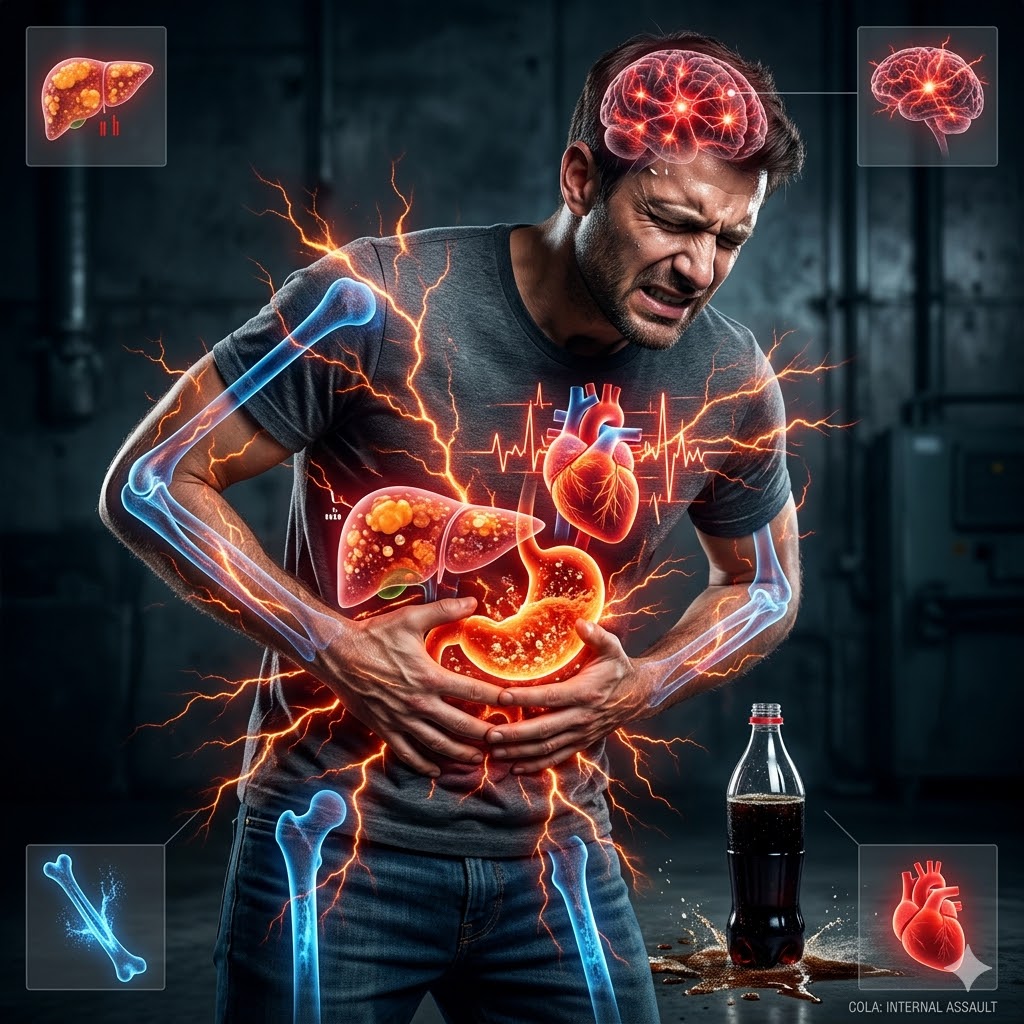
Imagine being able to look inside your own body the moment you take a gulp of an ice-cold, fizzy dark soda. While it might feel refreshing on a hot afternoon, the internal reality is far less soothing. As depicted in vivid 3D medical animations, the journey of a sugary carbonated beverage through your digestive system triggers a cascade of rapid, intense physiological reactions. From your brain down to your bones, the impact of a single bottle of cola extends far beyond a simple moment of sweetness.
In this article, we will break down the science behind the shocking visual of what sugary cola actually does to your vital organs, and why you might want to rethink that next sip.
The Immediate Impact: The Stomach and Digestion
When you consume a dark cola, the first major organ to take the hit is your stomach. Sodas are highly acidic, often containing a mixture of phosphoric acid and citric acid. As the dark liquid hits your stomach lining, it creates an intensely acidic environment. While human stomach acid is naturally strong, the sudden influx of carbonated, artificial acids can lead to gastric distress, bloating, and acid reflux.
The intense fizzing reaction you might imagine happening inside you is not far off from reality. The carbon dioxide in the drink expands in your warm stomach, leading to gas and discomfort. Furthermore, this acidic wash can disrupt the delicate balance of your gut microbiome, which is essential for proper digestion, nutrient absorption, and overall immune health.
The Liver Under Siege: Fructose Overload
Perhaps the most significant and silent damage occurs in your liver. A standard bottle of cola is packed with high-fructose corn syrup or refined sugars—often exceeding your entire recommended daily limit of added sugar in just one serving.
When this massive payload of liquid sugar enters your bloodstream, your pancreas goes into overdrive, pumping out insulin to manage the sudden spike. However, the liver is the only organ that can metabolize fructose in significant amounts. When flooded with it all at once, the liver has no choice but to turn this excess sugar directly into fat. Over time, this constant barrage contributes heavily to Non-Alcoholic Fatty Liver Disease (NAFLD). The visual of stress radiating from the midsection perfectly illustrates the heavy burden placed on your liver, forcing it to work overtime to process an unnatural dose of liquid fructose.
The Brain: The Dopamine Trap and The Sugar Crash
Why do we keep going back for more despite the known health risks? The answer lies inside the brain. When you drink cola, the massive dose of sugar triggers your brain’s reward center, releasing a sudden surge of dopamine—the “feel-good” neurotransmitter.
This neurological response is strikingly similar to the way the brain reacts to addictive substances. It creates a temporary feeling of pleasure, satisfaction, and alertness, often aided by the caffeine found in many dark sodas. However, this high is incredibly short-lived. As your body rapidly clears the sugar from your bloodstream, you experience a “sugar crash.” This leaves you feeling sluggish, irritable, and craving yet another sugary hit to restore that dopamine high, creating a vicious cycle of dependency and fatigue.
The Heart: Blood Pressure and Cardiovascular Risk
The effects of sugary sodas also ripple aggressively through your cardiovascular system. The sudden spike in insulin and blood sugar causes your blood vessels to constrict, which can temporarily raise your blood pressure.
However, the long-term effects are much worse. The chronic consumption of these beverages is strongly linked to a higher risk of heart disease. The excess fat created by the overloaded liver doesn’t just stay in the abdomen; it enters your bloodstream as triglycerides, contributing to the buildup of plaque in your arteries. Over time, this increases the strain on your heart, raising the likelihood of metabolic syndrome, heart attacks, and strokes. The stress signals shown flashing over the heart in medical models are a stark reminder that what we drink directly impacts our most vital muscle.
Bones and Joints: The Acidic Drain
One of the lesser-known, but deeply concerning, effects of dark colas is their impact on the skeletal system. Colas contain high levels of phosphoric acid, which gives them their tangy flavor and preserves their shelf life.
Excessive levels of phosphorus in the blood can throw off the body’s delicate calcium-phosphorus balance. To neutralize the acid and restore physiological balance, the body is forced to leach calcium directly from your bones. Over time, this process can lead to decreased bone mineral density, making your skeleton weaker and more susceptible to fractures and conditions like osteoporosis. Additionally, the chronic inflammation caused by high-sugar diets can exacerbate joint pain and stiffness, reflecting the systemic damage spreading to your extremities.
Conclusion: Making a Healthier Choice
The visual of a human body sustaining systemic shocks from a bottle of soda is a powerful metaphor for the real, documented physiological damage caused by sugary, carbonated drinks. From liver toxicity and cardiovascular strain to weakened bones and addictive brain patterns, the toll on the human body is profound.
While an occasional treat might not cause irreversible harm, making soda a daily habit is a recipe for long-term health complications. By understanding exactly what happens inside our bodies when we consume these beverages, we can make more informed, healthier choices. Swapping out sugary sodas for sparkling water, herbal teas, or simply pure water is one of the most effective steps you can take to protect your vital organs and ensure your body functions at its absolute best.