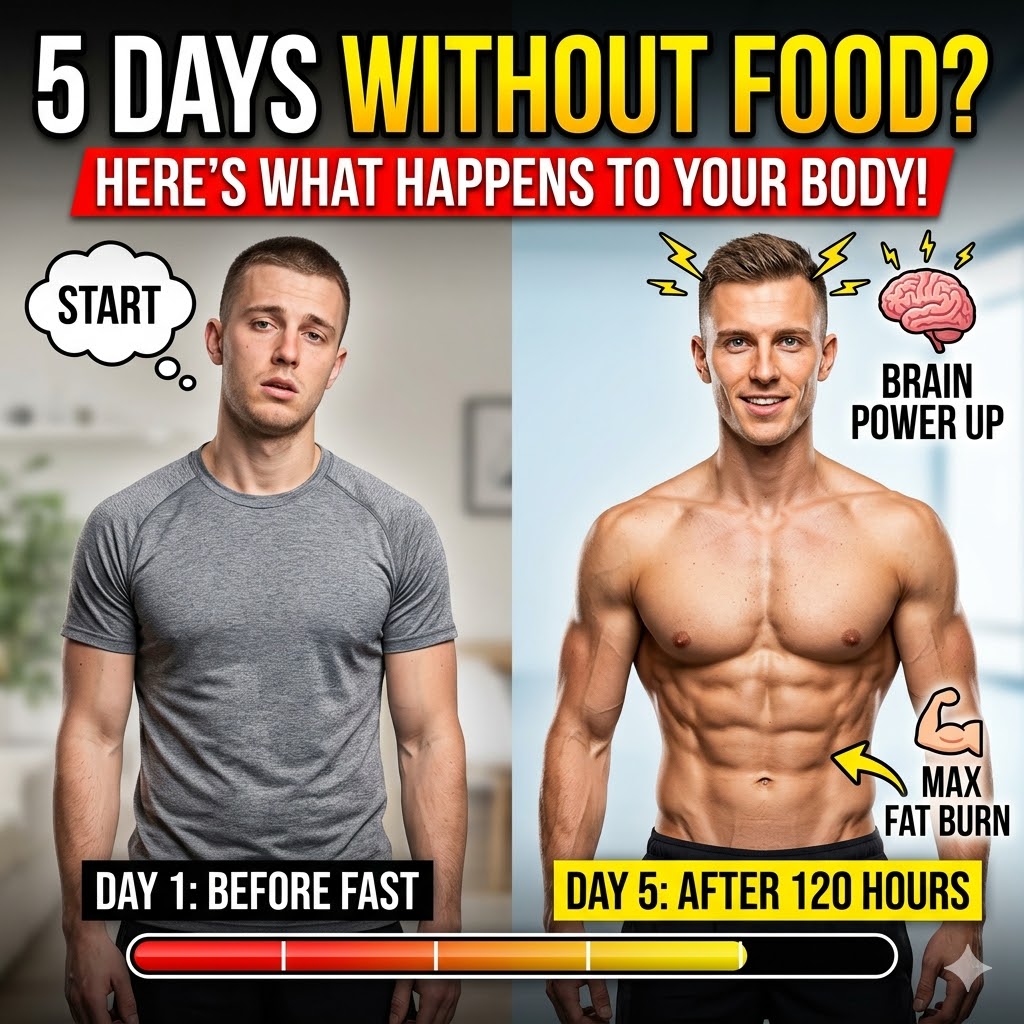
When you hear the phrase “five-day fast,” your first thought might be extreme deprivation. The idea of going 120 hours without a single bite of food sounds to many like a quick path to starvation. However, emerging science and human biology tell a profoundly different story.
When done correctly and safely, a prolonged water fast isn’t about crashing your system; it is about initiating a powerful, evolutionary mechanism of healing. Our bodies are not designed to be in a constant state of digestion. By pausing our food intake, we flip a biological switch that allows our cells to clean house, repair damaged tissues, and optimize our brain function.
If you have ever wondered exactly what happens under the hood when you stop eating for five days, here is the day-by-day biological timeline of your body’s ultimate reset.
Day 1: The Great Shift and Water Weight Drop
The first 24 hours of a fast are all about transition. Your body is accustomed to running on glucose (sugar) from the food you eat. When that external fuel source stops, your body turns to its internal storage: glycogen.
Glycogen is stored primarily in your liver and muscles, and it is heavily bound to water. As your body burns through these glycogen reserves to keep you energized, you will experience a rapid drop in water weight. This is why you might see the scale drop significantly on the very first day.
Internally, a major metabolic shift is occurring. Your insulin levels plummet. Insulin is the hormone responsible for storing fat, so when it drops, the “doors” to your fat cells finally open. By the end of Day 1, your body flips the metabolic switch and begins transitioning from a sugar-burner into a fat-burning machine.
Day 2: Enter Ketosis and Autophagy
Welcome to Day 2. The glycogen is gone, and your body needs a new, highly efficient fuel source: ketones. Boom—ketosis kicks in.
Ketones are produced by the liver from your fat stores, and they are like premium, high-octane fuel for your brain. While you might expect to feel foggy without food, the opposite actually happens. Brain power goes up, and surprisingly, the sharp pangs of hunger begin to subside as your blood sugar stabilizes.
But the real magic of Day 2 is the activation of a process called autophagy. Derived from Greek words meaning “self-eating,” autophagy is your cellular recycling program. Your cells begin scanning themselves for damaged parts, junk proteins, and metabolic waste, breaking them down and recycling them into usable energy. It is quite literally a deep clean for your biology.
Day 3: Deep Ketosis and The Brain Boost
By the 72-hour mark, you are in deep ketosis. For many, Day 3 is the turning point where the struggle fades, and a profound sense of euphoria takes over.
Your brain becomes laser-sharp, largely due to a massive spike in a protein called BDNF (Brain-Derived Neurotrophic Factor). BDNF is often described as “Miracle-Gro for the brain.” It stimulates the growth of brand-new brain cells and strengthens the neural pathways you already have.
Simultaneously, your immune system hits a massive reset button. The prolonged absence of food causes the body to break down old, damaged, or inefficient white blood cells. This clears the way for the creation of a brand-new, highly resilient immune system once you begin eating again.
Day 4: Maximum Fat Burning and Cellular Healing
On Day 4, your fat-burning capabilities are absolutely maxed out. Your body is comfortably fueling itself entirely from your own fat stores. Because your body has all the energy it needs readily available around your waistline and organs, physical hunger is virtually gone.
Meanwhile, autophagy continues to work relentlessly behind the scenes. It aggressively targets inflammatory cells and pre-cancerous tissues. Chronic inflammation—which is the root cause of many modern ailments like joint pain, brain fog, and fatigue—is drastically reduced. Your body is focusing 100% of its energy on healing and repairing damaged tissue rather than digesting heavy meals.
Day 5: The Magic Moment and The Rebuild
You have made it to Day 5. Your cells are cleaned out, your immune system is primed to rebuild, and your fat stores have been utilized for fuel. Now comes the most critical phase of the entire process: the refeed.
Breaking a 5-day fast requires extreme care. Your digestive system has been asleep, and shocking it with a heavy, carbohydrate-rich meal can be dangerous. The key is to reintroduce food gently. You must start with incredibly clean, easy-to-digest foods. Bone broth is the gold standard for breaking a long fast, followed a few hours later by soft-boiled eggs or high-quality, easily digestible proteins.
This refeeding phase is where the structural magic happens. Flush with new nutrients, your body rapidly rebuilds stronger than before. Stem cells are activated, skin clears up, joint health improves, and your newly grown brain cells are fortified.
Conclusion: Evolution, Not Starvation
Fasting is not about punishing yourself. It is an evolutionary tool that our ancestors relied upon for survival, and it remains locked inside our DNA waiting to be utilized. By skipping the constant cycle of snacking and eating, you unlock a profound healing mechanism that modern medicine is only just beginning to fully understand.
Disclaimer: The information provided in this article is intended for general informational purposes only and should not be considered as medical advice, diagnosis, or treatment. Extended fasting can be dangerous for certain individuals. Always seek the guidance of a qualified healthcare professional with any questions you may have regarding your health, medical conditions, or treatment options before attempting a prolonged fast.