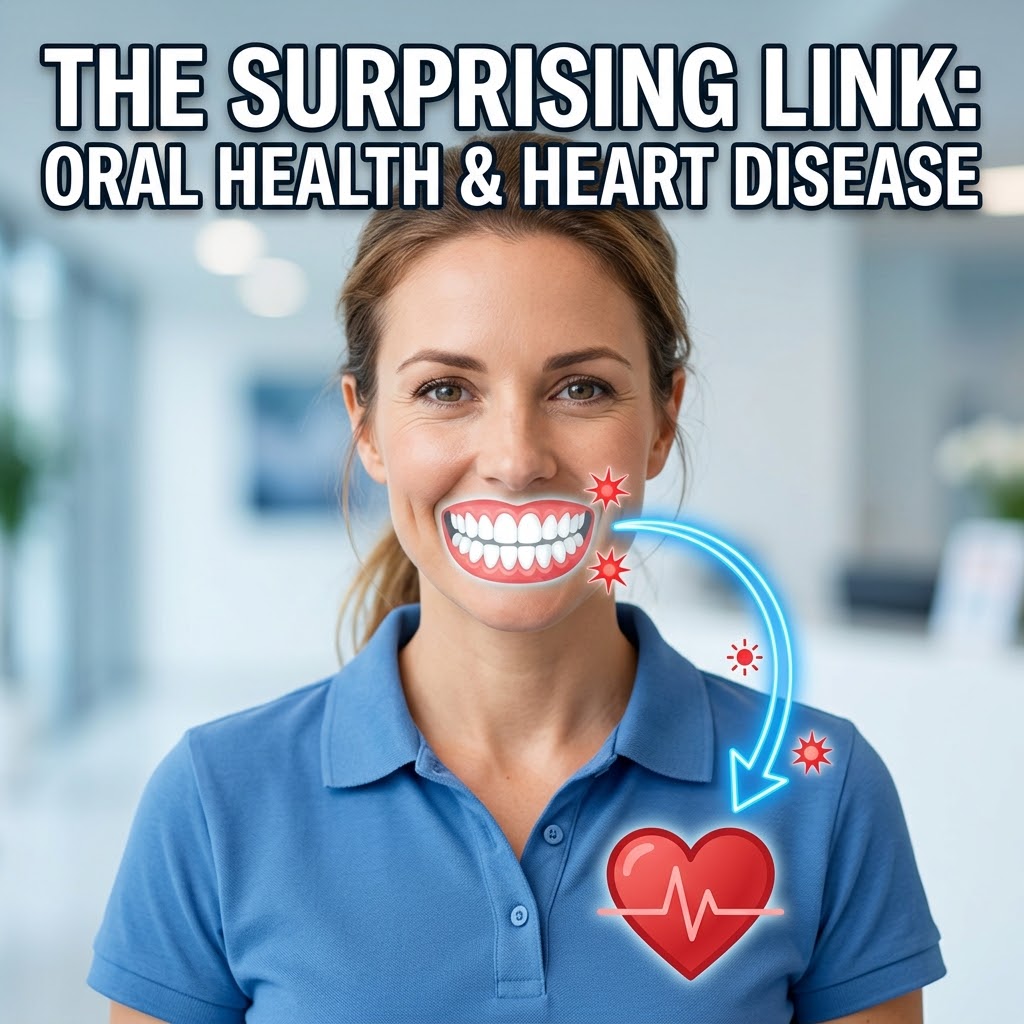
When you think about keeping your heart healthy, you probably think about eating right, exercising regularly, and managing stress. But did you know that protecting your heart might also start with a toothbrush and some floss?
Recent medical studies have revealed a strong and surprising connection between your oral health and your cardiovascular system. While a bright smile is great for your confidence, keeping your gums healthy could actually be a matter of life and death.
Here is what you need to know about the link between your mouth and your heart—and how to protect both.
How Are the Mouth and the Heart Connected?
The connection between oral health and heart disease comes down to two main factors: bacteria and inflammation.
1. The Bacterial Pathway
Your mouth is full of bacteria. While most are harmless, poor oral hygiene can allow dangerous bacteria to multiply and cause gum disease (periodontitis). When you have infected or bleeding gums, these harmful bacteria can enter your bloodstream. Once in the blood, they can travel directly to your heart, where they can attach to damaged areas and cause endocarditis—a life-threatening infection of the heart’s inner lining.
2. Inflammation and Clogged Arteries
Gum disease causes severe inflammation in the mouth. As your body’s immune system fights the gum infection, this inflammatory response can spread throughout your entire body. Chronic inflammation is a major risk factor for atherosclerosis (the hardening and narrowing of the arteries). Over time, this makes it harder for blood to flow to your heart, significantly increasing the risk of a heart attack or stroke.
Warning Signs You Should Not Ignore
Gum disease is often a silent condition in its early stages, but catching it early can protect your overall health. Look out for these common warning signs of periodontal disease:
-
Red, swollen, or tender gums
-
Gums that bleed easily when you brush or floss
-
Persistent bad breath or a bad taste in your mouth
-
Receding gums (teeth looking longer than usual)
-
Loose or shifting teeth
Note: If you experience any of these symptoms, it is highly recommended to schedule an appointment with your dentist as soon as possible.
How to Protect Your Heart and Your Smile
The good news is that preventing gum disease is straightforward and entirely within your control. By taking care of your mouth, you are taking a proactive step toward heart health.
Here are the best habits to adopt:
-
Brush Twice a Day: Use fluoride toothpaste and a soft-bristled toothbrush. Brush for at least two minutes to remove plaque effectively.
-
Floss Daily: Brushing alone cannot reach the tight spaces between your teeth. Flossing removes trapped food particles and plaque before they turn into harmful tartar.
-
Visit Your Dentist Regularly: Schedule professional cleanings and check-ups at least twice a year. Dentists can spot early signs of gum disease long before you feel any pain.
-
Quit Smoking: Tobacco use is one of the most significant risk factors for developing severe gum disease. Quitting will immediately benefit both your mouth and your cardiovascular system.
-
Eat a Heart-Healthy Diet: Limit sugary snacks and drinks, which feed the bacteria in your mouth. Focus on a diet rich in vegetables, fruits, whole grains, and lean proteins.