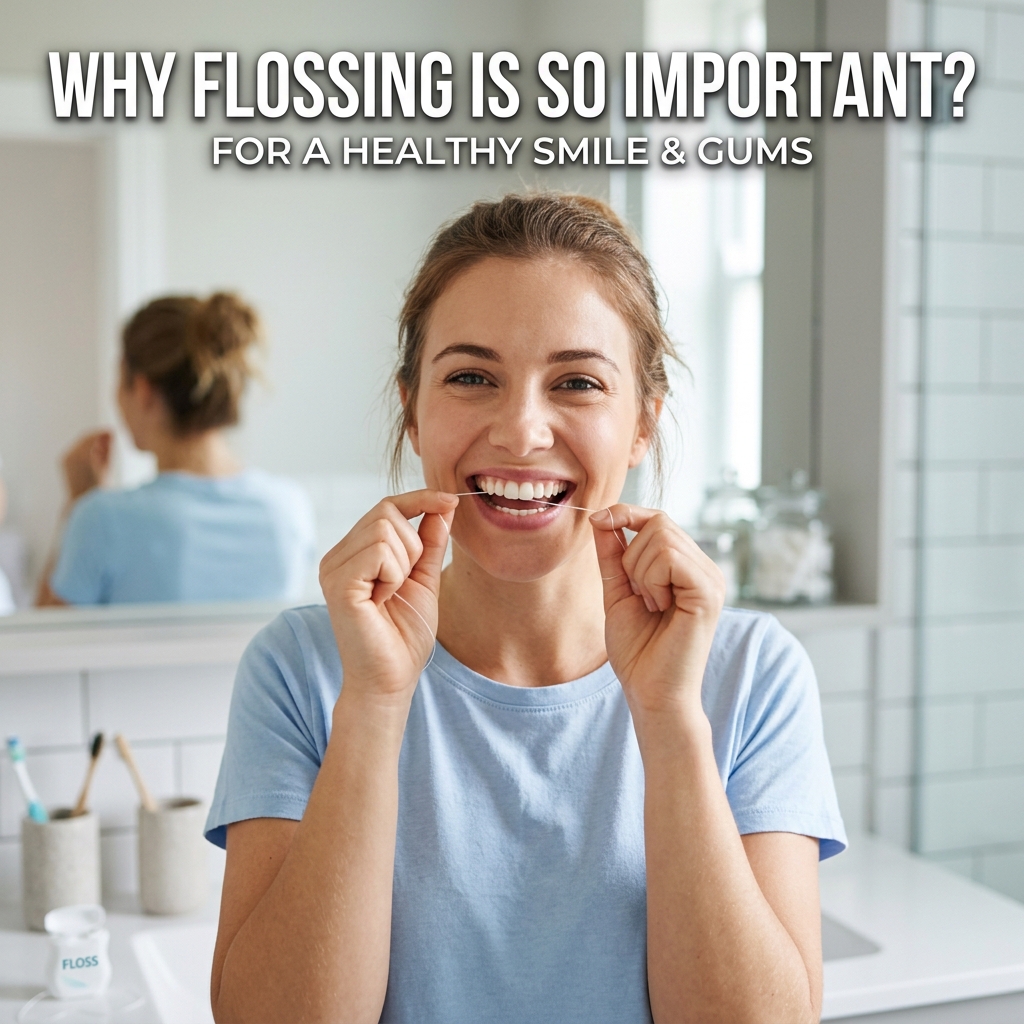
We all know the golden rule of dental care: brush your teeth twice a day. But if you are only brushing and skipping the floss, you are leaving about one-third of your tooth surface completely uncleaned!
Many people view flossing as an optional extra step, but dentists worldwide agree that it is a non-negotiable part of a healthy oral hygiene routine. So, why exactly is dental floss so important? Let’s dive into the incredible benefits of this simple daily habit.
1. It Cleans Where Your Toothbrush Can’t Reach
Your toothbrush is fantastic at cleaning the broad surfaces of your teeth, but the bristles simply cannot reach into the tight spaces between them. Dental floss is designed specifically to glide into these microscopic gaps, removing trapped food particles and plaque before they have a chance to harden into tartar.
2. It is Your Best Defense Against Gum Disease
Plaque that lingers between your teeth doesn’t just harm the enamel; it attacks your gums. When plaque accumulates, it causes inflammation known as gingivitis—the first stage of gum disease, characterized by red, swollen, and bleeding gums. If left unchecked by flossing, this can progress to periodontitis, a severe infection that can lead to tooth loss and bone damage.
3. It Prevents Hidden Cavities
When you eat, food particles and sugars get stuck between your teeth. If they aren’t removed by flossing, bacteria feed on them, producing acids that slowly eat away at your tooth enamel. Because these spaces are hidden, cavities that form between the teeth can grow quite large before you even notice them. Daily flossing stops this destructive process in its tracks.
4. It Banishes Bad Breath (Halitosis)
Have you ever brushed your teeth but still felt like your breath wasn’t entirely fresh? The culprit is often food trapped between your teeth. As these tiny food particles begin to break down and decay in your mouth, they release foul-smelling odors. Flossing physically removes these decaying particles, keeping your breath genuinely fresh.
5. It Protects Your Overall Health
Your mouth is the gateway to your body, and poor oral health is linked to several systemic health issues. Studies have shown that the bacteria responsible for gum disease can enter your bloodstream and increase the risk of serious conditions, including:
-
Heart disease
-
Respiratory infections
-
Complications related to diabetes
By simply taking a minute to floss every day, you are not just protecting your smile—you are actively protecting your overall well-being.
How to Make Flossing a Habit
If you aren’t used to flossing, starting can feel like a chore. Here are a few tips to build the habit:
-
Keep it visible: Leave your floss right next to your toothbrush so you don’t forget.
-
Find what works for you: If traditional string floss is difficult to use, try floss picks, water flossers, or interdental brushes.
-
Set a specific time: Whether it’s right after dinner or right before bed, attach the habit to an existing routine.