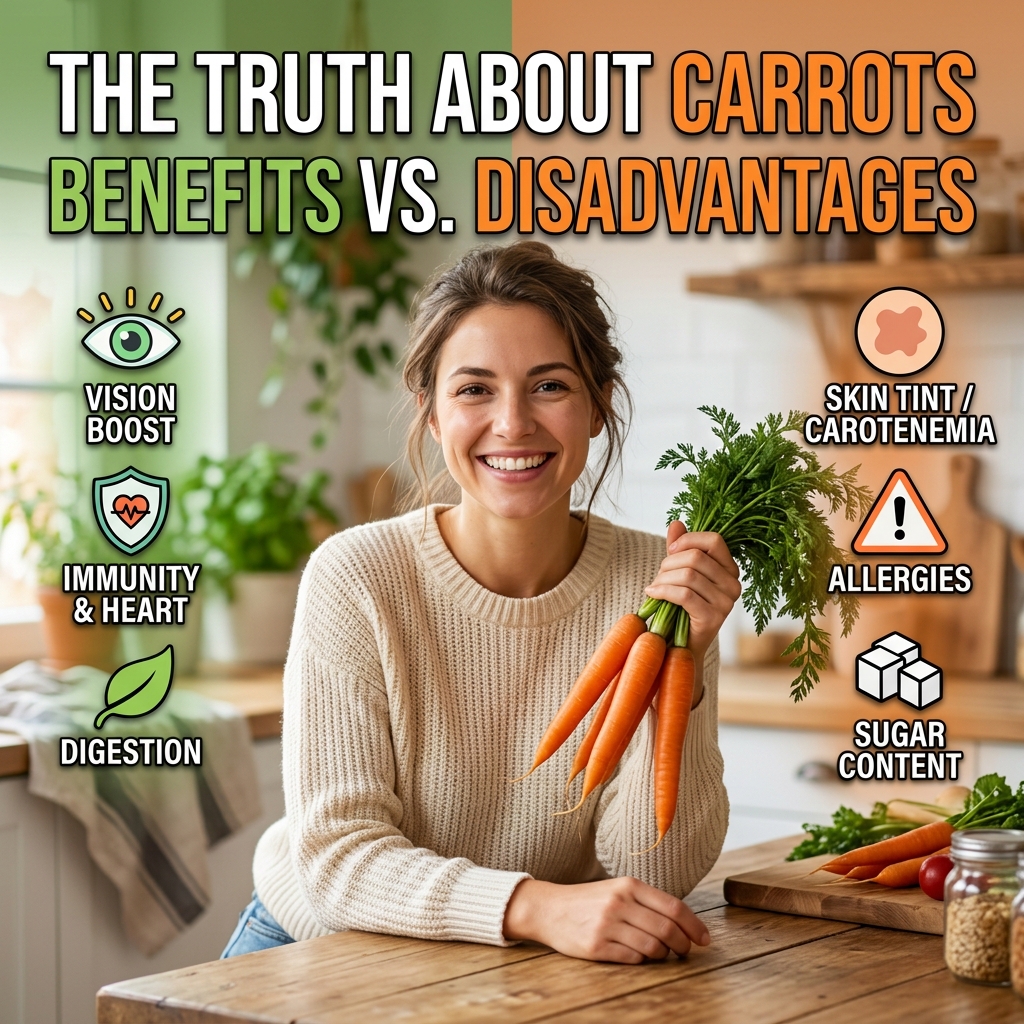
Carrots are arguably one of the most popular and versatile root vegetables in the world. Whether they are roasted, blended into a smoothie, tossed in a salad, or eaten raw as a quick snack, they are a staple in many households. We’ve all heard the childhood advice to “eat your carrots so you can see in the dark,” but how much of that is true?
While carrots are undeniably packed with essential nutrients, consuming them in excess can have some surprising side effects. Let’s dive deep into the health benefits and potential disadvantages of adding carrots to your daily diet.
🌟 The Health Benefits of Carrots
Carrots are a nutritional powerhouse, loaded with vitamins, minerals, and dietary fiber. Here are the top reasons to keep them on your plate:
1. Protects Your Vision
Yes, the old saying holds some truth! Carrots are exceptionally rich in beta-carotene, a compound that your body naturally converts into Vitamin A. Vitamin A is crucial for maintaining healthy eyesight and preventing conditions like night blindness and age-related macular degeneration.
2. Boosts Immune System
Vitamin A doesn’t just help your eyes; it also regulates the functioning of your immune system. Additionally, carrots contain Vitamin C, which stimulates the activity of white blood cells and helps your body defend against infections and illnesses.
3. Promotes Healthy Skin
The same beta-carotene that aids your vision also works wonders for your skin. It acts as an antioxidant, helping to repair skin tissues and protecting your skin from the sun’s harsh radiation. The Vitamin C content also aids in collagen production, keeping your skin firm and youthful.
4. Supports Digestive Health
Carrots are an excellent source of dietary fiber. Fiber adds bulk to your stool, which helps it pass smoothly through the digestive tract, preventing constipation and promoting a healthy gut microbiome.
5. Aids in Weight Management
If you are looking to shed a few pounds, carrots are a perfect snack. They are very low in calories but high in water and fiber, which helps keep you feeling full and satisfied for longer periods, reducing the urge to overeat.
⚠️ Potential Disadvantages and Side Effects
While carrots are incredibly healthy, they aren’t without a few minor drawbacks. Here is what you need to know about consuming them:
1. Carotenemia (Orange Skin)
This is perhaps the most famous side effect of eating too many carrots. If you consume massive amounts of beta-carotene over a long period, it can build up in your bloodstream and cause your skin to take on a yellowish-orange tint (a condition known as carotenemia). While it looks alarming, it is generally harmless and will fade once you reduce your carrot intake.
2. Pollen-Food Allergy Syndrome
Some people who are allergic to birch pollen or mugwort pollen may experience allergic reactions to raw carrots. This is due to a cross-reactivity where the proteins in the carrot are similar to the pollen. Symptoms usually include an itchy mouth, scratchy throat, or swollen lips. Cooking the carrots often destroys these proteins and prevents the reaction.
3. High Sugar Content (For a Vegetable)
Compared to other vegetables like leafy greens or broccoli, carrots contain a relatively high amount of natural sugars. While this isn’t a problem for the average person, individuals with diabetes or those on strict low-carb diets may need to monitor their portion sizes to avoid blood sugar spikes.
4. Choking Hazard for Young Children
Raw baby carrots or carrot sticks are hard and cylindrical, making them a common choking hazard for toddlers and small children. It is always recommended to cook carrots until they are soft or cut them lengthwise into thin matchsticks before serving them to infants.