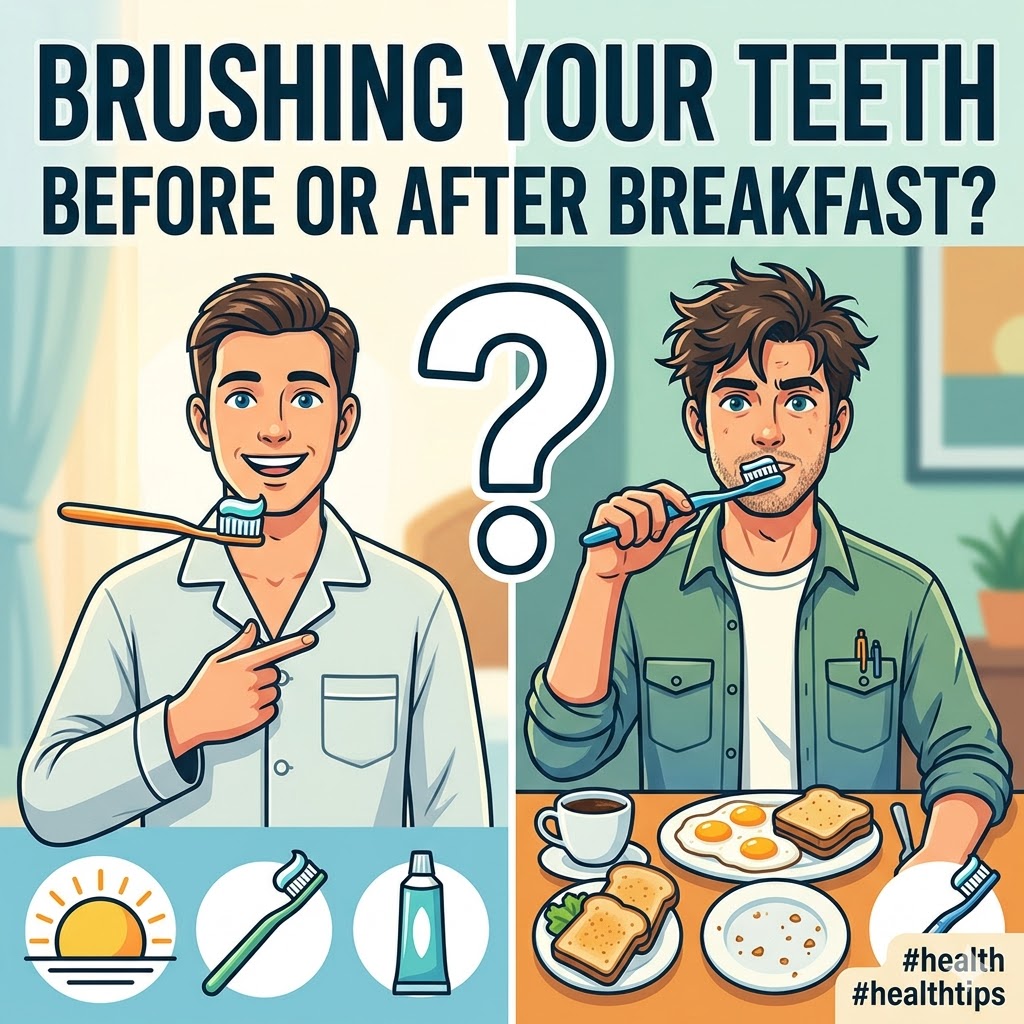
It is a question that has divided households, roommates, and families for generations: when you wake up in the morning, should you brush your teeth immediately, or should you wait until after you have eaten breakfast?
For many, brushing first thing in the morning is the only way to banish “morning breath” and feel ready to face the day. For others, the idea of drinking a glass of orange juice with a lingering minty taste is unappealing, and they prefer to clean their teeth to remove food particles right before heading out the door.
So, who is right? The answer is incredibly straightforward, but it comes with a twist: it all depends on exactly what you are eating for breakfast.
Here is the definitive guide to your morning dental routine, breaking down the science of your mouth and how your breakfast menu dictates when you should be reaching for that toothbrush.
What Happens in Your Mouth While You Sleep?
To understand the best time to brush, you first need to understand the environment of your mouth when you wake up.
While you are sleeping, your body’s saliva production significantly decreases. Saliva is your mouth’s natural defense mechanism; it washes away food particles and neutralizes acids produced by bacteria. Without that constant flow of saliva overnight, the naturally occurring bacteria in your mouth are left unchecked. They spend the entire night multiplying, feeding, and producing plaque.
This bacterial party is exactly what causes the phenomenon we all know as morning breath. When you wake up, your teeth are coated in a thin layer of this bacteria. If you immediately introduce food into this environment—especially sugars and carbohydrates—you are essentially feeding those bacteria a massive breakfast of their own, allowing them to produce even more acid that attacks your teeth.
The Acid Factor: When You Must Brush BEFORE Breakfast
The most crucial factor in the brushing debate comes down to acidity. Many of the most popular and beloved breakfast items are highly acidic. This includes:
-
Citrus Juices: Orange juice, grapefruit juice, and lemon water.
-
Caffeinated Drinks: Coffee and certain teas.
-
Fresh Produce: Berries, citrus fruits, and tomatoes.
-
Dairy: Yogurt.
When you consume these acidic foods and beverages, they immediately begin to interact with your teeth. The acid temporarily softens your tooth enamel—the hard, protective outer layer of your teeth. This softening effect can last for up to 30 minutes after you finish eating.
The Danger of Brushing After an Acidic Meal If you eat a bowl of yogurt with berries and drink a cup of coffee, your enamel is in a weakened, vulnerable state. If you go straight to the bathroom and vigorously brush your teeth, you are not just brushing away food particles. The abrasive action of the toothbrush bristles actually pushes the acid deeper into the microscopic pores of your teeth and scrubs away the temporarily softened enamel. Over time, this causes irreversible enamel erosion, leading to sensitivity, discoloration, and a higher risk of cavities.
The Optimal Routine for Acidic Eaters:
-
Brush first thing: Brush your teeth before you sit down to eat. This removes the overnight bacteria buildup and coats your teeth in a protective layer of fluoride, acting as a shield against the acidic food you are about to consume.
-
Eat your breakfast: Enjoy your coffee, juice, or fruit.
-
Rinse with water: After you finish eating, simply rinse your mouth out thoroughly with plain water. This washes away leftover food particles and helps neutralize the mouth’s pH without physically damaging the enamel.
The Safe Zone: When You Can Brush AFTER Breakfast
What if your breakfast looks a little different? If your morning meal consists entirely of non-acidic, neutral foods, the rules change completely.
Examples of non-acidic breakfast foods include:
-
Eggs (scrambled, fried, or boiled)
-
Plain toast or bread
-
Oatmeal
-
Cheese
-
Meats like bacon or sausage
Because these foods lack the high acid content of fruits or coffee, they do not cause that immediate, severe softening of your tooth enamel.
The Optimal Routine for Non-Acidic Eaters:
-
Eat your breakfast: Enjoy your eggs and toast.
-
Wait a few minutes: It is still best practice to let your mouth rest for 5 to 10 minutes to allow your natural saliva to begin breaking down the food.
-
Brush normally: Go ahead and brush your teeth. Because there was no acid introduced to soften the enamel, brushing will not cause damage. Instead, it effectively removes the food debris from your meal, leaving you with a clean mouth for the rest of the morning.
The Golden Rule of Morning Dental Care
While the science is clear on how different foods affect your teeth, mornings can be chaotic, and you might not always know exactly what you are going to eat when you first wake up. Furthermore, many breakfasts are a mix of both—you might have eggs and toast, but pair it with a cup of coffee.
Because most typical breakfast drinks and fruits lean heavily on the acidic side, it can be risky to guess.
When in doubt, brush before breakfast. Brushing your teeth the moment you wake up is the safest, most foolproof choice for your dental health. It guarantees that overnight bacteria are cleared away, ensures your enamel is protected with fluoride, and eliminates the risk of accidentally brushing away acid-softened enamel. By simply adding a quick water rinse after your meal, you can step out the door with a perfectly healthy, radiant smile.