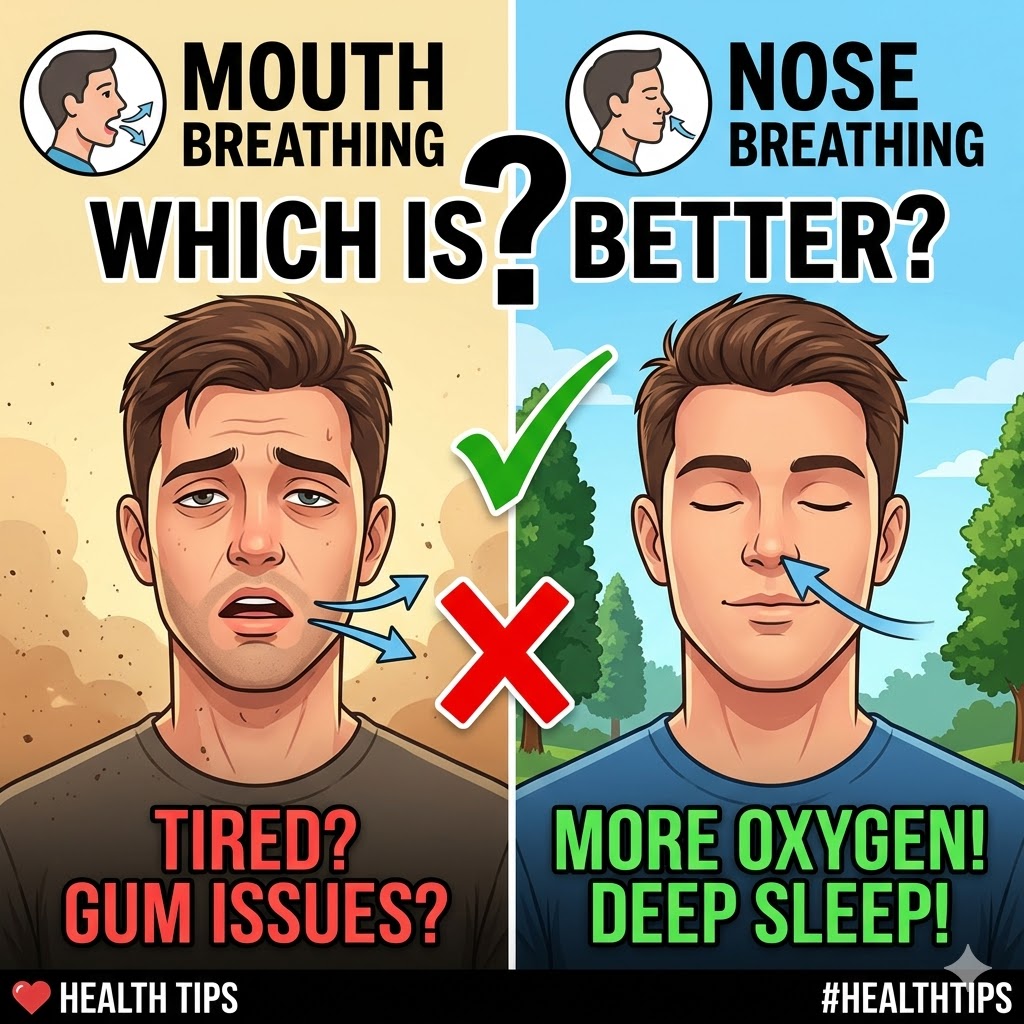
Are you breathing through your mouth right now? Take a second to check. It might seem like a harmless, unconscious habit, but how you take in air fundamentally impacts almost every system in your body. In the debate of mouth breathing versus nose breathing, science has declared a clear winner.
Breathing is the most natural thing we do, yet millions of people are doing it in a way that actively harms their vitality. Relying on your mouth for oxygen can negatively affect your sleep quality, cognitive function, dental health, and even the structural development of your face.
If you want to optimize your holistic wellness, it is time to look at the science of respiration. Here is a deep dive into why your nose is not just for decoration, and how switching to nasal breathing can transform your daily life.
The Hidden Dangers of Mouth Breathing
Our mouths are designed for eating, drinking, and speaking—not as a primary airway. When you bypass the nose, you miss out on a crucial filtration and conditioning process, leading to a cascade of negative health effects.
1. Oral Health Disasters
One of the most immediate impacts of mouth breathing is dry mouth. Saliva is your mouth’s natural defense mechanism; it washes away bacteria and helps maintain a balanced pH. When constant airflow dries out your oral cavity, bacteria thrive.
According to dental research, chronic mouth breathing can increase your risk of cavities and gum disease by a staggering 50%. If you struggle with chronic bad breath or frequent dental issues despite good hygiene, your breathing habits might be the hidden culprit.
2. Sleep Disruption and Chronic Fatigue
If you wake up feeling exhausted after a full eight hours of sleep, pay attention to your breathing. Studies show that mouth breathers are three times more likely to experience severe sleep disruptions and snoring.
Breathing through your mouth relaxes the tissues in the back of your throat, making them vibrate (snoring) or collapse entirely (sleep apnea). This leads to less oxygen reaching your brain and tissues overnight. The result? You wake up in a state of chronic inflammation, brain fog, and lingering fatigue that no amount of coffee can fix.
3. Facial Bone Development in Children
Perhaps the most alarming consequence of mouth breathing affects children. Chronic mouth breathing during childhood can actually alter facial bone development. Because the tongue rests improperly in the lower jaw rather than against the roof of the mouth, the upper jaw can become narrow. Over time, this can lead to a longer facial structure, crowded teeth, a receding chin, and a weakened jawline.
The Science of Nose Breathing: A Built-In Superpower
Your nasal passages are a highly sophisticated anatomical system designed specifically to process the air you breathe before it reaches your delicate lungs.
The Ultimate Air Filter
Your nose is lined with tiny, hair-like structures called cilia and a specialized mucous membrane. This system acts as a high-efficiency particulate air (HEPA) filter for your body. Research shows that your nasal passages filter out approximately 80% of airborne particles, including dust, allergens, and microbes. When you breathe through your mouth, you are letting unfiltered, unconditioned air shoot straight into your respiratory tract.
The Nitric Oxide Miracle
Here is the biggest game-changer: when you breathe through your nose, your paranasal sinuses produce a miraculous molecule called nitric oxide (NO).
Nitric oxide is a potent vasodilator. When it travels from your nose down into your lungs, it expands your blood vessels. This allows your blood to absorb 10% to 20% more oxygen with every single breath. Mouth breathing bypasses this production entirely, actively reducing the efficiency of your oxygen delivery system.
How to Make the Switch to Nasal Breathing
Transitioning to strict nasal breathing takes conscious effort, especially if you have been a mouth breather for years. Here are actionable steps to integrate this into your lifestyle:
-
Mindful Daytime Breathing: Set a recurring timer on your phone or use a visual cue (like checking the time) to check your posture and breathing. Keep your lips sealed, your teeth slightly apart, and your tongue resting gently against the roof of your mouth.
-
Exercise Conditioning: Start practicing nasal breathing during light cardiovascular workouts. It will feel difficult and restrictive at first because your body is adjusting to a different carbon dioxide tolerance. Over time, your endurance and recovery will dramatically improve.
-
Nighttime Mouth Taping: Many healthcare providers and sleep specialists now recommend sleep tape. Using a small piece of porous, skin-safe medical tape over your lips at night gently encourages your body to rely on nasal breathing while you sleep, preventing the jaw from dropping open.
-
Targeted Breathing Exercises: Incorporate breathwork practices, such as alternate nostril breathing or the 4-7-8 method, into your daily routine to strengthen your diaphragm and nasal pathways.
When to See a Professional
Sometimes, mouth breathing isn’t a habit—it’s a physical necessity. If you physically cannot draw enough air through your nose, you should consult an Ear, Nose, and Throat (ENT) specialist or your primary care doctor. Chronic nasal obstruction can be caused by unmanaged allergies, nasal polyps, or a deviated septum. Medical intervention can clear the pathway, allowing you to reap the profound benefits of nasal breathing.