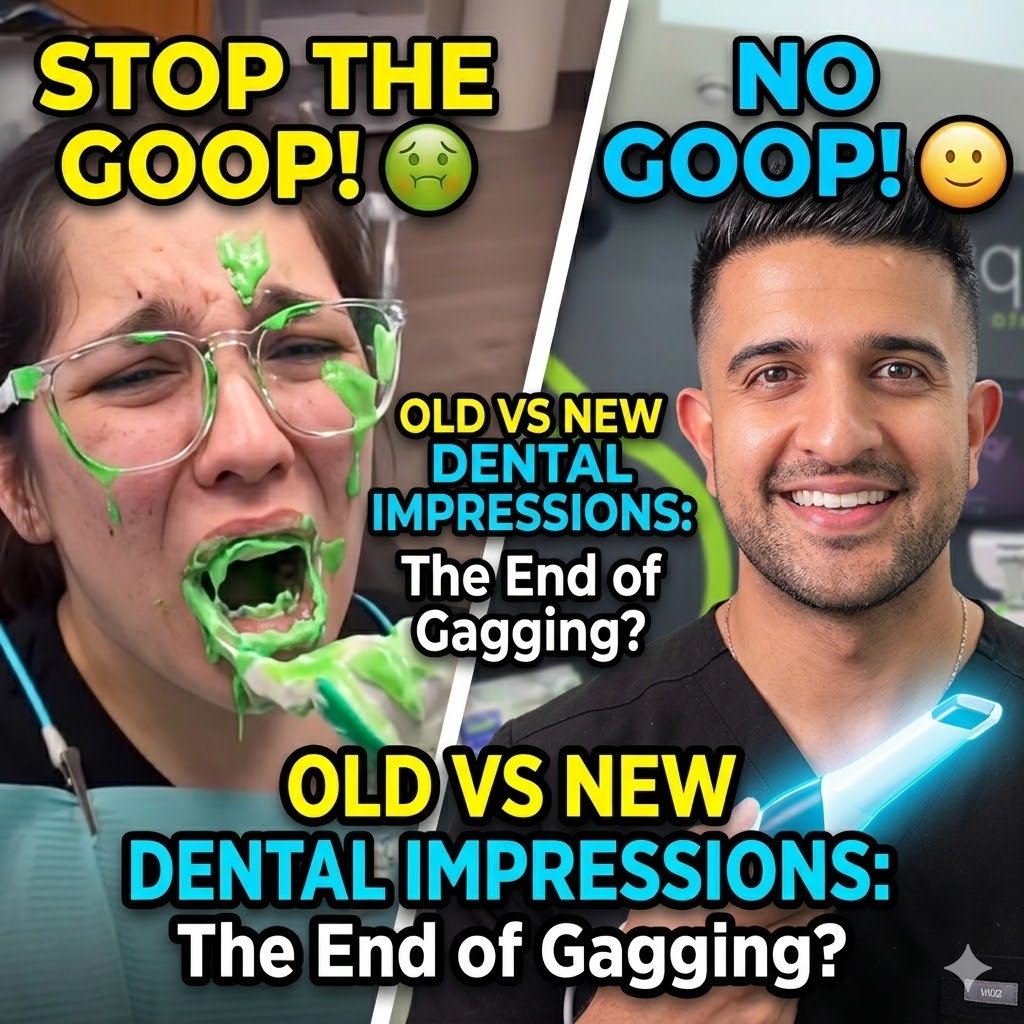
For decades, one of the most universally dreaded experiences at the dentist’s office hasn’t been the drill, the bright lights, or even the needles—it’s been the dreaded dental impression. If you have ever needed braces, a crown, a nightguard, or a retainer, you likely know exactly what this entails. You sit back in the chair while a dental professional approaches with a large, U-shaped plastic tray filled to the brim with cold, heavy, brightly colored goop.
As they press it into your mouth, the material squishes up against your gums, over your teeth, and inevitably inches its way toward the back of your throat. For anyone with a sensitive gag reflex, it is a truly uncomfortable few minutes. Fortunately, as technology continues to revolutionize healthcare, dentistry is experiencing a massive upgrade. The days of choking on dental slime are rapidly coming to an end, thanks to the advent of digital intraoral scanners.
Here is a closer look at why traditional impressions are becoming a thing of the past, and why digital dental impressions are the modern solution you should be looking for.
The Nightmare of Traditional Alginate Impressions
The traditional method of taking dental molds relies on a material called alginate. As highlighted by dental professionals, the process is far from glamorous.
The Messy Process Alginate begins as a fine powder. A dental assistant must quickly mix this powder with water in a rubber bowl, whipping it rapidly to create a thick, slime-like consistency. The timing must be perfect; if the water is too warm, it sets too fast. Once the paste is ready, it is loaded into an impression tray and forcefully shoved into the patient’s mouth.
The Waiting Game Once the tray is in place, the waiting game begins. The alginate takes about two to three minutes to fully set into a rubbery solid. While two minutes might sound quick in theory, it feels like an absolute eternity when you are breathing heavily through your nose, trying desperately not to swallow or gag while a heavy mass occupies your entire oral cavity.
The Worst-Case Scenario What happens if something goes wrong? Sometimes, a patient’s gag reflex simply cannot handle the intrusion, or the tray is pulled out just a few seconds too early before the alginate has completely cured. When this happens, the results are disastrous. The unset slime tears away from the tray, remaining glued to the patient’s teeth and lips.
Not only is this incredibly messy and deeply uncomfortable for the patient, but the impression is completely ruined. The dentist cannot use a flawed mold, meaning they have to clean out the patient’s mouth and start the entire grueling process all over again from scratch.
Enter the Intraoral Scanner: The Digital Revolution
Recognizing the widespread discomfort and inefficiency of traditional molds, the dental industry has embraced a high-tech alternative: the intraoral scanner. This device represents a total paradigm shift in how dentists map and measure a patient’s mouth.
Instead of mixing powders and relying on physical setting times, a dentist or hygienist uses a sleek, handheld wand. This wand is equipped with highly advanced optical technology that captures thousands of tiny, high-resolution pictures of the inside of your mouth per second.
As the wand glides smoothly over your teeth, a highly accurate, full-color 3D model of your teeth and gums is generated on a computer screen in real-time.
The Benefits of Digital Impressions
The shift from analog goop to digital scanning offers incredible benefits for both the patient and the dental professional:
-
Zero Discomfort or Gagging: Because there are no messy materials expanding in your mouth, the risk of triggering a gag reflex is virtually eliminated. You can breathe normally, swallow comfortably, and even pause the process if you need to take a break.
-
Speed and Efficiency: A full-mouth digital scan takes only a few minutes. If a particular area wasn’t captured perfectly on the first pass, the dentist can simply rescan that specific spot without having to start over.
-
Unmatched Precision: Physical alginate molds are subject to human error. They can shrink, distort, or develop air bubbles, leading to ill-fitting crowns or aligners. Digital scans are incredibly precise, resulting in dental appliances that fit perfectly on the first try.
-
Eco-Friendly and Fast Delivery: Digital files are instantly emailed to the dental laboratory. This eliminates the carbon footprint of physically mailing plaster molds and drastically speeds up the turnaround time for your final dental appliance.
Don’t Let Dental Anxiety Hold You Back
Dental anxiety is a very real issue that prevents millions of people from seeking the oral healthcare they need. For many, the fear of traditional impressions and the panic associated with a blocked airway or severe gagging is the primary reason they put off essential treatments like orthodontic work or restorative crowns.
If you have been delaying a trip to the dentist because you are terrified of having a mold taken, you no longer have to worry. The landscape has changed. When you are ready to book your next appointment or consultation, simply call the dental clinic ahead of time and ask one simple question: “Do you use an intraoral scanner for your impressions?”
By choosing a modern dental office equipped with digital technology, you can prioritize both your oral health and your personal comfort. Say goodbye to the goop, and step into the clean, fast, and comfortable future of digital dentistry.