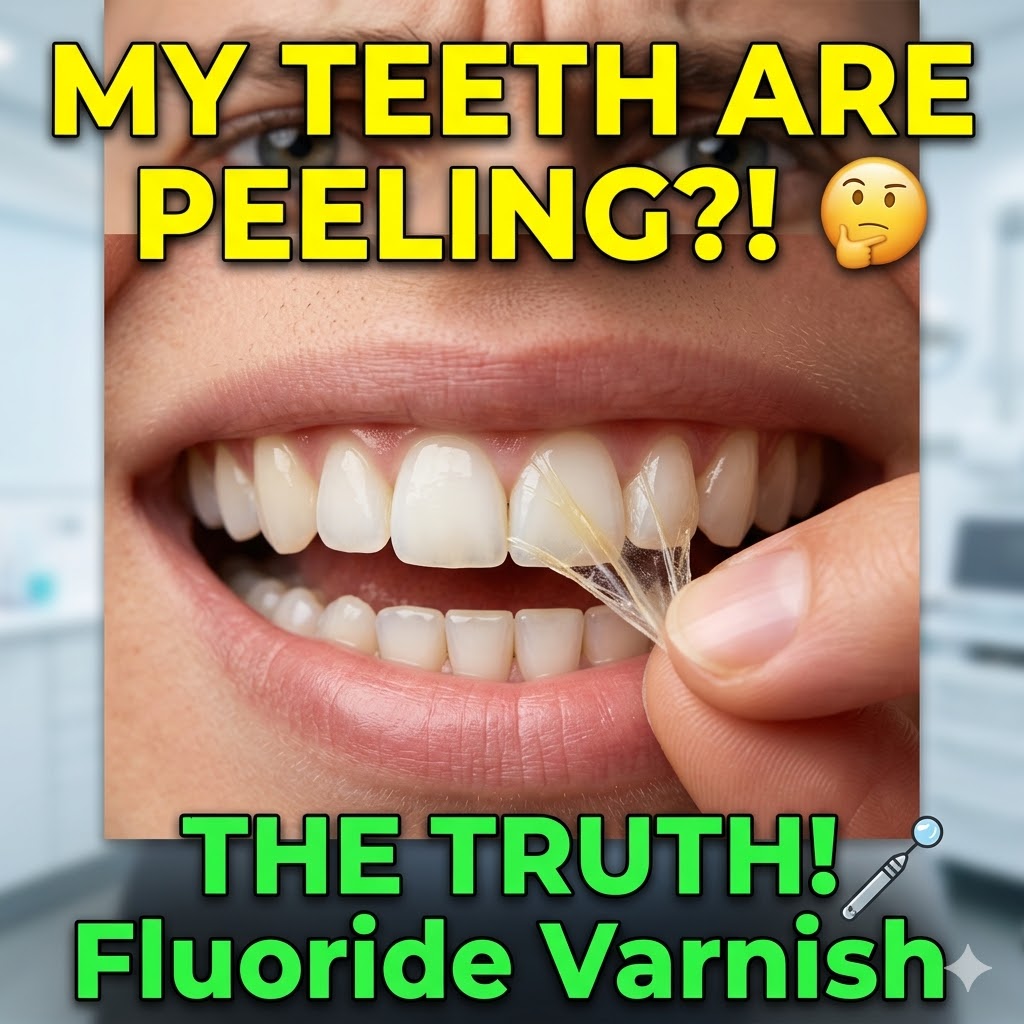
If you have ever left the dentist’s office only to look in the mirror a few hours later and discover a strange, film-like substance peeling off your teeth, your first instinct might be panic. Social media platforms are filled with viral videos of patients pulling stringy, white flakes from their smiles, terrified that their actual tooth enamel is shedding.
However, you can breathe a sigh of relief. Your enamel is not peeling away. That slightly sticky, peelable layer is actually one of the most powerful protective treatments your dentist can provide: fluoride varnish.
In this comprehensive guide, we will explore exactly what fluoride varnish is, why dentists use it, and the incredible benefits it offers for long-term oral health and disease prevention.
What is Fluoride Varnish?
Fluoride varnish is a highly concentrated form of topical fluoride applied directly to the surface of the teeth. Unlike the fluoride found in your daily toothpaste or municipal tap water, professional varnish is a localized, intensive treatment designed to deliver maximum protection.
The varnish itself is typically a pale yellow or clear resin-based gel. Using a small, soft brush, a dentist or dental hygienist paints this gel onto the front, back, and biting surfaces of the teeth. One of the unique properties of this varnish is that it sets almost instantly upon coming into contact with saliva.
Because it clings to the tooth surface, it continues to release fluoride into the enamel over several hours. Once the treatment has fully absorbed and done its job, the resin carrier begins to break down. This is the exact moment when you might notice that harmless, rubbery film peeling off your teeth.
The Great Myth: Can Tooth Enamel Peel?
To understand why the “peeling enamel” fear is a myth, it helps to understand human anatomy. Tooth enamel is the hardest substance in the human body—even harder than bone. It is composed of a highly mineralized crystalline structure.
Because of its rigid nature, enamel can chip, crack, or slowly erode over time due to acidic foods and poor oral hygiene, but it cannot peel off in soft, flexible strips. Anytime you can pull a stretchy or flaky substance from your teeth after a dental cleaning, you are simply removing the residual barrier of the fluoride treatment.
The Top Three Benefits of Fluoride Varnish
While it might feel a little strange for a few hours, leaving that varnish on your teeth provides three massive benefits for your oral health.
1. It Actively Kills Harmful Bacteria
Our mouths are naturally filled with bacteria. While some of these bacteria are beneficial, others feed on the sugars and carbohydrates we consume, producing harmful acids as a byproduct. These acids attack the teeth, leading to cavities and decay. Fluoride varnish possesses strong antimicrobial properties. It actively disrupts the harmful bacteria in your mouth, inhibiting their ability to process sugars and reducing the amount of destructive acid they can produce.
2. It Hardens and Fortifies the Tooth’s Outer Layer
Every day, your teeth go through a natural cycle of demineralization (losing minerals due to acid attacks) and remineralization (gaining minerals back from saliva, water, and food). When demineralization outpaces remineralization, cavities form. Fluoride varnish supercharges the remineralization process. It binds with the calcium and phosphate naturally present in your saliva to create a compound called fluorapatite. This newly formed layer is significantly harder and much more resistant to acid attacks than your natural enamel, acting as an invisible shield for your teeth.
3. It Can Reverse Early Signs of Tooth Decay
One of the most remarkable properties of fluoride varnish is its ability to heal. Before a cavity turns into a physical hole in the tooth, it starts as a microscopic weak spot, often visible to a dentist as a chalky white lesion on the enamel. If caught early enough, these white spot lesions do not require a drill or a filling. The concentrated application of fluoride varnish can actually arrest the decay process and remineralize the weakened area, effectively healing the tooth from the outside in.
Who Needs Fluoride Varnish?
Fluoride varnish is universally recognized as a cornerstone of pediatric dentistry. Because children are still mastering their brushing techniques and often consume diets high in cavity-causing carbohydrates, regular fluoride applications provide a necessary safety net. In many regions, health guidelines recommend that children receive a fluoride varnish application at least twice a year.
However, the benefits are not strictly for kids. Adults can greatly benefit from varnish applications, especially those who:
-
Have a history of frequent cavities.
-
Suffer from dry mouth (xerostomia), which reduces the protective benefits of natural saliva.
-
Wear orthodontic braces, which can trap food and plaque.
-
Have receding gums, exposing the softer root surfaces of the teeth.
Post-Treatment Care: Making the Most of Your Varnish
To ensure the varnish is as effective as possible, dentists typically recommend a few simple post-treatment guidelines. After the varnish is applied, you should wait at least 30 to 60 minutes before eating or drinking. For the remainder of the day, it is best to stick to soft foods and avoid hot beverages, sticky candies, or alcohol-based mouthwashes, as these can prematurely strip the varnish away. You should also wait until the next morning to resume your normal brushing and flossing routine.
The Final Word on Dental Health
Maintaining a healthy lifestyle involves taking care of your body from head to toe, and your smile is a crucial part of that equation. Combining professional preventative care—like fluoride varnish applications—with a balanced diet and excellent daily oral hygiene is the best way to ensure your teeth last a lifetime. So, the next time you leave the dentist and feel a little peeling, don’t panic. That is simply the feeling of strong, healthy, and heavily protected teeth.