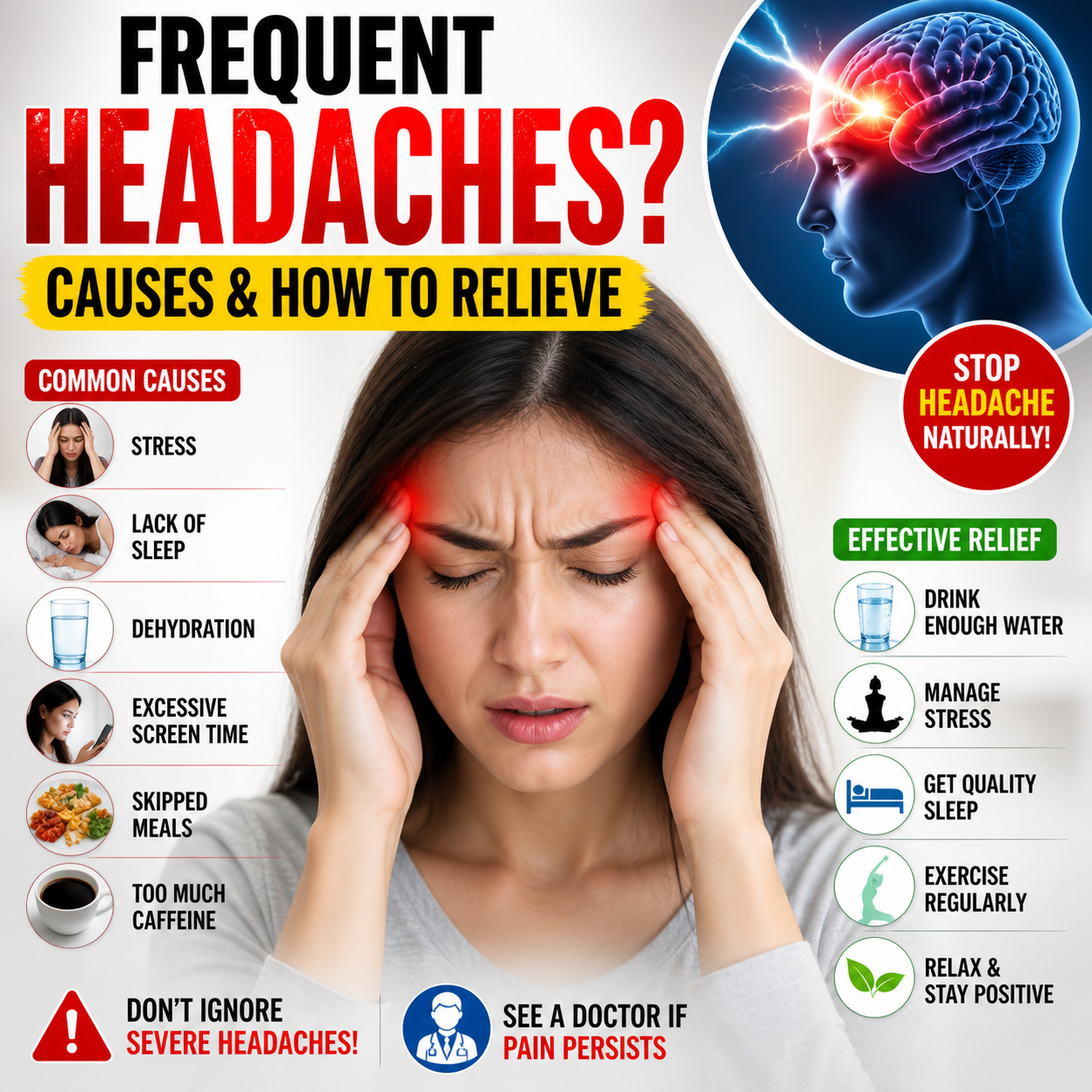
Headaches are one of the most common health problems people experience in daily life. Some individuals may have mild headaches, while others suffer from frequent or severe headaches that can affect work, productivity, and overall quality of life. Understanding the causes and solutions is essential for effective prevention and relief.
🔍 Causes of Frequent Headaches
1. Stress
Stress is one of the leading causes of headaches. When you are under pressure or anxiety, the muscles around your head and neck can tighten, leading to tension headaches.
2. Lack of Sleep
Not getting enough sleep or having irregular sleep patterns can negatively affect brain function and trigger headaches.
3. Dehydration
Not drinking enough water can cause dehydration, which often leads to headaches and general discomfort.
4. Excessive Screen Time
Spending too much time on phones, computers, or other digital devices can strain your eyes and brain, resulting in headaches.
5. Irregular Eating Habits
Skipping meals or eating unhealthy foods can lower blood sugar levels and trigger headaches.
6. Migraine
Migraines are intense headaches that may include symptoms such as throbbing pain (often on one side of the head), nausea, and sensitivity to light or sound.
7. Blood Pressure Issues
Both high and low blood pressure can contribute to frequent headaches.
8. Caffeine Consumption
Drinking too much caffeine—or suddenly stopping it—can cause headaches.
9. Environmental Factors
Loud noise, bright lights, heat, or poor air quality can trigger headaches.
10. Other Medical Conditions
Conditions such as Sinusitis or infections may also lead to headaches.
💊 How to Relieve Headaches
1. Get Enough Rest
Aim for at least 7–8 hours of sleep per night to allow your brain to recover.
2. Stay Hydrated
Drink at least 8 glasses of water daily to prevent dehydration.
3. Manage Stress
Practice relaxation techniques such as meditation, deep breathing, or light exercise.
4. Reduce Screen Time
Follow the 20-20-20 rule: every 20 minutes, look at something 20 feet away for 20 seconds.
5. Eat Balanced Meals
Maintain regular eating habits and include nutritious foods in your diet.
6. Use Pain Relievers
Medications like Paracetamol or Ibuprofen can help relieve headache pain (use as directed by a healthcare professional).
7. Massage and Relaxation
Gently massaging your head, neck, and shoulders can reduce muscle tension.
8. Avoid Triggers
Identify and avoid triggers such as excessive caffeine, loud noise, or bright lights.
9. Exercise Regularly
Physical activity improves blood circulation and reduces stress.
10. Consult a Doctor
If headaches are severe, frequent, or unusual, seek medical advice.
⚠️ When Should You See a Doctor?
You should seek medical attention if you experience:
- Sudden, severe headache
- Headache with weakness or confusion
- Persistent or worsening headaches
- Changes in vision
✅ Conclusion
Frequent headaches can result from various causes, ranging from stress and lifestyle habits to underlying medical conditions. Maintaining a healthy routine, getting enough rest, and paying attention to your body can significantly reduce headaches. If symptoms become severe or unusual, do not ignore them—consult a healthcare professional promptly.