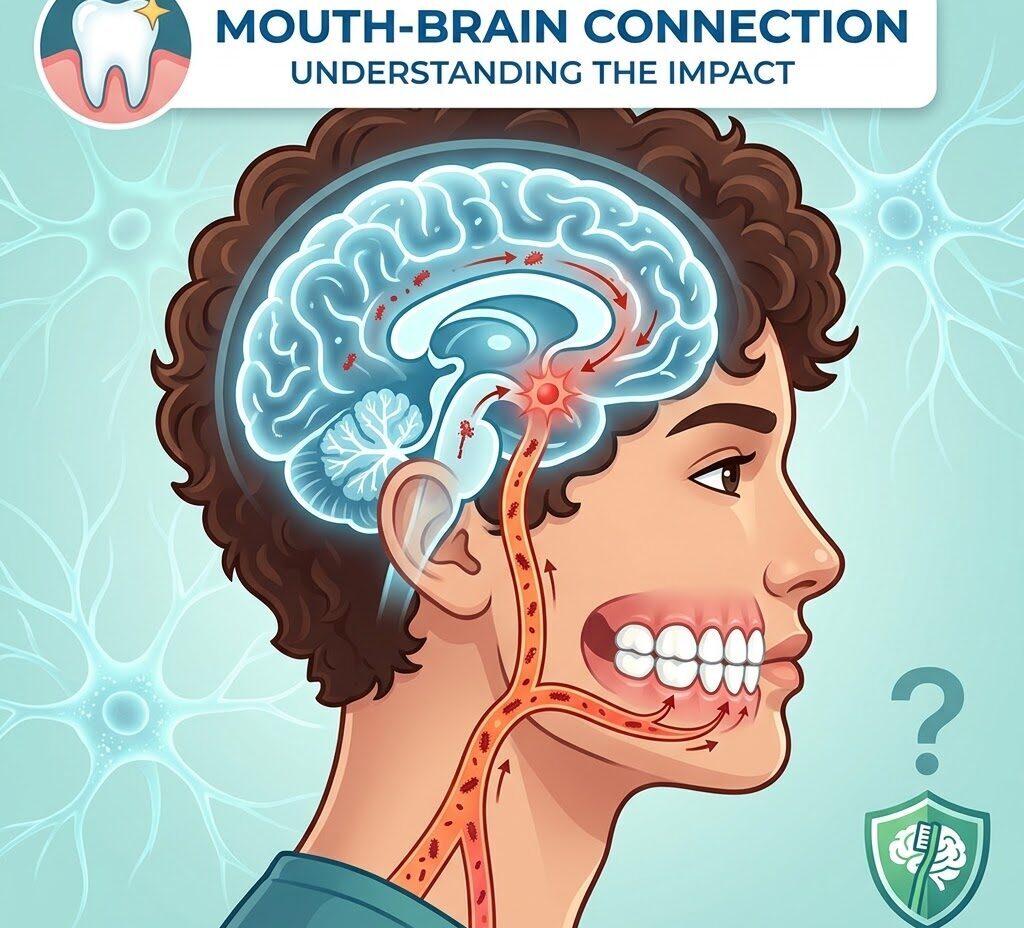
Most of us brush and floss every day to prevent cavities, keep our breath fresh, and maintain a bright smile. But did you know that your daily dental hygiene routine might also be protecting your brain?
Recent scientific research has uncovered a fascinating—and somewhat surprising—connection between the health of our mouths and the health of our brains. As it turns out, taking care of your teeth and gums is about much more than just dentistry; it is a crucial step in maintaining long-term cognitive function and overall well-being.
Here is a closer look at how your oral health directly impacts your brain, and what you can do to protect both.
1. The Mouth-Brain Connection: It Starts with Bacteria
Our mouths are home to billions of bacteria. While many of these are harmless or even beneficial, poor oral hygiene allows harmful bacteria to multiply and form plaque. Over time, this buildup leads to gum disease (periodontitis).
When gums become inflamed and bleed, it creates a direct gateway for these harmful bacteria to enter the bloodstream. Scientists have discovered that certain oral bacteria—specifically Porphyromonas gingivalis, a major cause of gum disease—can travel through the bloodstream and cross the blood-brain barrier.
2. The Link to Alzheimer’s and Cognitive Decline
The presence of gum disease bacteria in the brain is not harmless. Once there, these bacteria release toxins that damage brain tissue.
In several groundbreaking studies, researchers have found high levels of these specific oral bacteria in the brains of people with Alzheimer’s disease. While gum disease is not the sole cause of Alzheimer’s, evidence strongly suggests that chronic gum infections can accelerate cognitive decline and increase the risk of developing dementia as we age.
3. The Danger of Chronic Inflammation
Bacteria aren’t the only culprits; inflammation plays a massive role. Gum disease is a chronic inflammatory condition. When your body is constantly fighting an infection in your mouth, it keeps your immune system on high alert, causing systemic (body-wide) inflammation.
Chronic inflammation is a known risk factor for a variety of serious health issues, including heart disease, stroke, and neurodegeneration. Over time, this widespread inflammation can cause damage to brain cells and neural pathways, leading to memory loss and reduced cognitive speed.
How to Protect Your Mouth and Your Mind
The good news is that preventing gum disease is highly manageable. By taking proactive steps to maintain excellent oral hygiene, you can significantly reduce your risk of bacteria and inflammation affecting your brain.
Here are a few simple yet powerful habits to incorporate into your daily routine:
-
Brush Twice a Day: Use fluoride toothpaste and a soft-bristled brush. Take your time—brushing should last for a full two minutes to effectively remove plaque.
-
Floss Daily: Brushing alone cannot reach the tight spaces between your teeth. Flossing removes trapped food particles and plaque where gum disease often begins.
-
Visit Your Dentist Regularly: Professional cleanings every six months are essential. A dental hygienist can remove hardened plaque (tartar) that your toothbrush cannot, and your dentist can spot early signs of gum disease before it becomes severe.
-
Eat a Brain- and Tooth-Healthy Diet: Limit sugary foods and drinks, which feed harmful bacteria. Instead, focus on a diet rich in leafy greens, nuts, lean proteins, and plenty of water.
-
Don’t Ignore the Warning Signs: Red, swollen, or bleeding gums are not normal. If your gums bleed when you brush or floss, schedule an appointment with your dentist promptly.