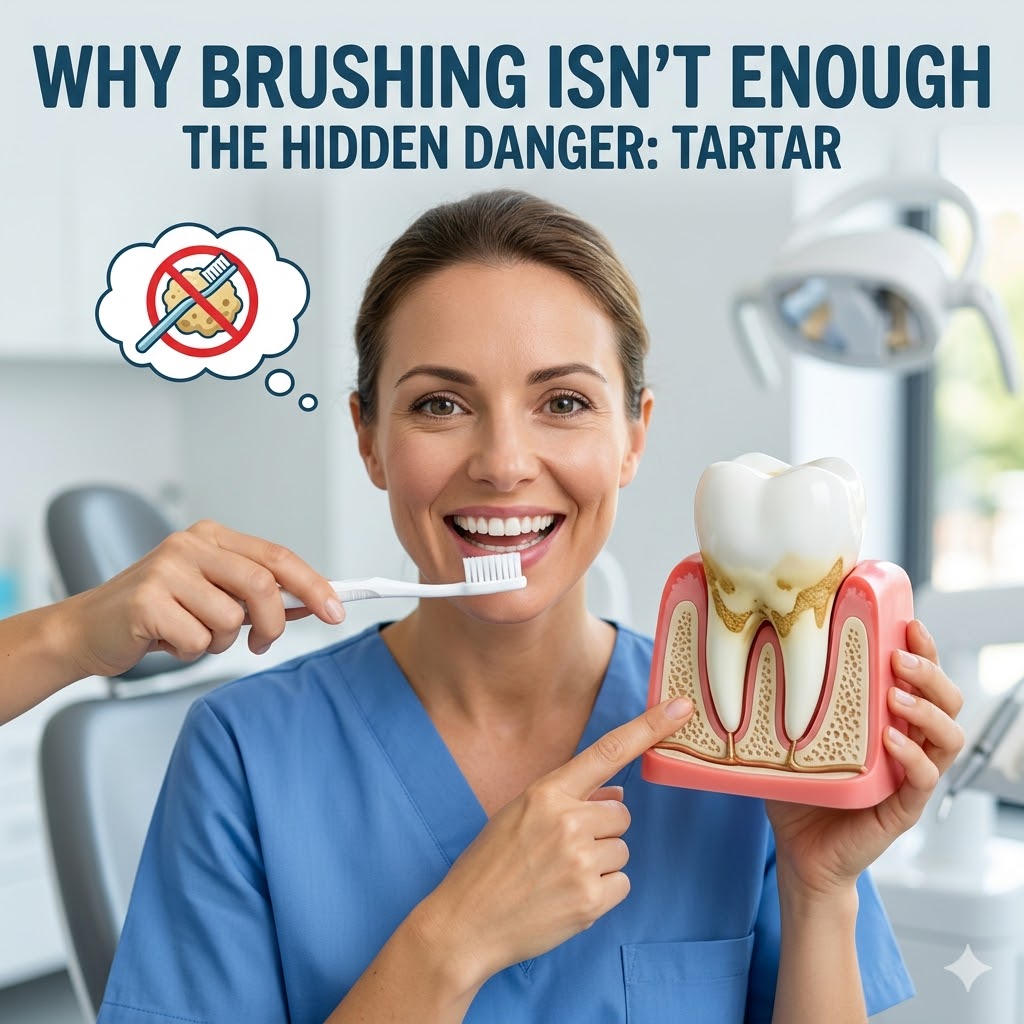
We have all heard the golden rule of dental hygiene since childhood: brush your teeth twice a day for two minutes. While a high-quality toothbrush and fluoride toothpaste are the absolute foundation of a healthy mouth, they are only part of the equation. Many people brush diligently every morning and night, yet still find themselves sitting in the dentist’s chair facing cavities, bleeding gums, or advanced dental procedures.
The culprit? The tiny, easily overlooked spaces between our teeth. If you have ever seen a video of a dentist removing large, stone-like chunks from someone’s gum line, you have witnessed firsthand the consequences of neglecting these hidden areas. Let’s dive into the science of your smile to understand why cleaning between your teeth is not just a suggestion, but a critical requirement for your oral health and overall well-being.
The Anatomy of a “Nook and Cranny”
Teeth are not perfectly flat, smooth surfaces. They have intricate contours, subtle curves, and tight contacts where they press against their neighbors. These “nooks and crannies,” as dental professionals often call them, are the perfect microscopic hiding spots for food particles and bacteria.
A standard toothbrush, regardless of how advanced its bristles are or how vigorous your brushing technique might be, simply cannot reach effectively into these tight interdental spaces. When you rely on brushing alone, you are essentially cleaning only about 60% of the surface area of your teeth. The remaining 40%—the sides of your teeth—are left vulnerable to a silent, sticky, and destructive enemy.
The Onset of Plaque: The Silent Invader
Every time you eat or drink, especially items containing carbohydrates and sugars, the naturally occurring bacteria in your mouth go to work. They feed on these lingering food particles and produce acidic byproducts. This combination of bacteria, food debris, acid, and saliva forms a sticky, colorless, biofilm known as plaque.
Plaque begins forming constantly, coating your teeth shortly after you finish a meal. While your toothbrush successfully sweeps plaque away from the front, back, and biting surfaces of your teeth, the plaque trapped in the tight spaces between your teeth continues to thrive if it is not manually disturbed by interdental cleaning.
When Plaque Hardens: The Threat of Calculus (Tartar)
This is where the situation escalates from a daily nuisance to a medical issue. Plaque, in its early stages, is soft and easily removed with a toothbrush or a piece of dental floss. However, if plaque is left undisturbed in those hard-to-reach places for just 24 to 72 hours, a rapid transformation occurs.
The soft biofilm begins to mineralize, absorbing calcium and other minerals from your saliva, and hardens into a tough, stone-like substance called calculus, commonly known as tartar. Unlike plaque, tartar is incredibly stubborn. It bonds powerfully to the tooth enamel, often forming thick wedges along and even below the gum line.
Once tartar has formed, it is game over for your at-home dental routine; your toothbrush and floss are completely ineffective against it. Furthermore, tartar is porous, meaning it provides a highly textured surface that is perfect for more sticky plaque to adhere to, creating a vicious, accelerating cycle of buildup. Visually, tartar can appear yellow, brown, or even black, but the real danger lies in how it physically and chemically irritates the surrounding delicate gum tissue.
The Ripple Effects on Your Oral Health
The presence of tartar and the constant, localized accumulation of plaque between teeth lead to a cascade of painful and expensive dental problems:
-
Gingivitis: This is the earliest stage of gum disease, characterized by red, swollen, and bleeding gums. If you notice blood when you brush or floss, it is often a distress signal from your gums fighting off a localized bacterial infection.
-
Periodontitis: If gingivitis is ignored, it can advance to periodontitis. This is a severe, chronic infection that damages the soft tissue and actively destroys the bone that supports your teeth in your jaw. It is the leading cause of tooth loss in adults.
-
Interproximal Cavities: The acids produced by trapped bacteria eat away at tooth enamel, leading to cavities that form directly between the teeth. These are notoriously difficult to detect with the naked eye until they become deep and painful.
-
Halitosis: The thriving bacterial colonies trapped in these hidden spaces are a primary cause of chronic bad breath.
Professional Intervention: The Ultrasonic Scaler
When tartar takes hold, you must seek professional help. Dental hygienists and dentists use specialized tools to safely remove this hardened buildup. One of the most effective instruments for this job is the ultrasonic scaler.
This advanced tool utilizes high-frequency vibrations—often ranging from 20,000 to 45,000 times per second—combined with a targeted stream of water. The rapid micro-vibrations safely shatter the hard calculus deposits into tiny fragments without damaging the enamel. Simultaneously, the water stream acts to flush away the debris, cool the tip of the instrument, and create microscopic bubbles that implode to help eradicate bacteria. It is a precise and highly effective way to descale the teeth and give the gums a clean slate to heal.
Taking Control: Your Daily Action Plan
Preventing tartar buildup and its associated complications requires a committed daily routine that goes far beyond the brush. Interdental cleaning is essential. Dental floss is the classic, highly effective method for mechanically scraping plaque from the sides of teeth.
For those who find traditional string floss difficult to maneuver, modern alternatives like water flossers (which use a pulsating stream of water to blast away debris) or interdental brushes (tiny, cylindrical brushes designed to slide between teeth) are excellent options.
The best tool is simply the one you will use consistently. Aim to clean between your teeth at least once a day, preferably before brushing, so the fluoride from your toothpaste can reach those freshly cleaned, vulnerable surfaces. By understanding the rapid progression from soft plaque to hardened tartar, you can take a proactive approach, protecting your smile from the inside out.