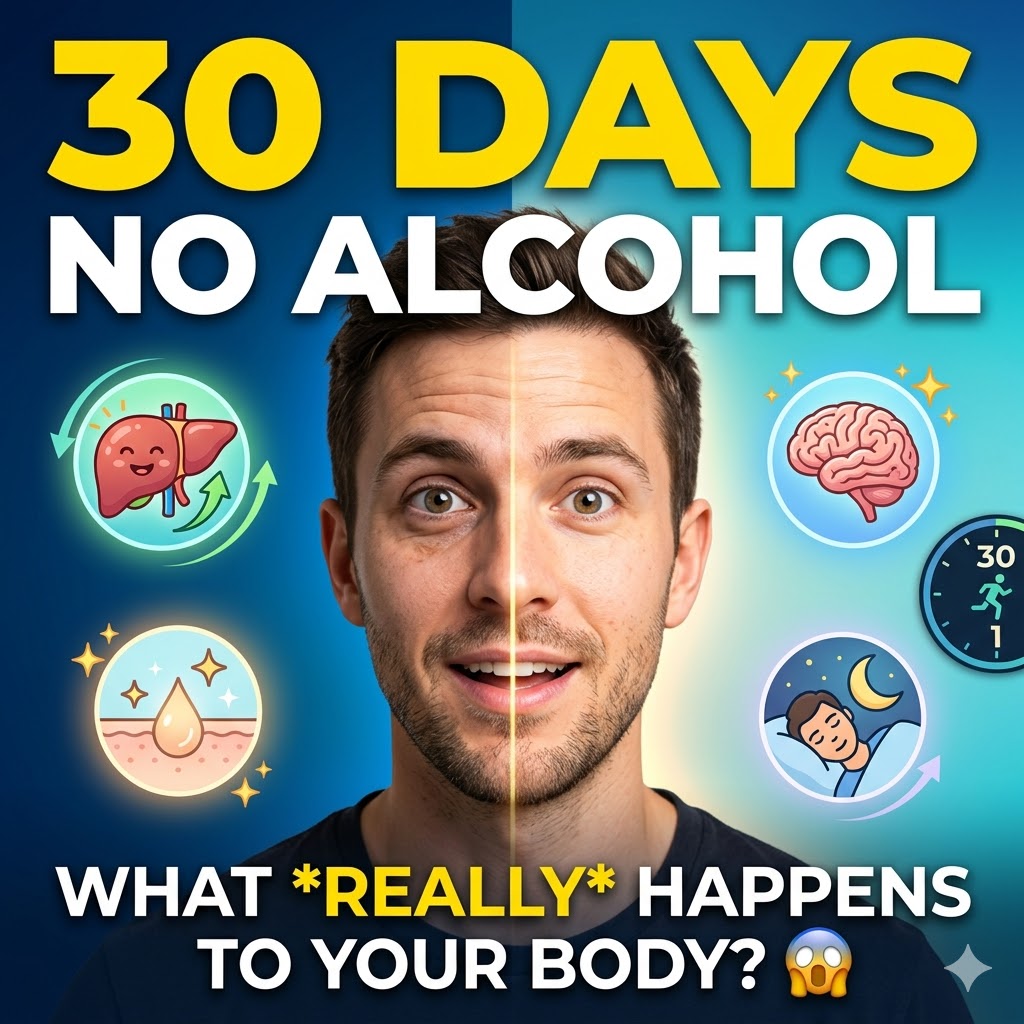
In today’s fast-paced world, pouring a glass of wine after work or cracking open a cold beer on the weekend is often seen as the ultimate way to unwind. It is deeply woven into our social fabric, our celebrations, and our daily coping mechanisms. But have you ever stopped to wonder what this ubiquitous habit is actually doing to your biological systems beneath the surface? More importantly, what would happen if you simply hit the pause button?
Committing to a 30-day alcohol-free journey isn’t just a trendy internet challenge; it is a profound, scientifically backed reset for your entire body. When you eliminate alcohol, you aren’t just giving up a beverage—you are unlocking a profound state of natural healing. Let’s dive deep into the remarkable biological timeline of what really happens to your body when you quit alcohol for just one month.
The Toxin Toll: Shifting from Defense to Healing
To fully grasp the benefits of quitting, we first have to acknowledge the reality of what alcohol is to our internal systems: a toxin. When consumed, your body treats it as a primary threat, prioritizing its rapid elimination above almost all other metabolic processes. Every system in your body—from your digestive tract to your neurological pathways—takes a hit.
However, the human body is incredibly resilient. The most astounding piece of good news is that the moment you stop introducing this toxin, your body’s innate healing mechanisms activate almost immediately. The focus rapidly shifts from desperate detoxification to organic restoration and regeneration.
The Liver’s Remarkable Comeback
The liver is the unsung hero of our anatomy, bearing the absolute brunt of our drinking habits as the body’s premier filtration system. When you quit drinking, the liver’s response is nothing short of miraculous.
-
Week One: Within just seven days of your last drink, the organ begins a rapid phase of regeneration. The dangerous fat deposits that accumulate from processing alcohol begin to break down. Systemic inflammation drops sharply, and damaged cells initiate a robust rebuilding process.
-
Day Thirty: As you cross the one-month mark, the compounding effects of this cellular repair become truly significant. Studies and medical observations suggest that after 30 days of abstinence, liver function can improve by up to 15%.
This means your body becomes drastically more efficient at filtering out natural waste, metabolizing nutrients, and maintaining overall vitality.
Reclaiming True Rest: The Sleep Revolution
Many people mistakenly use alcohol as a sleep aid, believing that a quick “nightcap” helps them drift off. While alcohol might act as a sedative that initially knocks you out, it absolutely wrecks the architecture of your sleep over the course of the night. Specifically, alcohol destroys REM (Rapid Eye Movement) sleep—the deep, restorative phase your brain and body require to repair tissues, consolidate memories, and regulate mood.
When you quit for 30 days, your sleep quality undergoes a complete transformation. Without chemical interference, your brain can properly cycle through all necessary sleep stages. You will begin to experience the deep, uninterrupted restorative phases your mind has been craving. The result? You finally wake up actually feeling refreshed, energized, and ready to tackle the day.
Igniting the Metabolic Fire: Natural Weight Loss
One of the most universally celebrated side effects of a 30-day alcohol reset is the impact on the waistline. Alcohol is incredibly calorie-dense, offering strictly “empty calories” with zero nutritional value. But the issue goes much deeper than just calorie counting.
When alcohol is present in your system, it actively suppresses your body’s ability to burn fat—slowing fat oxidation by a staggering 73%. Your body is simply too busy burning off the alcohol to process stored fat.
When you remove alcohol from the equation, your metabolism fires back up to its natural, optimal state. Without changing anything else about your diet or exercise routine, your body seamlessly shifts back into fat-burning mode. It is incredibly common for people to effortlessly drop 5 to 10 pounds within the first month of quitting simply because their metabolic pathways are no longer suppressed.
The “Sober Glow”: Reversing the Clock on Your Skin
The visible changes of quitting alcohol are often just as dramatic as the internal ones. Alcohol is a powerful diuretic, leading to severe cellular dehydration, while simultaneously triggering widespread inflammation. This combination is a disaster for your skin, leading to premature aging, puffiness, and a dull complexion.
Within just two weeks of quitting, the visual transformation becomes undeniable:
-
As hydration levels normalize and systemic inflammation subsides, telltale facial puffiness disappears.
-
Dark circles under the eyes begin to fade away.
-
Skin elasticity improves, replaced by a clearer, brighter complexion.
Many in the wellness space refer to this as the “sober glow”—a radiant, youthful appearance that makes you look visibly years younger.
The Verdict
Taking a 30-day break from alcohol is one of the most powerful, transformative gifts you can give your physical and mental health. It is an open invitation to experience your body operating at its absolute peak performance. From a revitalized liver and a turbocharged metabolism to deeply restorative sleep and glowing skin, the benefits are comprehensive. If you are looking to embrace a true, natural vibe and reset your baseline health, stepping away from the glass is the ultimate first step.