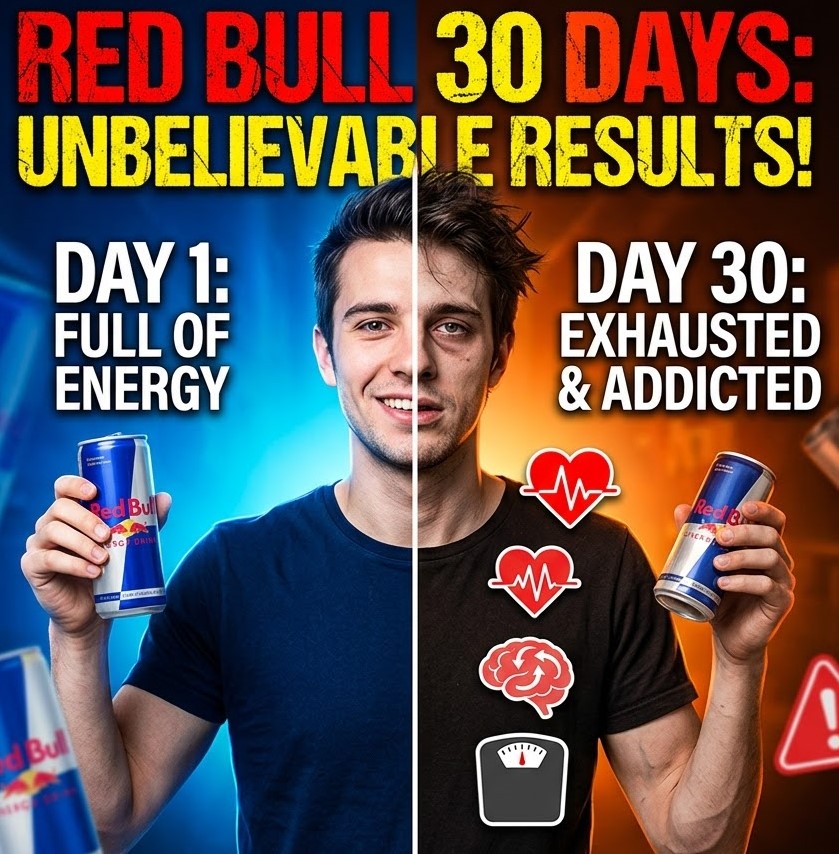
In today’s fast-paced, always-on world, finding the energy to power through a demanding schedule can feel like an endless uphill battle. For many, the quick fix comes in the form of a sleek, silver and blue can. Red Bull and similar energy drinks have become a daily staple for millions of people seeking an instant boost in focus and vitality. But what exactly is the true biological cost of this liquid energy?
If you were to commit to drinking just one can of Red Bull every single day for an entire month, the changes taking place beneath your skin would be nothing short of dramatic. From cardiovascular strain to neurological rewiring, let’s break down the science of what a 30-day energy drink habit really does to your body.
The Immediate Impact: The First 10 Minutes
You don’t have to wait a month, or even a day, to see how an energy drink affects your system. The physical reaction begins almost the moment the liquid hits your stomach. Within just 10 minutes of consuming a single can, the combination of high caffeine and stimulant additives rapidly enters your bloodstream.
Your cardiovascular system is the first to respond. Your heart rate noticeably increases, and your blood pressure spikes by an average of 3 to 4 millimeters of mercury. While a healthy individual might not immediately feel this acute cardiovascular shift, placing this kind of stress on your heart daily forces your cardiovascular system to work in a constant state of mild overdrive. Over the course of 30 days, this daily cardiovascular stress compounds, becoming exceptionally dangerous for anyone with underlying heart issues or pre-existing hypertension.
Day 1: The Infamous Sugar Roller Coaster
By the time you finish your first can on Day 1, you have boarded a metabolic roller coaster. The primary fuel source in a standard Red Bull isn’t just caffeine; it’s a massive dose of simple sugars.
-
The Peak: At the 30-minute mark, your blood sugar levels hit their absolute peak. This is the “high” you feel—a sudden rush of alertness, hyper-focus, and physical energy.
-
The Crash: However, what goes up must come down. Within an hour, your body releases a surge of insulin to combat the massive sugar influx, leading to a precipitous blood sugar crash.
This crash leaves you feeling more exhausted, lethargic, and brain-fogged than you were before you opened the can. This physiological plummet creates a dangerous behavioral cycle: your brain immediately signals that you need another can just to return to a baseline feeling of “normal.”
Week 2: The Onset of Tolerance and Brain Rewiring
If you push through the crashes and continue drinking one can a day, by the second week, you will hit a new physiological hurdle: tolerance.
The human brain is incredibly adaptable. When bombarded with daily doses of high caffeine, your brain’s neurochemistry actively begins rewiring itself. It alters its receptor sites to adapt to the constant presence of stimulants. As a result, the single can of Red Bull that gave you a massive jolt of energy on Day 1 will suddenly feel ineffective by Day 14. Your body has adapted to the stimulant load, meaning you now require a higher volume of the drink just to achieve the exact same energizing effect.
Week 3 and Beyond: Full Dependency
By week three of this 30-day cycle, you are no longer drinking the energy drink for a boost—you are drinking it to survive the day. You have entered the phase of full caffeine dependency.
At this stage, what started as a voluntary choice for a quick pick-me-up has transformed into a baseline physiological requirement. Your body has adjusted its natural energy production downward, relying entirely on the artificial stimulant to function. A single can barely registers as an energy boost; instead, it merely staves off the debilitating symptoms of withdrawal.
The Hidden Costs: Sugar, Calories, and Chronic Disease
While the caffeine dependency is alarming, the sheer volume of sugar and empty calories consumed over a 30-day period is staggering. If you drink a standard can every day for a month, you will have ingested:
-
810 Grams of Sugar: This massive influx of simple carbohydrates far exceeds recommended daily allowances, putting intense pressure on your liver and pancreas.
-
3,000 Empty Calories: These liquid calories offer absolutely no nutritional value, contributing to unwanted weight gain and metabolic disruption.
The compounding effect of this 30-day dietary assault drastically increases your risk of developing insulin resistance, which is the primary stepping stone toward type 2 diabetes.
The Aftermath: Quitting and Withdrawal
Perhaps the most telling sign of the damage done comes at the end of the 30 days when you finally decide to quit. Stopping cold turkey after a month of daily consumption shocks the system.
Because your brain has rewired itself to expect the daily stimulant, removing it triggers severe withdrawal. You can expect intense, pounding headaches, extreme irritability, lack of focus, and profound fatigue. This withdrawal period isn’t a 24-hour affair; it can drag on for up to nine agonizing days as your neurochemistry slowly attempts to heal and return to its natural baseline.
Conclusion: Is the Quick Boost Worth the Cost?
The allure of a quick energy fix is undeniable, but the biological reality of a daily energy drink habit paints a stark picture. Between the compounded stress on your heart, the volatile blood sugar crashes, the neurological dependency, and the massive intake of disease-promoting sugars, the long-term costs far outweigh the short-term benefits.
True, sustainable energy doesn’t come from an aluminum can. It is built through foundational habits: consistent, quality sleep, a nutrient-dense diet, proper hydration, and regular physical activity. The next time you feel the afternoon slump setting in, consider reaching for a glass of water or taking a brisk walk instead of subjecting your body to the harsh roller coaster of synthetic energy.