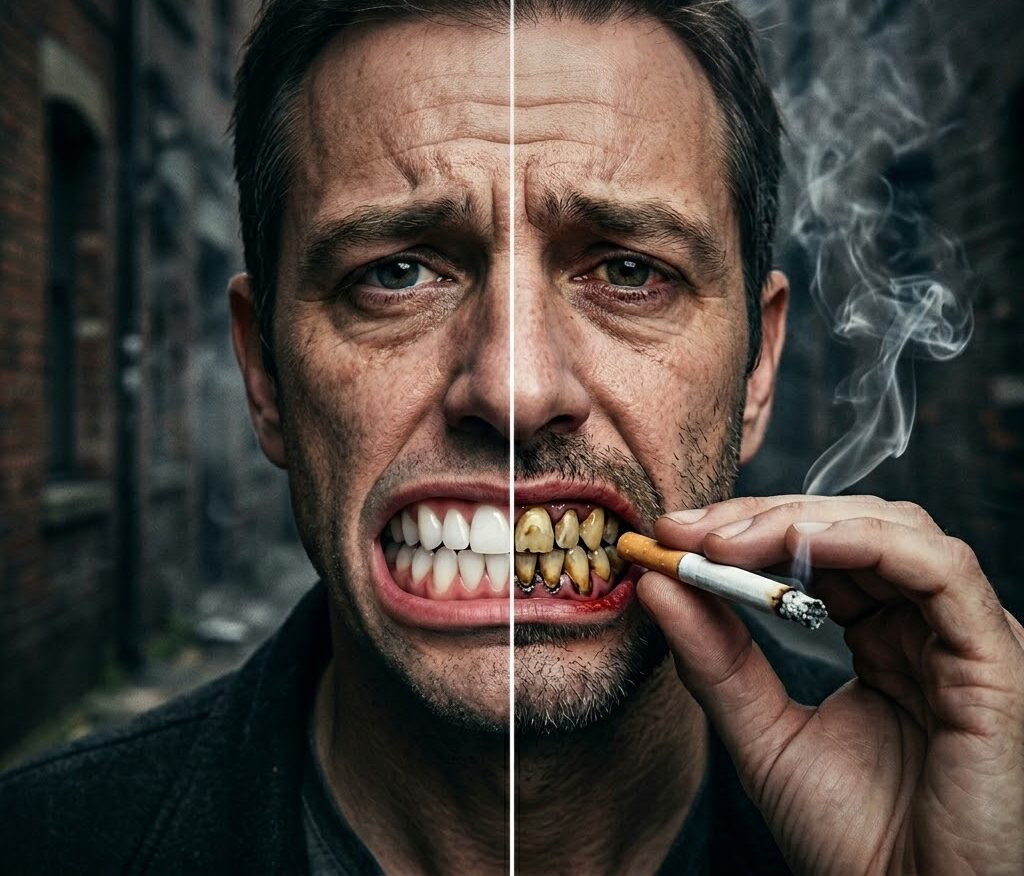
When we think about the dangers of smoking, lung cancer and heart disease are usually the first things that come to mind. However, the very first part of your body that comes into contact with cigarette smoke is your mouth.
Smoking takes a severe toll on your teeth, gums, and overall oral hygiene. If you are a smoker, understanding these impacts is the first step toward protecting your smile. Here is a breakdown of how smoking affects your dental health.
1. Stubborn Tooth Discoloration
One of the most immediate and visible signs of smoking is stained teeth. Cigarettes contain nicotine and tar, both of which easily settle into the microscopic pores of your tooth enamel.
-
The Result: Over time, teeth turn yellow or even a dark brownish color.
-
The Challenge: Unlike regular food stains, tobacco stains are incredibly stubborn and often require professional whitening treatments to remove.
2. Severe Gum Disease (Periodontitis)
Smoking is one of the most significant risk factors for the development and progression of gum disease.
-
Reduced Blood Flow: Smoking restricts the blood vessels in your gums, limiting the flow of oxygen and nutrients. This makes it harder for your gums to fight off bacterial infections.
-
Plaque Buildup: Smokers tend to produce more dental plaque, which hardens into tartar. This irritates the gums, causing them to pull away from the teeth and form deep, infected pockets.
3. Increased Risk of Tooth Loss
Because smoking weakens the immune system and accelerates gum disease, the bone and tissue supporting your teeth deteriorate much faster. As the foundation weakens, teeth become loose and eventually fall out. Studies show that smokers are twice as likely to lose their teeth compared to non-smokers.
4. Chronic Bad Breath (Halitosis)
“Smoker’s breath” is a very real condition. Cigarette smoke leaves chemical particles lingering in the mouth, throat, and lungs. Furthermore, because smoking dries out the mouth (reducing saliva flow) and promotes the growth of bad bacteria, it creates the perfect environment for chronic halitosis that cannot be cured by a simple mint or mouthwash.
5. Delayed Healing and Surgical Complications
If you need a tooth extracted, a dental implant, or treatment for gum disease, being a smoker puts you at a distinct disadvantage.
Note: Because smoking suppresses the immune system and reduces blood circulation, wounds in the mouth take much longer to heal. Smokers also face a significantly higher risk of dental implant failure.
6. Oral Cancer
The most serious and life-threatening oral complication of smoking is oral cancer. The toxic chemicals in tobacco cause mutations in the cells of your mouth, lips, tongue, and throat. Regular screenings by a dentist are absolutely vital for smokers to catch any early signs of abnormal tissue.
Protecting Your Smile
The single best thing you can do for your oral and overall health is to quit smoking. Even if you have smoked for years, quitting immediately reduces your risk of gum disease and allows your mouth to begin healing.
If you currently smoke, it is crucial to maintain a strict oral hygiene routine and visit your dentist at least twice a year for professional cleanings and checkups.