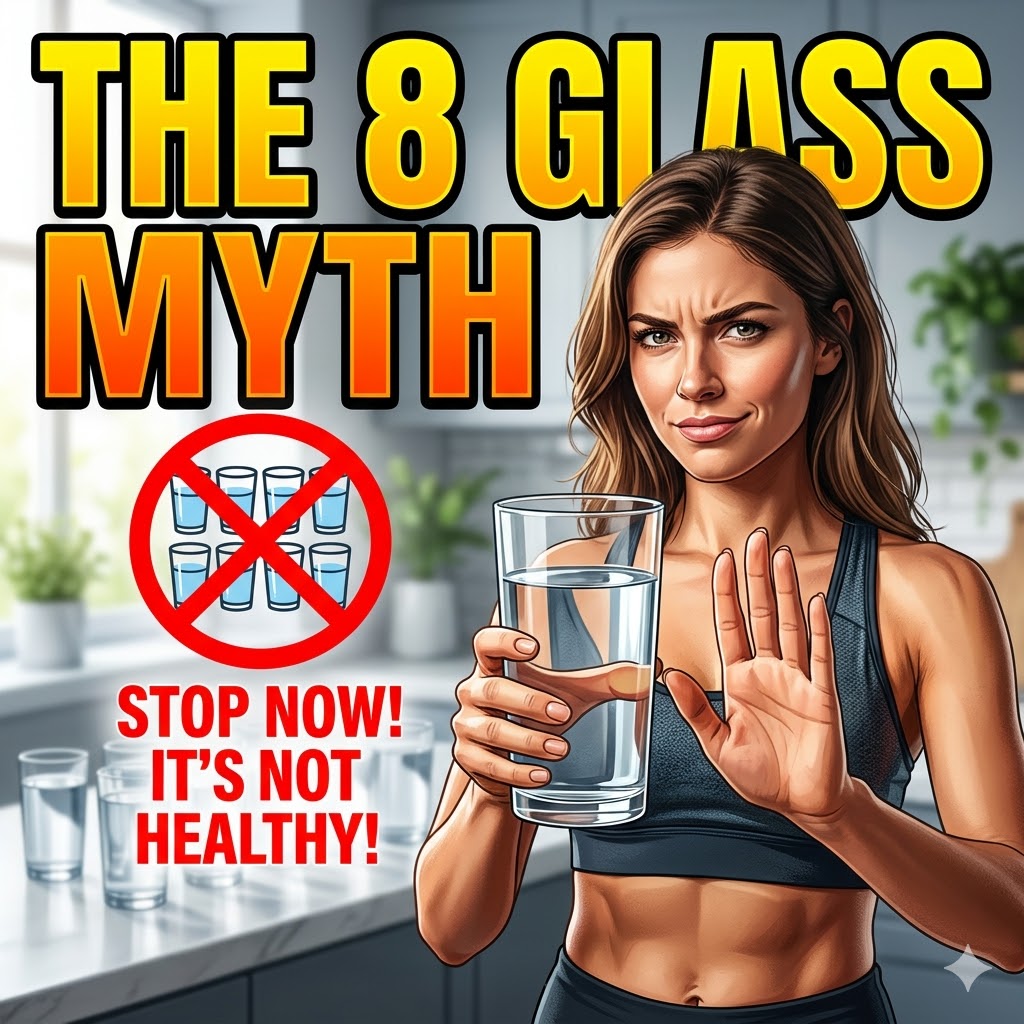
For decades, one piece of health advice has been echoed by fitness enthusiasts, wellness blogs, and well-meaning family members alike: “Drink eight glasses of water every single day.” It has been drilled into our minds as the ultimate golden rule for clear skin, endless energy, and optimal health. However, recent scientific insights and medical advice are turning this long-held belief on its head. It turns out that forcing yourself to gulp down an arbitrary amount of water daily isn’t just unnecessary—it could actually be doing your body more harm than good. It is time to shatter the 8-glass myth and take a more personalized, intuitive approach to how we hydrate.
The Problem with a One-Size-Fits-All Approach
The human body is an incredibly complex and highly individualized machine. To assume that a 120-pound office worker living in a cool, rainy climate requires the exact same amount of water as a 200-pound construction worker laboring under the hot summer sun is fundamentally flawed. Your actual hydration needs fluctuate dramatically based on several key variables: your body weight, your daily physical activity, the climate you live in, and your overall diet.
When you adhere strictly to the “eight glasses a day” rule, you are ignoring your body’s natural signals. Forcing water down when you are not thirsty can lead to a feeling of sluggishness, bloating, and discomfort. Instead of treating hydration as a rigid daily quota to be met at all costs, we need to understand the nuances of how our bodies actually absorb and utilize fluids.
The Real Numbers and the “Food Factor”
If eight glasses isn’t the magic number, then what is? The National Academies of Sciences, Engineering, and Medicine does provide general guidelines, recommending about 15.5 cups of total fluids for men and 11.5 cups for women. At first glance, this seems like even more than the standard eight glasses. However, there is a massive caveat that most people overlook: “total fluids” does not just mean plain water from a bottle or tap.
Approximately 20% of your daily hydration needs are met through the food you eat. Nature has conveniently packaged water into delicious, nutrient-dense forms. Fruits and vegetables like watermelon, strawberries, cucumbers, oranges, and lettuce are overwhelmingly composed of water. When you factor in the fluids you get from your meals, alongside other beverages you might consume like tea or coffee, the amount of plain, straight water you actually need to drink drops significantly. For the average person with a balanced diet, this means drinking just four to six glasses of plain water a day is often perfectly sufficient.
The Hidden Danger: Water Intoxication and Hyponatremia
While dehydration is a well-known risk, the opposite end of the spectrum is rarely discussed but equally dangerous. Drinking too much water can lead to a life-threatening condition known as hyponatremia, commonly referred to as water intoxication.
When you consume an excessive amount of water, you dilute the essential electrolytes in your blood, particularly sodium. Sodium is crucial for balancing the fluids in and around your cells. When sodium levels drop too low, water rushes into your cells to try and balance the concentration. This causes the cells to swell. While swelling in muscle cells might just cause cramping or weakness, swelling in brain cells is catastrophic.
Because the brain is encased in a rigid skull, there is no room for it to expand. This swelling can lead to severe headaches, extreme confusion, nausea, seizures, and in extreme cases, coma or even death. Tragically, perfectly healthy people—including endurance athletes who over-hydrate during events—have died from drinking too much water too fast. As a general medical rule, the human kidneys can only process about one liter of water per hour. Drinking more than that within a sixty-minute timeframe is crossing into dangerous territory.
The Ultimate Guide to Hydration: Listen to Your Body
If quotas and rigid rules are out, how can you ensure you are properly hydrated without overdoing it? The answer is incredibly simple and built right into your physiology. You must learn to listen to your body and rely on two primary indicators: thirst and the color of your urine.
Thirst is a highly refined evolutionary mechanism. When your blood volume drops or your sodium concentration rises slightly, your brain triggers the sensation of thirst. Your body telling you it needs water is the most reliable cue you have. Drink when you feel thirsty, and stop when your thirst is quenched.
The second, and perhaps most foolproof, indicator is checking the color of your urine. Think of it as a daily, built-in hydration test.
-
Pale Yellow: This is the gold standard. If your urine looks like pale lemonade, you are perfectly hydrated. Keep doing what you are doing.
-
Clear: If your urine is completely transparent, like water, you are drinking too much. Your body is rapidly flushing out the excess liquid, and you should scale back your intake.
-
Dark Yellow or Amber: This is a clear warning sign of dehydration. Your kidneys are working hard to conserve water, making your urine highly concentrated. You need to drink a glass of water soon.
Conclusion
The journey to optimal health isn’t about following arbitrary rules blindly; it is about cultivating a deeper understanding of your own body’s unique needs. The myth of the eight glasses was well-intentioned, but science has shown us that true hydration is far more dynamic. Remember that athletes pushing their limits and people living in blistering heat will naturally require more fluids than the average person. But for most of us, staying hydrated is as simple as enjoying a diet rich in hydrating foods, drinking when we feel parched, and keeping an eye out for that perfect pale yellow. Stop forcing the water, and start listening to your body.