In today’s fast-paced world, we are constantly rushing. We eat at our desks, in our cars, and while scrolling on our phones. As a result, meals that should be savored are often inhaled in mere minutes. We spend billions of dollars globally on fad diets, complex supplements, and grueling workout programs, constantly searching for the magic bullet for weight loss and better health. But what if the most effective tool for shedding pounds and improving digestion is completely free, requires absolutely no equipment, and is something you already do every single day?
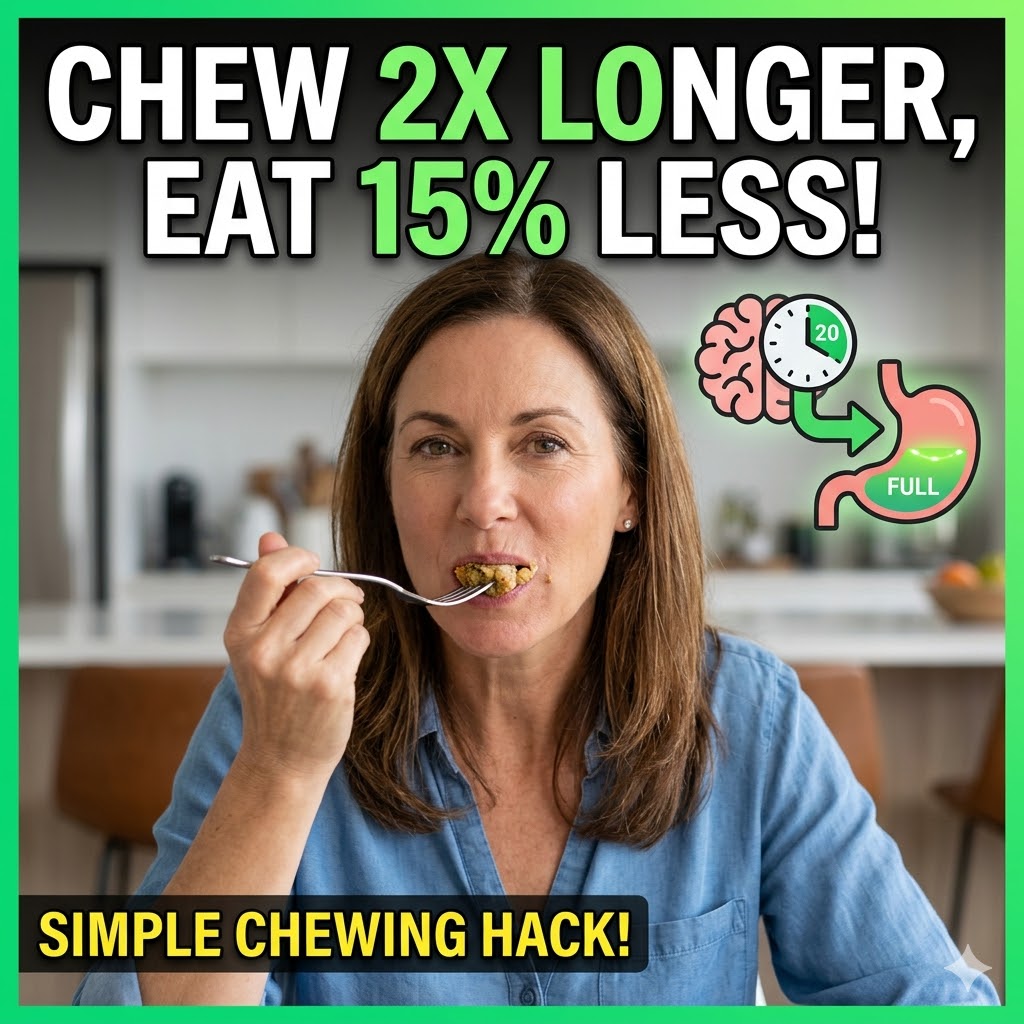
Welcome to the simple “chewing hack.” Recent health insights have highlighted a profound yet incredibly basic physiological truth: simply chewing your food twice as long as you normally do can lead to consuming 15% fewer calories, naturally and effortlessly. Here is why the simple act of slowing down could be the most transformative habit you adopt this year.
The 20-Minute Delay: Bridging the Brain-Gut Gap
Let’s look at the mechanics of modern eating. Most people today are what experts would classify as “fast eaters.” On average, individuals chew their food a mere five to ten times before swallowing. This rapid-fire consumption completely bypasses one of the human body’s most crucial regulatory systems: the brain-gut connection.
When you eat, your stomach needs time to stretch and send hormonal signals—specifically leptin, the satiety hormone—to your brain to say, “I am full, you can stop eating now.” The catch? This complex signaling process takes roughly 20 minutes to fully register in your brain. If you inhale your entire dinner in five or ten minutes, your brain hasn’t even received the first memo that food is arriving. By the time that 20-minute mark finally hits, you have likely consumed second helpings and significantly more calories than your body actually needed, leading to that uncomfortable, overstuffed feeling.
By doubling the amount of time you spend chewing, you are essentially buying time for your brain to catch up with your stomach. More chewing equals more time spent eating, which naturally results in eating less food before the fullness signals kick in.
The 15% Rule: Weight Loss Without the Diet
Studies and mindful eating experts suggest a staggering statistic: mindful chewers—those who take the time to thoroughly break down their food—can consume up to 15% fewer calories without ever intentionally restricting their diet.
Think about what a 15% reduction means over the course of a day, a week, or a year. If you typically consume 2,000 calories a day, a 15% reduction is 300 calories. Over a week, that equates to 2,100 calories saved—just by moving your jaw a few more times per bite. This isn’t about starvation, skipping meals, or eating bland foods; it is about natural auto-regulation. Because you are giving your brain the adequate time it needs to recognize fullness, you naturally put the fork down sooner. You are entirely satisfied with smaller portions.
Digestion Begins in the Mouth, Not the Stomach
Beyond effortless weight management, mindful chewing is an absolute game-changer for your digestive health. A common misconception is that digestion happens solely in the stomach. In reality, digestion begins the moment food enters your mouth.
The physical act of chewing breaks large food particles into smaller ones, vastly increasing their surface area. Simultaneously, the chewing motion stimulates your salivary glands to release enzymes, such as amylase, which immediately begin breaking down complex carbohydrates before the food even travels down your esophagus.
When you swallow hastily chewed food, you are forcing your stomach and your intestines to work overtime. They have to produce excess acid and expend significantly more energy to break down those large, unchewed chunks. This digestive strain is a primary culprit behind common daily woes like bloating, excessive gas, and acid reflux. By thoroughly masticating your food until it reaches a near-liquid consistency, you are effectively pre-digesting it, drastically easing the burden on your entire gastrointestinal tract and reducing stomach distension.
Maximizing Your Nutrient Absorption
Not only does proper chewing banish the bloat, but it also ensures you are actually getting the nutritional value out of the expensive, healthy food you eat. As the saying goes: you aren’t just what you eat; you are what you absorb.
The thorough mechanical and chemical breakdown of food in the mouth allows your small intestines to more easily extract vital nutrients—vitamins, minerals, and amino acids. When food passes through your system partially undigested due to a lack of chewing, a significant portion of its nutritional value is simply wasted and passed through the body. By slowing down, you are maximizing the high-quality fuel you give your body, which translates to better sustained energy levels, clearer skin, improved immune function, and enhanced overall vitality.
How to Cultivate the Chewing Habit
Knowing the profound benefits is one thing; changing a lifelong, subconscious habit is another. How do you actually become a mindful chewer?
-
Start with the very next bite: Don’t wait for tomorrow. Try it right now.
-
Count your chews: Initially, try aiming for 20 to 30 chews per mouthful, depending on the density of the food.
-
Put your fork down: Make it a rule to rest your utensils on the table between every single bite. Do not pick them up again until you have completely swallowed.
-
Eliminate screens: Avoid eating in front of the television, computer, or while scrolling on your phone. Distracted eating is the number one driver of eating too quickly.
In a culture obsessed with complex, expensive health solutions, the simplest ones are often the most profound. The simple chewing hack is a return to natural, mindful living. It costs nothing, requires no meal prep, and has the power to completely transform your relationship with food. The next time you sit down for a meal, remember the science: slow down, chew thoroughly, and let your body’s natural intelligence do the rest.