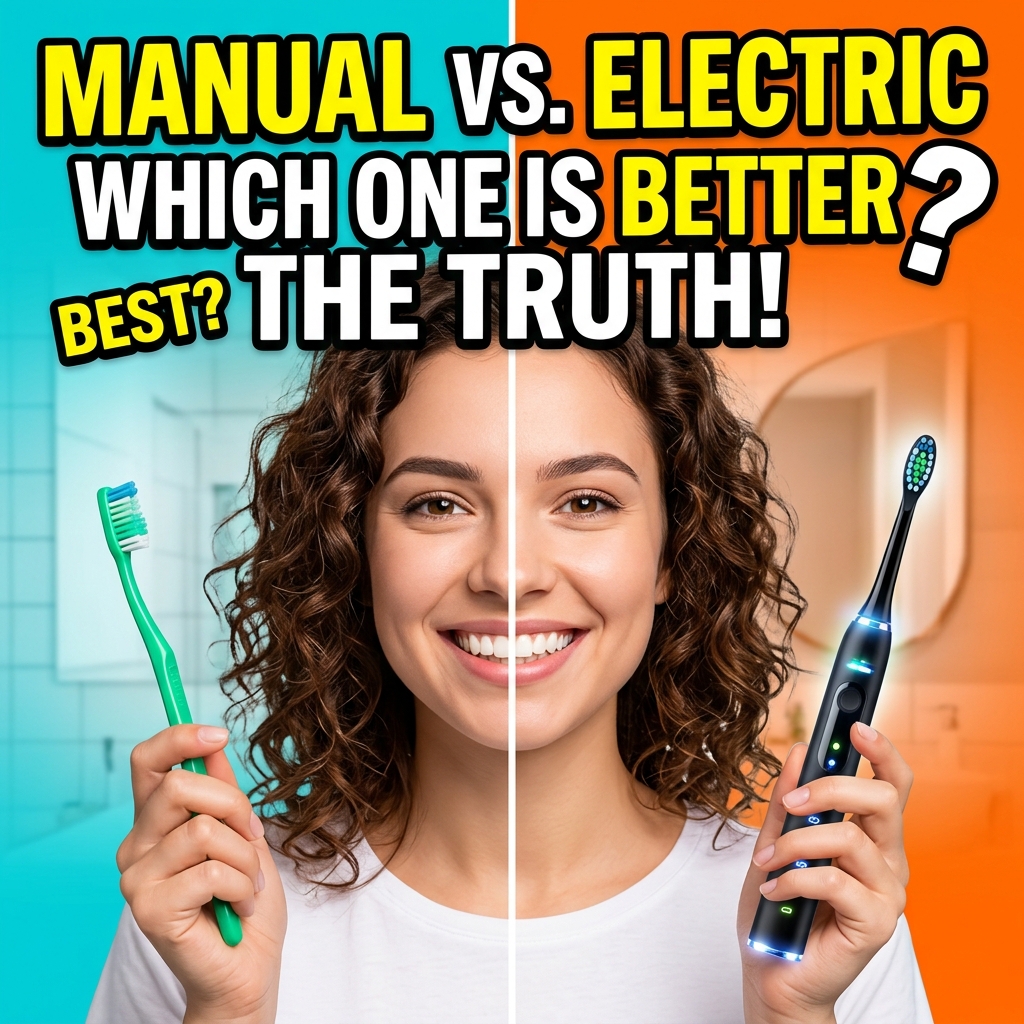
We all know the golden rule of oral hygiene: brush twice a day for at least two minutes. But when you are standing in the dental care aisle staring at rows of colorful plastic and high-tech gadgets, the decision can feel overwhelming. Should you stick to the trusty manual toothbrush, or is it time to upgrade to an electric one?
Let’s break down the pros and cons of both options to help you decide which tool is best for your smile.
The Classic Choice: Manual Toothbrushes
Manual toothbrushes have been around for a long time, and for good reason. They are simple, effective, and accessible.
The Pros:
-
Cost-Effective: Manual toothbrushes are highly affordable. You can easily stock up on them without breaking the bank.
-
Travel-Friendly: No need to pack bulky chargers, cables, or batteries. You can toss a manual brush in your bag and go anywhere.
-
Complete Control: You have total control over the pressure and speed, which can be comforting for people with highly sensitive teeth or gums.
The Cons:
-
Relies heavily on technique: To get your teeth truly clean, you have to use the perfect circular motion and apply just the right amount of pressure.
-
No built-in timer: It is incredibly easy to overestimate how long you’ve been brushing. Most people using a manual brush fall far short of the dentist-recommended two minutes.
The Modern Upgrade: Electric Toothbrushes
Electric toothbrushes use rapid bristle motions—either rotating, oscillating, or vibrating—to clean teeth and sweep away plaque.
The Pros:
-
Superior Plaque Removal: Studies consistently show that electric toothbrushes, particularly those with oscillating-rotating heads, remove more plaque and reduce gingivitis better than manual brushes.
-
Built-in Timers: Most electric models buzz or beep every 30 seconds to remind you to switch quadrants, and they automatically turn off or alert you when the two minutes are up.
-
Easier for Limited Mobility: If you have arthritis, carpal tunnel, or simply struggle with the manual dexterity required for brushing, the electric toothbrush does the hard work for you.
-
Great for Braces: The automated bristles navigate around orthodontic wires and brackets much more effectively.
The Cons:
-
Higher Price Tag: The initial investment is significantly higher, and replacement heads can be pricey.
-
Requires Charging: You have to remember to keep it charged or replace the batteries, making it slightly less convenient for off-the-grid travel.
The Verdict: Which is Better?
From a purely clinical standpoint, electric toothbrushes generally have the edge. The rapid micro-movements of the bristles clean teeth more efficiently, and the built-in timers ensure you are brushing for the correct amount of time. Dentists frequently recommend them for their ability to combat plaque and gum disease with less effort from the user.
However, the “best” toothbrush is ultimately the one you will use consistently and correctly. A manual toothbrush can be just as effective if you are diligent about your brushing technique, use a soft-bristled brush, and actively time yourself for two full minutes.
3 Golden Rules for Both:
-
Always choose soft bristles: Hard bristles can damage your enamel and cause your gums to recede.
-
Replace your brush head regularly: Swap out your manual brush or your electric brush head every 3 to 4 months (or sooner if the bristles look frayed).
-
Don’t forget to floss: No toothbrush, no matter how advanced, can clean the tight spaces between your teeth.