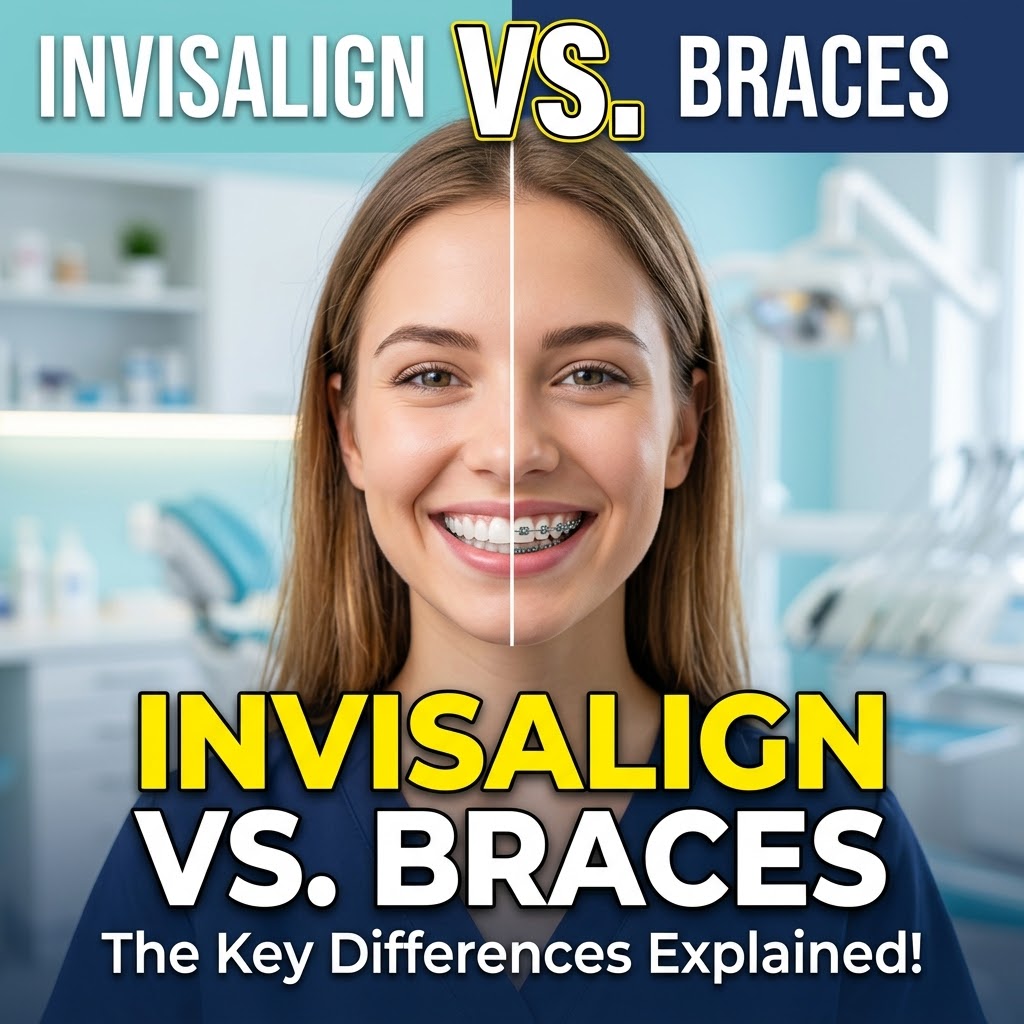
Whether you are looking to fix a slight overbite, close a gap, or achieve a perfectly straight smile, orthodontic treatment is the best way to get there. For decades, traditional metal braces were the only option. Today, however, Invisalign has revolutionized the way we straighten teeth.
If you are stuck trying to decide between the two, you are not alone. Both treatments are highly effective, but they cater to different lifestyles, needs, and orthodontic conditions. Here is a comprehensive breakdown of the differences between Invisalign and traditional braces to help you make an informed decision.
1. What Are Traditional Braces?
Traditional braces consist of metal or ceramic brackets that are glued individually to the front of your teeth. These brackets are connected by a flexible archwire and held in place by tiny rubber bands (ligatures).
How they work: The orthodontist periodically tightens or adjusts the wire throughout your treatment, applying constant, gentle pressure to slowly shift your teeth into their correct positions.
2. What Is Invisalign?
Invisalign is a modern orthodontic treatment that uses a series of custom-made, clear plastic trays (aligners) to shift your teeth.
How they work: You wear each set of aligners for about one to two weeks before swapping them out for the next set in the series. Each aligner is slightly different, gradually pushing your teeth into alignment. Unlike braces, Invisalign trays are fully removable.
3. The Key Differences
When choosing between the two, it comes down to comparing aesthetics, convenience, comfort, and treatment complexity.
Aesthetics & Visibility
-
Braces: Even with modern advancements like tooth-colored ceramic brackets, braces are still noticeable when you speak, smile, or laugh.
-
Invisalign: The clear aligners are virtually invisible. Most people will not even notice you are wearing them, making them a highly popular choice for adults and self-conscious teens.
Removability & Diet
-
Braces: Because they are bonded to your teeth, braces are a 24/7 commitment. You will need to avoid hard, sticky, or chewy foods (like popcorn, gum, and hard candies) to prevent breaking a bracket or wire.
-
Invisalign: The aligners are removable. You take them out to eat, drink anything other than water, and brush your teeth. This means there are zero dietary restrictions—you can eat whatever you want. However, you must commit to wearing the aligners for 20 to 22 hours a day for the treatment to work.
Comfort
-
Braces: Metal wires and brackets can sometimes cause irritation, tiny cuts, or sores on the inside of your cheeks and lips, especially after an adjustment.
-
Invisalign: Made of smooth, patented SmartTrack plastic, Invisalign is generally much more comfortable against the soft tissues of your mouth. You may experience some mild soreness for a day or two when switching to a new tray, but there are no sharp edges.
Oral Hygiene
-
Braces: Brushing and flossing around wires and brackets requires extra time and special tools (like floss threaders or interdental brushes) to ensure plaque doesn’t build up.
-
Invisalign: You simply remove the aligners to brush and floss your teeth normally. You will also need to lightly brush and rinse the aligners themselves before putting them back in.
Treatment Complexity
-
Braces: Metal braces are incredibly powerful and versatile. They are typically the best option for severe crowding, extreme bite issues (malocclusion), or complex tooth rotations.
-
Invisalign: While Invisalign technology has advanced significantly and can treat most mild to moderate orthodontic issues, it may not be suitable for highly complex cases.
4. Cost and Treatment Time
| Feature | Traditional Braces | Invisalign |
| Average Time | 18 to 36 months | 12 to 18 months (highly dependent on compliance) |
| Cost | Generally slightly lower, but varies by location and material. | Often comparable to braces, though sometimes slightly more expensive. |
| Office Visits | Every 4 to 8 weeks for tightening. | Every 6 to 8 weeks to check progress and get new trays. |
Note: The actual cost and timeframe for both options depend entirely on the severity of your specific dental needs and your location.
Which One Should You Choose?
The choice between Invisalign and traditional braces ultimately depends on your personal preferences, lifestyle, and the specific alignment issues you need to correct.
If you want a discreet look, the freedom to eat what you want, and have the discipline to wear your aligners for 22 hours a day, Invisalign is an excellent choice. If you have a severe bite issue, or if you know you (or your child) might forget to put removable trays back in, traditional braces are the reliable, heavy-lifting solution.
Ready to transform your smile? The best way to find out which treatment is right for you is to schedule a consultation with an orthodontist. They will evaluate your smile and help you craft the perfect treatment plan!