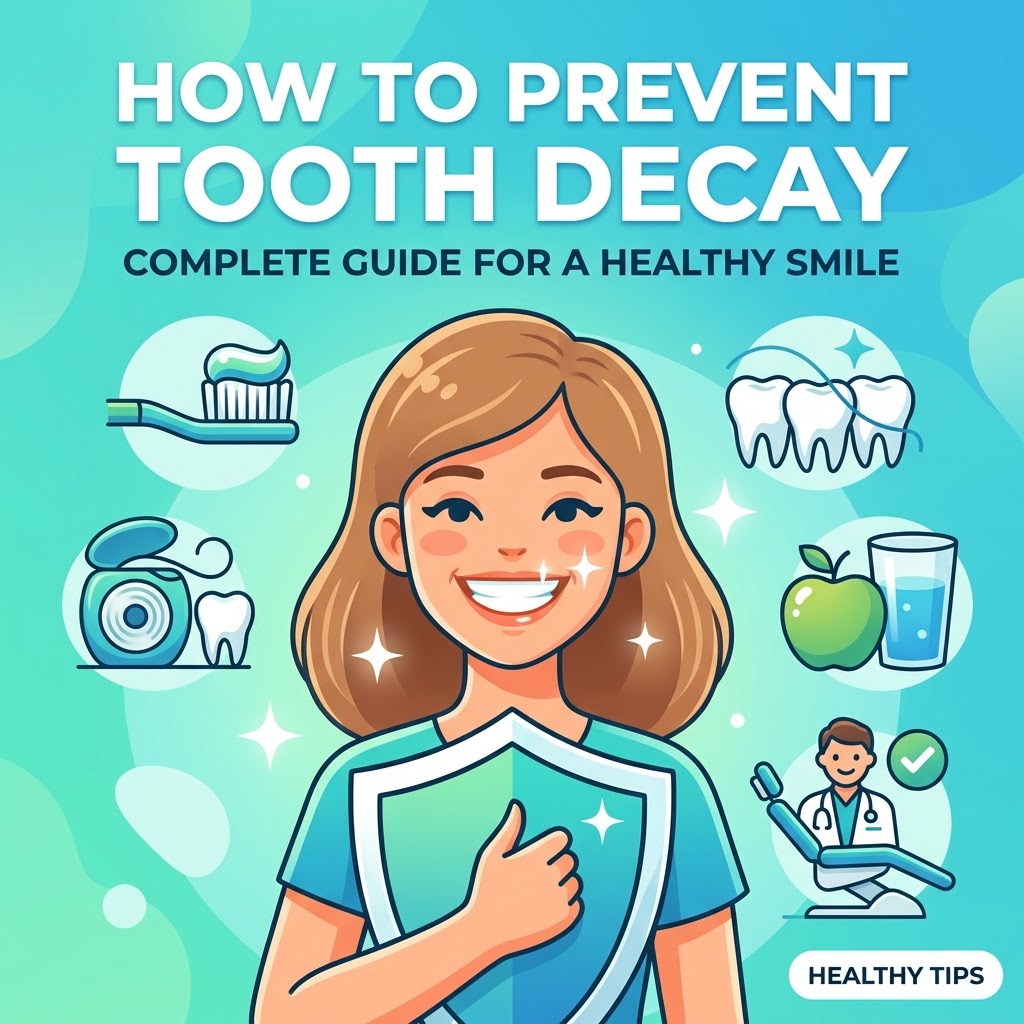
Tooth decay, commonly known as cavities, is one of the most widespread health issues in the world. It happens when plaque—a sticky film of bacteria—builds up on your teeth and produces acids that slowly destroy your tooth enamel.
While cavities are common, the great news is that they are almost entirely preventable. By adopting the right daily habits and making a few lifestyle changes, you can keep your teeth strong and your smile bright for a lifetime. Here are the most effective ways to prevent tooth decay.
1. Master Your Daily Oral Hygiene Routine
The foundation of a cavity-free mouth starts in your own bathroom. Consistency is key when it comes to cleaning your teeth.
-
Brush Twice a Day: Brush your teeth at least twice a day for two minutes each time. Use a soft-bristled toothbrush and a toothpaste that contains fluoride, a natural mineral that strengthens enamel and makes it more resistant to acid attacks.
-
Don’t Forget to Floss: Brushing alone cannot reach the tight spaces between your teeth or below the gumline. Flossing at least once a day removes trapped food particles and hidden plaque before they can cause damage.
-
Use a Mouthwash: Consider adding an antimicrobial or fluoride mouthwash to your daily routine. Mouthwash can help wash away remaining food particles and provide extra protection against bacteria.
2. Be Mindful of Your Diet
What you eat directly impacts the health of your teeth. Bacteria in your mouth thrive on sugar and starch, using them to produce enamel-eroding acids.
-
Limit Sugary and Acidic Foods: Cut back on sodas, candies, pastries, and even fruit juices. If you do consume sweet or highly acidic foods, try to have them with meals rather than as standalone snacks, as increased saliva during meals helps wash away the acids.
-
Eat Tooth-Friendly Foods: Incorporate crunchy fruits and vegetables like apples, carrots, and celery into your diet. These act like natural toothbrushes, stimulating saliva production. Dairy products like cheese and yogurt are also excellent, as they are rich in calcium and phosphates that help remineralize teeth.
3. Drink Plenty of Water
Staying hydrated is not just good for your overall health; it is crucial for your oral hygiene.
-
Boost Saliva Production: Water helps keep your mouth moist. Saliva is your mouth’s first line of defense against tooth decay, as it naturally washes away food particles and neutralizes harmful acids.
-
Drink Fluoridated Water: If your local tap water contains fluoride, drinking it regularly will provide continuous, low-dose protection for your tooth enamel throughout the day.
4. Visit Your Dentist Regularly
Even with perfect brushing and flossing, professional dental care is non-negotiable for long-term oral health.
-
Bi-Annual Checkups: Visit your dentist every six months for a routine checkup and professional cleaning. Dentists can remove hardened plaque (tartar) that you cannot remove at home.
-
Catch Problems Early: Regular exams allow your dentist to spot the early signs of tooth decay before it turns into a painful cavity that requires a filling or a root canal.
5. Consider Dental Sealants
If you or your children are prone to cavities, ask your dentist about dental sealants.
-
What are they? A sealant is a thin, protective plastic coating applied to the chewing surfaces of the back teeth (molars).
-
How do they work? They fill in the deep grooves and pits where food and bacteria often get trapped, creating a smooth, easy-to-clean surface that blocks decay from starting.
The Bottom Line
Preventing tooth decay doesn’t require a complicated routine; it simply requires consistency. By brushing with fluoride toothpaste, flossing daily, making smart dietary choices, and seeing your dentist regularly, you can effectively protect your teeth from cavities. Start prioritizing your oral health today, and enjoy a confident, pain-free smile for years to come!