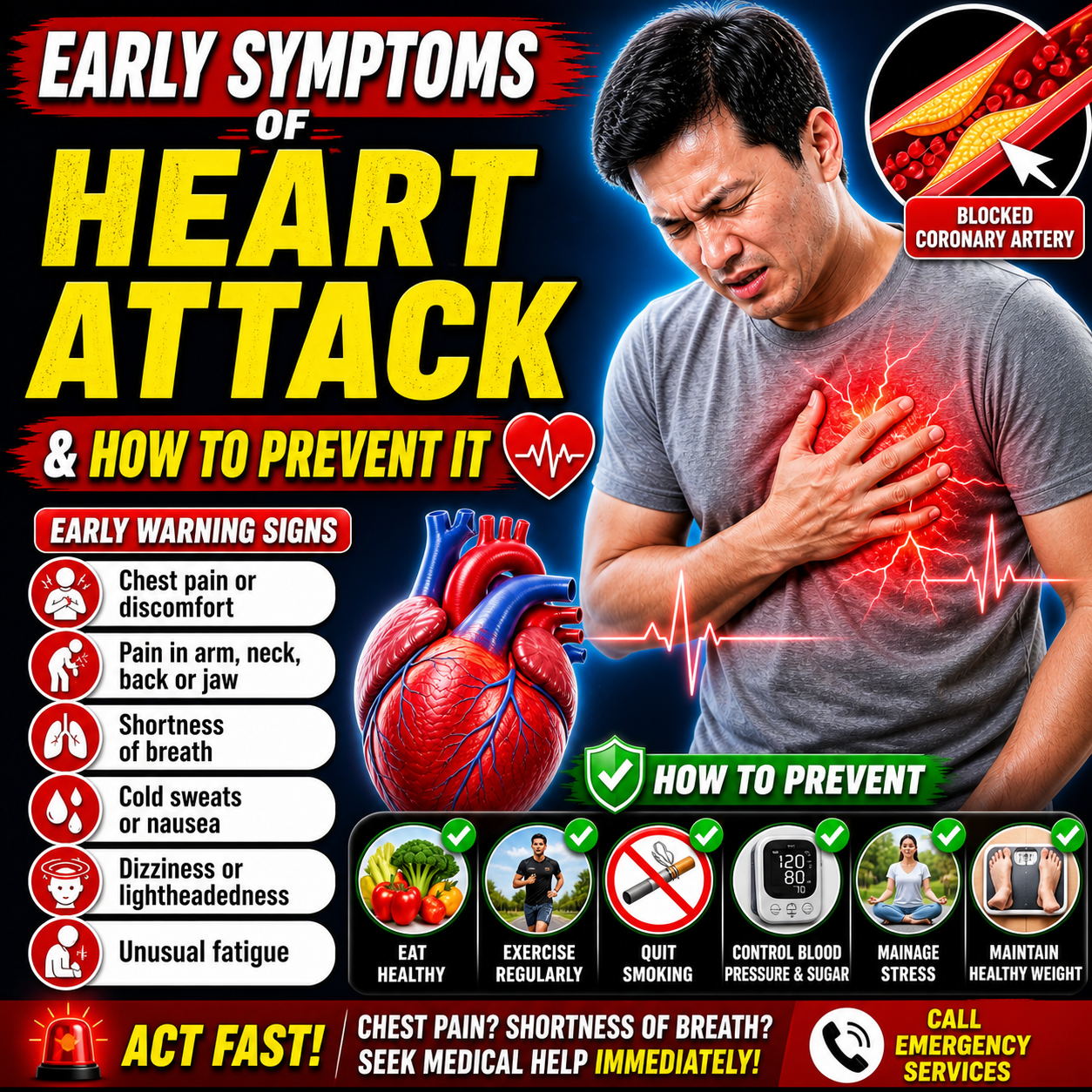
A heart attack is a serious medical condition that can be life-threatening if not treated immediately. It occurs when blood flow to the heart muscle is blocked, causing damage to the heart. Many people ignore early warning signs, which increases the risk of severe complications. Therefore, understanding early symptoms and prevention methods is crucial.
1. Early Symptoms of a Heart Attack
Symptoms can vary from person to person, but common early signs include:
🔹 Chest Pain or Discomfort
This is the most common symptom. It may feel like pressure, tightness, or squeezing in the chest that lasts for a few minutes or comes and goes.
🔹 Pain Spreading to Other Areas
Pain may spread to the left arm, neck, back, or jaw.
🔹 Shortness of Breath
Difficulty breathing or feeling like you can’t get enough air.
🔹 Cold Sweats
Sudden sweating without a clear reason.
🔹 Dizziness or Fainting
Feeling lightheaded or losing consciousness.
🔹 Extreme Fatigue
Unusual tiredness that persists.
🔹 Nausea or Indigestion
Some people may feel sick or experience stomach discomfort.
2. Causes of Heart Attack
Heart attacks are often caused by blocked arteries due to cholesterol buildup. Key risk factors include:
- High blood pressure
- Diabetes
- Smoking
- High-fat diet
- Lack of exercise
- Stress
3. Prevention Methods
You can reduce your risk by making healthy lifestyle changes:
✅ Eat a Healthy Diet
Include fruits, vegetables, and fiber-rich foods. Avoid processed and fatty foods.
✅ Exercise Regularly
At least 30 minutes of physical activity daily.
✅ Quit Smoking
Smoking greatly increases heart disease risk.
✅ Manage Blood Pressure and Blood Sugar
Regular check-ups help maintain healthy levels.
✅ Reduce Stress
Practice relaxation techniques such as meditation.
✅ Maintain a Healthy Weight
Healthy weight lowers the risk of heart disease.
4. When to Seek Medical Help
If you experience chest pain along with shortness of breath or dizziness, seek medical help immediately. Do not wait, as early treatment can save your life.
5. Conclusion
Heart attacks can happen unexpectedly, but recognizing early symptoms and maintaining a healthy lifestyle can significantly reduce the risk. Taking care of your heart is essential for a long and healthy life.