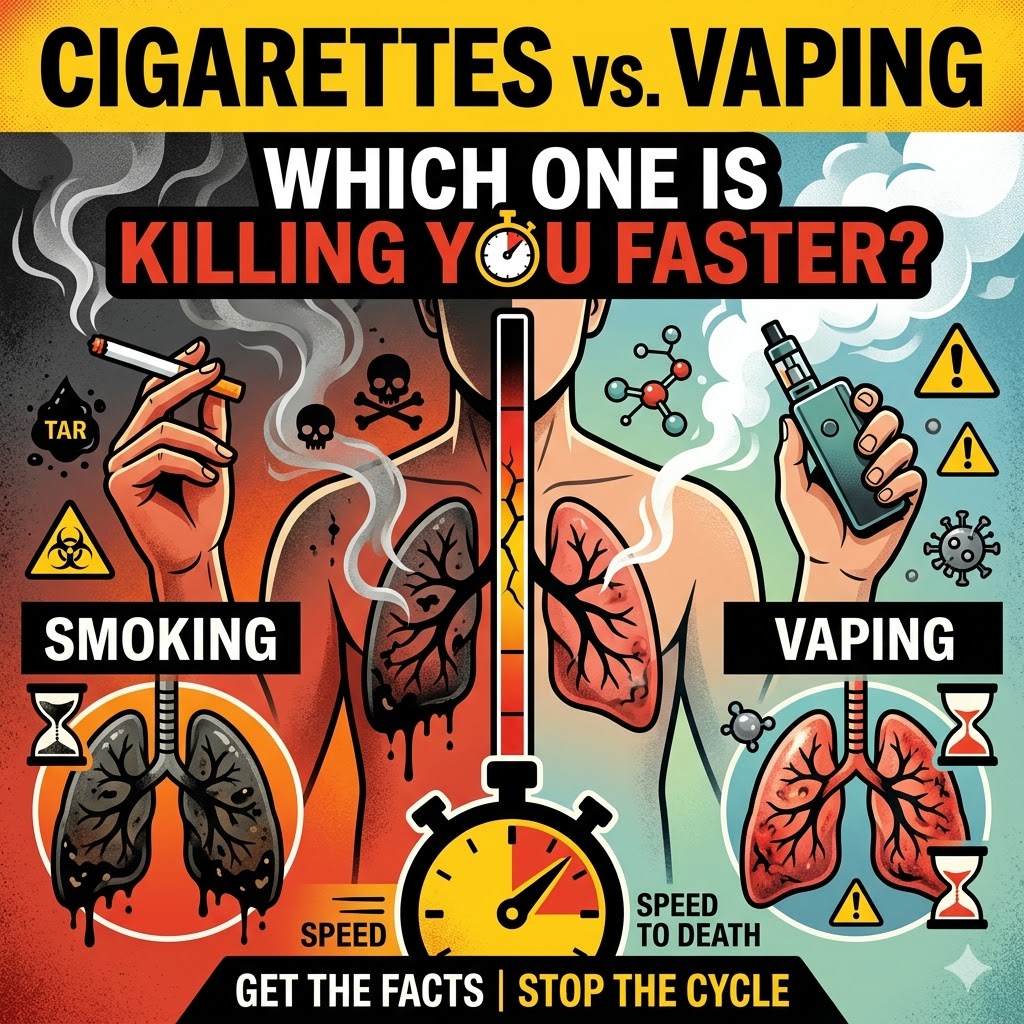
For years, the debate surrounding nicotine consumption has been dominated by one burning question: is vaping truly safer than smoking traditional cigarettes? With flashy marketing, countless flavor options, and the lack of harsh, burning smoke, e-cigarettes have been touted by many as the ultimate solution to the smoking epidemic. However, as medical visualization and ongoing research reveal what is truly happening inside the human body, the answer is far more complex—and alarming—than a simple “yes” or “no.”
If you are weighing the risks, trying to quit, or just curious about the biological impact of these two habits, here is a definitive breakdown of the science, the chemicals, and the ultimate toll they take on your vital organs.
The Deadly Reality of Traditional Cigarettes
To understand the comparison, we first have to look at the undeniable devastation caused by traditional combustible cigarettes. Medical science is unequivocal on this front: cigarettes are exceptionally deadly.
The danger lies primarily in the combustion process. When you light a cigarette, the burning tobacco and paper release a massive, toxic payload. Every single puff delivers over 7,000 different chemicals directly into your respiratory system. Within that toxic cloud, there are at least 70 known carcinogens—substances scientifically proven to cause cancer. These include highly dangerous chemicals like benzene, formaldehyde, and even arsenic.
The physical impact on the body is both immediate and cumulative:
-
Tar Accumulation: Thick, black tar coats the delicate inner linings of the lungs, paralyzing the structures meant to keep your airways clean and clogging the organs over time.
-
Organ Starvation: Carbon monoxide, a toxic byproduct of the smoke, binds to your red blood cells, actively starving your heart, brain, and other vital organs of the oxygen they need to function.
-
DNA Damage: Tobacco-specific nitrosamines penetrate at the cellular level, fracturing and damaging your DNA, which is a primary trigger for cancerous mutations.
The statistics are grim. In the United States alone, smoking kills approximately 480,000 people every single year, driving catastrophic rates of lung cancer, heart disease, Chronic Obstructive Pulmonary Disease (COPD), and strokes.
Vaping: A Safer Alternative or a New Threat?
When you compare vaping to traditional smoking, the immediate differences seem highly favorable for e-cigarettes. The most significant advantage of vaping is the complete elimination of combustion. Because you are not burning organic matter, vaping delivers approximately 95% fewer toxic chemicals than a traditional cigarette.
For the lungs, this means two major victories: zero tar and zero carbon monoxide.
However, claiming vaping is “safer” is not the same as claiming it is “safe.” While it may be less dangerous than smoking, e-cigarettes introduce their own unique array of hazards to the human body.
-
The Nicotine Factor: Most e-cigarettes still contain highly addictive nicotine. Nicotine actively constricts blood vessels, raising your overall blood pressure and significantly increasing your risk of suffering a heart attack.
-
Hidden Carcinogens: While e-liquids might seem harmless, the process of heating them is not. When the propylene glycol found in many vape juices is subjected to high heat, it undergoes a chemical reaction that produces formaldehyde and acetaldehyde—both of which are known carcinogens.
-
Heavy Metal Inhalation: E-cigarettes rely on heating coils to vaporize the liquid. As these metal coils degrade, they can leach heavy metals, such as nickel and lead, directly into the vapor. Inhaling these metals, along with ultrafine particles produced by the device, causes profound cellular damage deep within the lung tissue.
-
Dangerous Flavorings: The appeal of vaping often lies in the flavors, but some of these chemical flavorings contain diacetyl. Inhaling diacetyl has been heavily linked to severe, irreversible lung conditions, often referred to colloquially as “popcorn lung.”
The Bottom Line: What Should You Do?
The science presents a nuanced reality that depends entirely on your current habits.
If you are a current smoker: Switching completely from traditional combustible cigarettes to vaping is fundamentally less harmful. Studies consistently show that moving entirely to e-cigarettes is an effective harm-reduction strategy and can be a stepping stone to quitting altogether.
The Danger of Dual Use: Many people attempt to compromise by vaping in places where they cannot smoke, while continuing to smoke cigarettes when they can. This “dual use” provides absolutely zero health benefits. You are simply subjecting your body to the worst elements of both habits simultaneously.
If you don’t smoke: Do not start vaping. E-cigarettes are not harmless tech gadgets; they are nicotine delivery systems that expose your lungs to heavy metals, ultrafine particles, and carcinogenic compounds. If you do not already have a nicotine addiction, picking up a vape is simply adding entirely unnecessary health risks to your life.
Ultimately, when forced to choose between cigarettes and vaping, the safest, most biologically sound choice is, without question, neither.