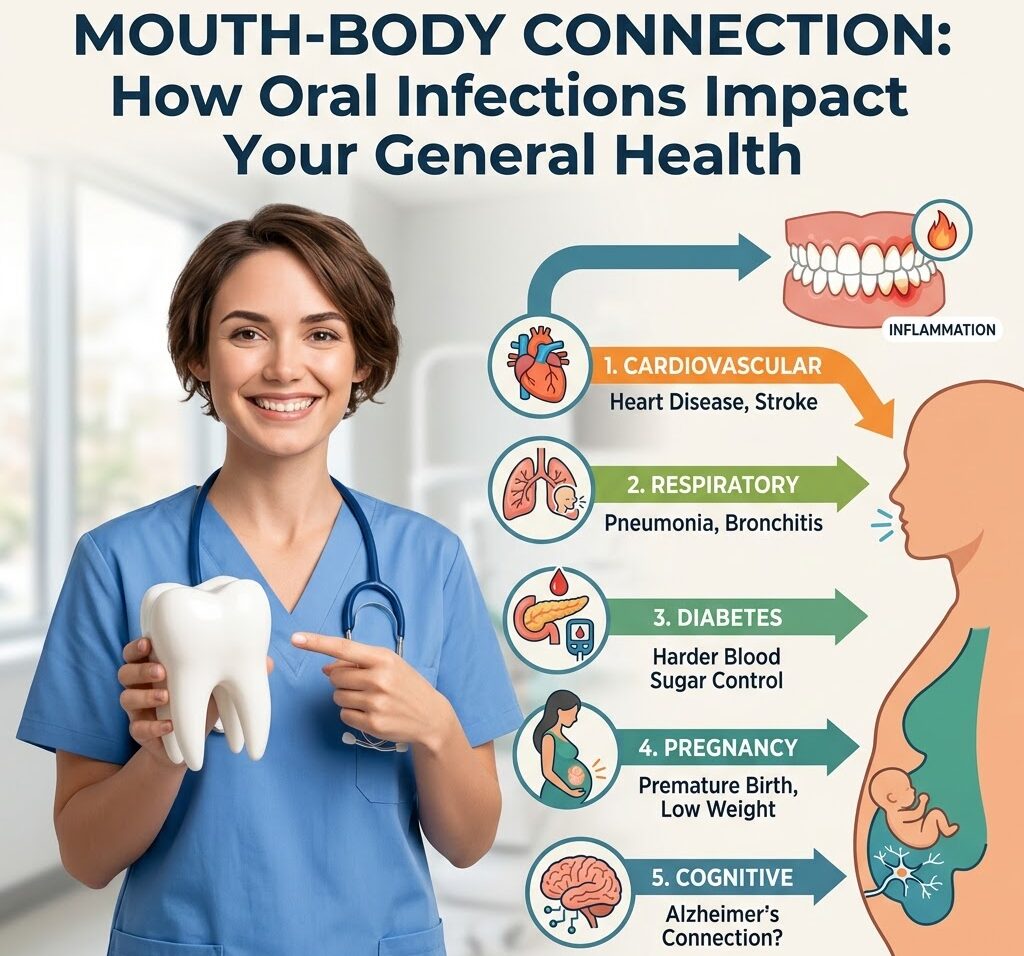
When we think about oral hygiene, we usually focus on achieving a bright smile, preventing cavities, and keeping our breath fresh. However, your mouth is much more than just a tool for eating and speaking—it is the gateway to your entire body.
Emerging medical research continues to prove that what happens in your mouth doesn’t stay in your mouth. Left untreated, oral infections and gum disease can have surprisingly severe consequences for your overall systemic health.
Here is a closer look at how poor oral health can affect the rest of your body, and why taking care of your teeth is vital for your overall well-being.
The Mouth-Body Connection: How Does It Work?
Your mouth is naturally teeming with bacteria—most of them harmless. Good oral care, like daily brushing and flossing, keeps these bacteria under control. However, without proper hygiene, bacteria can reach levels that lead to oral infections, such as tooth decay and periodontitis (severe gum disease).
When you have periodontitis, your gums become inflamed, weakened, and prone to bleeding. This creates an open doorway for harmful bacteria to enter your bloodstream, travel throughout your body, and trigger widespread systemic inflammation.
5 Ways Oral Infections Affect Your General Health
1. Cardiovascular Disease (Heart Health)
While the exact connection is still being studied, research suggests that the inflammation caused by oral bacteria may be linked to heart disease, clogged arteries, and strokes. When bacteria from infected gums enter the bloodstream, they can attach to fatty plaques in the blood vessels of your heart, contributing to blockages. Additionally, these bacteria can cause endocarditis, a life-threatening infection of the inner lining of your heart chambers or valves.
2. The Diabetes “Two-Way Street”
There is a unique, two-way relationship between diabetes and gum disease.
-
The impact of diabetes: People with diabetes are more susceptible to infections, making them much more likely to develop severe gum disease.
-
The impact of gum disease: Conversely, severe oral infections make it much harder to control blood sugar levels. Treating gum disease can actually help patients improve their diabetic control.
3. Respiratory Infections
You are constantly breathing air through your mouth and past your teeth. If your mouth is harboring infectious bacteria from decayed teeth or inflamed gums, those bacteria can be pulled down into your lungs. Once there, they can cause respiratory infections, bronchitis, and even severe conditions like pneumonia, especially in older adults or those with compromised immune systems.
4. Pregnancy and Birth Complications
Hormonal changes during pregnancy can make women more susceptible to “pregnancy gingivitis.” If this escalates into severe periodontitis, it can pose risks to the baby. Studies have linked severe gum disease in expectant mothers to premature birth and low birth weight, both of which can lead to long-term health issues for the child.
5. Brain Health and Alzheimer’s Disease
Recent and ongoing studies have begun to explore the link between poor oral health and cognitive decline. Researchers have found the bacteria responsible for gum disease in the brains of people with Alzheimer’s. While more research is needed, it is believed that chronic inflammation from oral infections may play a role in nerve cell damage in the brain.
How to Protect Your Oral and Overall Health
The good news is that preventing oral infections is entirely within your control. Protecting your mouth is one of the easiest ways to protect your entire body. Follow these fundamental steps:
-
Brush properly: Brush your teeth at least twice a day using fluoride toothpaste.
-
Floss daily: Flossing removes plaque and food particles from between the teeth where a toothbrush cannot reach.
-
Limit sugar: A diet high in sugar feeds the harmful bacteria in your mouth, accelerating decay and inflammation.
-
Replace your toothbrush: Get a new toothbrush or replacement head for your electric brush every three to four months.
-
Visit your dentist: Schedule regular dental checkups and professional cleanings every six months. Your dentist can spot and treat gingivitis before it turns into a severe infection.
The Bottom Line
Your oral health is a window into your overall health. By taking a few minutes each day to care for your teeth and gums, you aren’t just saving your smile—you are actively protecting your heart, your lungs, and your long-term vitality.