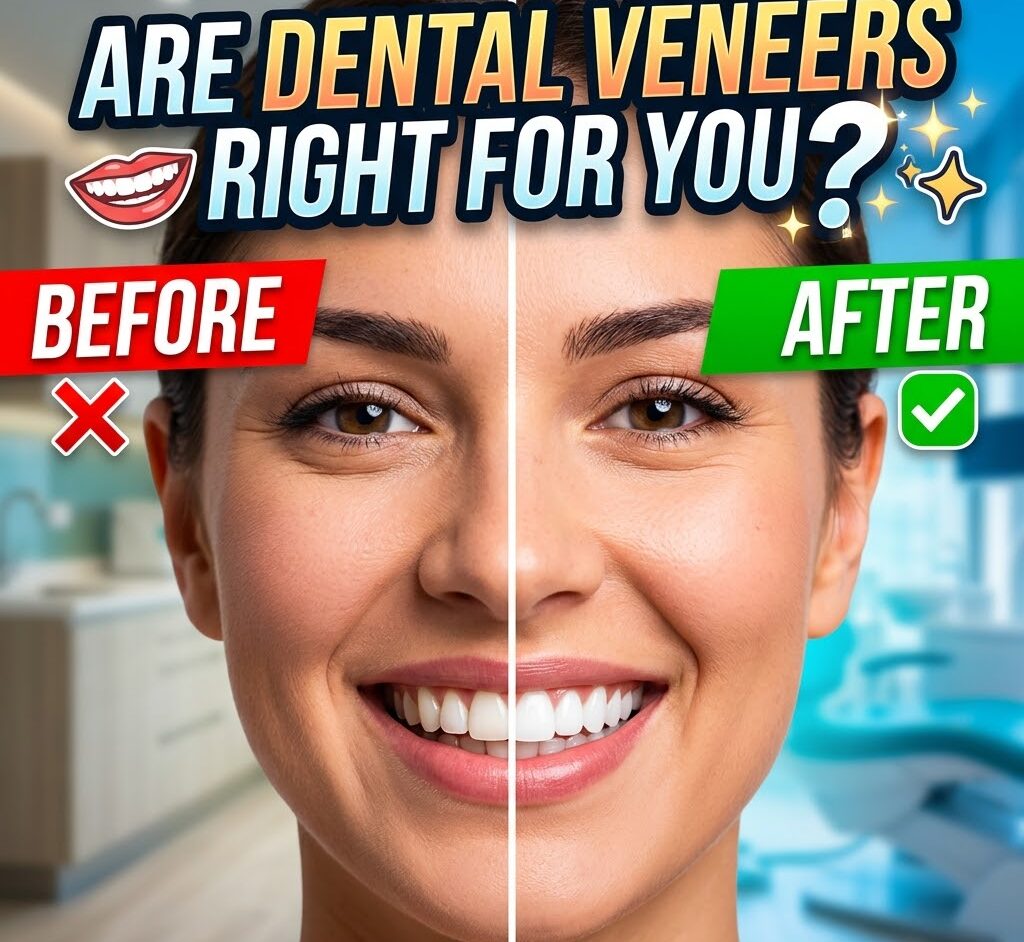
A bright, confident smile is something many people desire, and modern cosmetic dentistry has made it easier than ever to achieve. If you have been looking for ways to improve the appearance of your teeth, you have likely come across dental veneers. They are a favorite among celebrities and everyday people alike for creating that perfect, “Hollywood” smile.
But are they the right choice for your dental needs? Let’s dive into what veneers are, who makes a good candidate, and what you need to consider before making a decision.
What Are Dental Veneers?
Dental veneers are wafer-thin, custom-made shells designed to cover the front surface of your teeth. They are bonded to your natural teeth to change their color, shape, size, or length.
There are two main types of veneers:
-
Porcelain Veneers: These resist stains better than resin veneers and closely mimic the light-reflecting properties of natural teeth. They are highly durable and long-lasting.
-
Composite Resin Veneers: These are thinner and require less removal of the tooth surface before placement. They are generally more affordable than porcelain but may not last quite as long.
Signs Veneers Might Be Right for You
Veneers are highly versatile and can address a wide variety of cosmetic concerns. You might be a great candidate for veneers if you experience any of the following:
-
Stubborn Discoloration: If your teeth are severely stained from medications (like tetracycline), excessive fluoride, or root canal treatments, traditional teeth whitening might not work. Veneers can provide a permanently white smile.
-
Chipped or Broken Teeth: Veneers can instantly restore the natural look and shape of a tooth that has suffered minor cosmetic damage.
-
Gaps Between Teeth: If you have unwanted spaces between your teeth, veneers can be used to close those gaps without the need for braces.
-
Irregular or Misshapen Teeth: Veneers can create a uniform, symmetrical appearance for teeth that are naturally uneven or cratered.
When Veneers Might NOT Be the Best Option
While veneers are a fantastic cosmetic solution, they aren’t suitable for everyone. Grounding your expectations in reality is important. You might need to look into alternative treatments if you have:
-
Active Dental Issues: If you have tooth decay, active gum disease (periodontitis), or root canal infections, these must be completely resolved before any cosmetic work can be done.
-
Severe Teeth Grinding (Bruxism): Clenching or grinding your teeth can easily chip or crack porcelain veneers. If you grind your teeth, your dentist may require you to wear a nightguard, or they may recommend a different treatment.
-
Weakened Teeth: If a tooth has significant decay, large fillings, or very little enamel left, a dental crown (which covers the entire tooth) is usually a safer, more structural choice than a veneer.
-
Severe Misalignment: Veneers can fix slightly crooked teeth, but for severe crowding or bite issues, orthodontic treatments like braces or Invisalign are the healthier and more effective route.
Pros and Cons of Dental Veneers
Before making a commitment, it is helpful to weigh the advantages and disadvantages.
The Bottom Line
Dental veneers are a powerful tool in cosmetic dentistry, capable of completely transforming a smile and boosting self-confidence. However, because the procedure involves permanently altering your natural teeth, it is not a decision to be taken lightly.
Next Steps: The only definitive way to know if veneers are right for you is to schedule a consultation with a board-certified cosmetic dentist. They will evaluate your oral health, discuss your aesthetic goals, and help you determine the safest and most effective path to the smile you deserve!