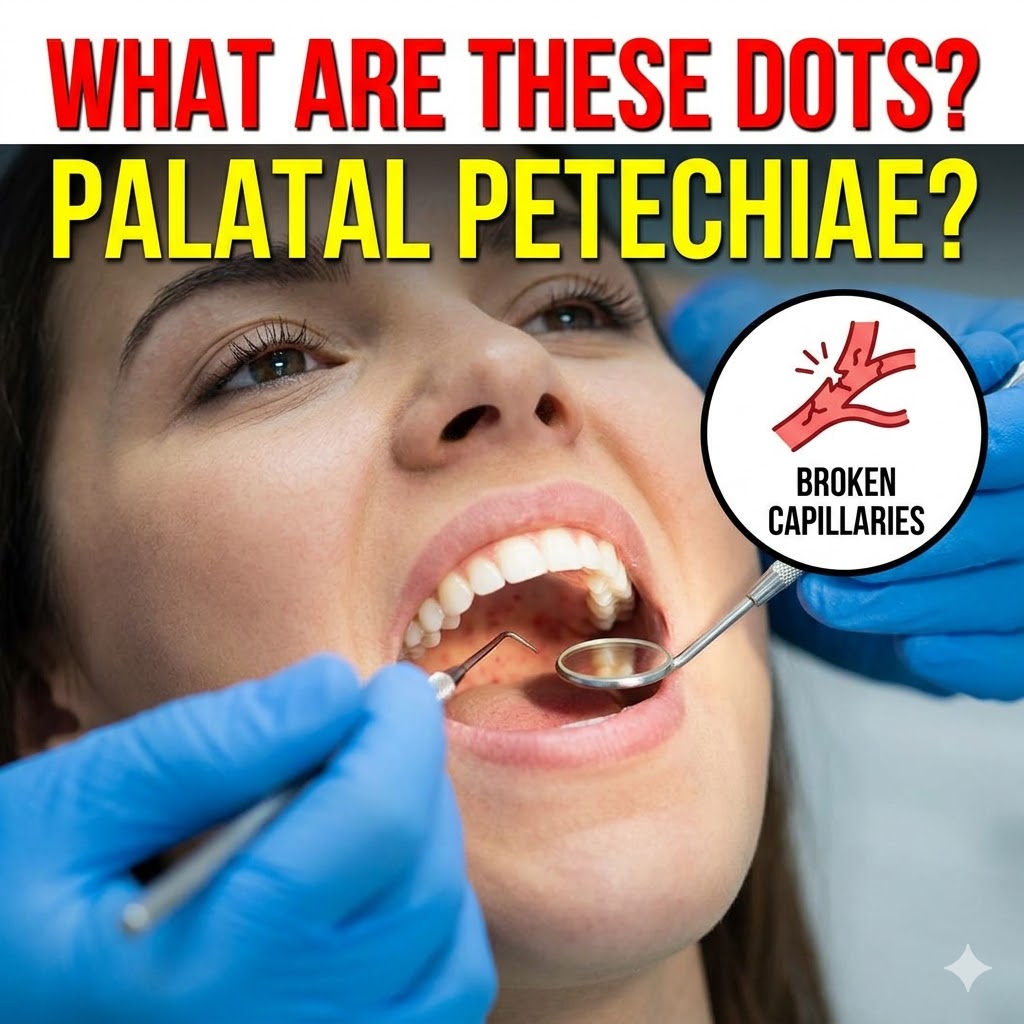
A recent viral trend on social media has sparked a wave of curiosity—and perhaps a little anxiety—among dental patients everywhere. The trend revolves around a simple, provocative question: Can your dentist really tell what you’ve been doing just by looking inside your mouth? As highlighted by dental professionals reacting to these videos, the answer is a resounding yes. Dentists are trained to look far beyond cavities and plaque buildup. The oral cavity is essentially a mirror reflecting your overall health, lifestyle habits, and sometimes, even your private activities. One of the most common, yet least understood, indicators dentists spot during a routine checkup is a condition known as palatal petechiae.
Whether you are a health enthusiast looking to understand your body better or simply curious about the science behind the viral videos, understanding what these tiny red spots mean provides fascinating insight into the complexities of human anatomy and the rigorous standards of healthcare professionals.
What Are Palatal Petechiae? The Science Behind the Red Spots
When you open your mouth wide for a dental exam, the dentist illuminates the entire oral cavity, paying close attention to the soft tissues. If you trace your tongue backward along the roof of your mouth, you will feel the hard palate transition into a softer, fleshier area known as the soft palate. This region is highly vascular and incredibly sensitive.
Petechiae (pronounced puh-TEE-kee-ee) are tiny, pinpoint, round spots that appear on the skin or mucous membranes as a result of bleeding. In the mouth, they most commonly manifest on the soft palate. They appear red, brown, or purple and, crucially, they do not blanch (turn white) when you press on them.
These spots occur when capillaries—the smallest blood vessels in the body—break open and leak a tiny amount of blood into the surrounding tissue. While the sudden appearance of red dots on the roof of your mouth can look alarming, petechiae are a symptom rather than a disease themselves.
The Common (and Unspoken) Causes of Palatal Petechiae
To understand how a dentist can deduce your recent activities, we have to look at the mechanics of how these blood vessels rupture. The soft palate is delicate, and capillaries can burst due to a variety of internal and external factors.
1. Suction and Negative Pressure
This is the specific cause that drives the viral social media conversations. The soft palate is highly susceptible to localized physical trauma. Intense suction or the creation of negative pressure inside the mouth acts similarly to a “hickey” on the skin. The vacuum effect forces the delicate capillaries to expand and rupture, leaving behind a cluster of petechiae. This is why dental professionals can accurately recognize when a patient has recently engaged in activities involving strong oral suction.
2. General Physical Trauma
Not all petechiae are the result of intimate activities. The mouth endures a lot of wear and tear daily. Eating exceptionally hard, crunchy foods (like tortilla chips or hard candies) can bruise the soft palate. Similarly, consuming food or beverages that are too hot can cause minor thermal burns that damage the surface blood vessels. Even aggressive coughing, vomiting, or playing a wind instrument can generate enough pressure to cause these tiny hemorrhages.
3. Underlying Medical Conditions and Infections
From a purely medical standpoint, palatal petechiae are a crucial diagnostic clue for several health conditions.
-
Infectious Mononucleosis: Often called “mono,” this viral infection frequently presents with a sore throat, extreme fatigue, and petechiae on the roof of the mouth.
-
Strep Throat: Bacterial infections, particularly Group A Streptococcus, commonly cause severe inflammation and red spots on the soft palate and uvula.
-
Blood Disorders: In rarer cases, petechiae can indicate a low platelet count (thrombocytopenia) or other issues with blood coagulation, which prevent the blood from clotting normally.
The Dental Exam: More Than Just Teeth
The realization that dentists can spot signs of physical trauma from suction often makes adults feel self-conscious. However, it highlights a crucial aspect of modern dentistry: the comprehensive oral mucosal exam.
When you sit in the dental chair, the professional is conducting an oral cancer screening and a full-tissue pathology check. They are evaluating the tongue, the insides of the cheeks, the floor of the mouth, and the palate. They are trained to differentiate between a harmless cluster of petechiae caused by a weekend coughing fit (or other activities) and lesions that could indicate early-stage oral cancer or a systemic autoimmune disease.
For adult patients, dentists maintain strict professionalism. If they spot petechiae consistent with benign suction trauma and no other signs of illness are present, they typically will not mention it. There is no medical need to cause a patient embarrassment over a harmless, temporary physical symptom. Doctor-patient confidentiality ensures that what is seen in the exam room stays in the exam room.
The Critical Exception: Safeguarding and Protecting Minors
While confidentiality is a cornerstone of healthcare, there is a hard line where that confidentiality is legally and ethically overridden: the protection of vulnerable individuals.
As mentioned by medical professionals discussing this topic, if a dentist observes palatal petechiae indicative of extreme suction or trauma in a minor (a child or teenager), the protocol changes entirely. Dentists are mandated reporters. This means they are legally obligated to report suspected cases of child abuse, neglect, or sexual assault (SA).
Because the oral cavity can show distinct signs of forced trauma or non-consensual activity, pediatric dentists and general practitioners are trained to look for these red flags. In cases where the signs point toward abuse, the principle of “safeguarding” takes precedence. The healthcare provider will escalate the finding to child protective services or relevant authorities to ensure the child’s safety. This vital function makes dental professionals a crucial first line of defense in community health and child welfare.
When Should You Worry About Red Spots?
Most cases of palatal petechiae are completely harmless and will resolve on their own within a few days as the body reabsorbs the tiny amounts of leaked blood. However, because they can be a sign of something more serious, you should be mindful of accompanying symptoms.
Consult a healthcare provider if the petechiae:
-
Spread rapidly or appear on other parts of your body.
-
Are accompanied by a high fever, severe sore throat, or swollen lymph nodes.
-
Do not fade or disappear after a week.
-
Are accompanied by unexplained bruising, nosebleeds, or bleeding gums.
Conclusion: A Window to Your Health
The next time you settle into the dental chair, you can do so with the knowledge that your dentist is performing a highly sophisticated evaluation of your overall well-being. While social media might fixate on the humorous or embarrassing aspects of what a dentist can deduce from the roof of your mouth, the reality is far more profound.
From identifying viral infections to acting as essential protectors for vulnerable children, dentists use every visual cue available to them—including tiny red spots on the palate—to provide comprehensive, compassionate, and life-saving care. Maintaining regular dental checkups is not just about keeping a bright smile; it is a critical component of tracking and preserving your holistic health.