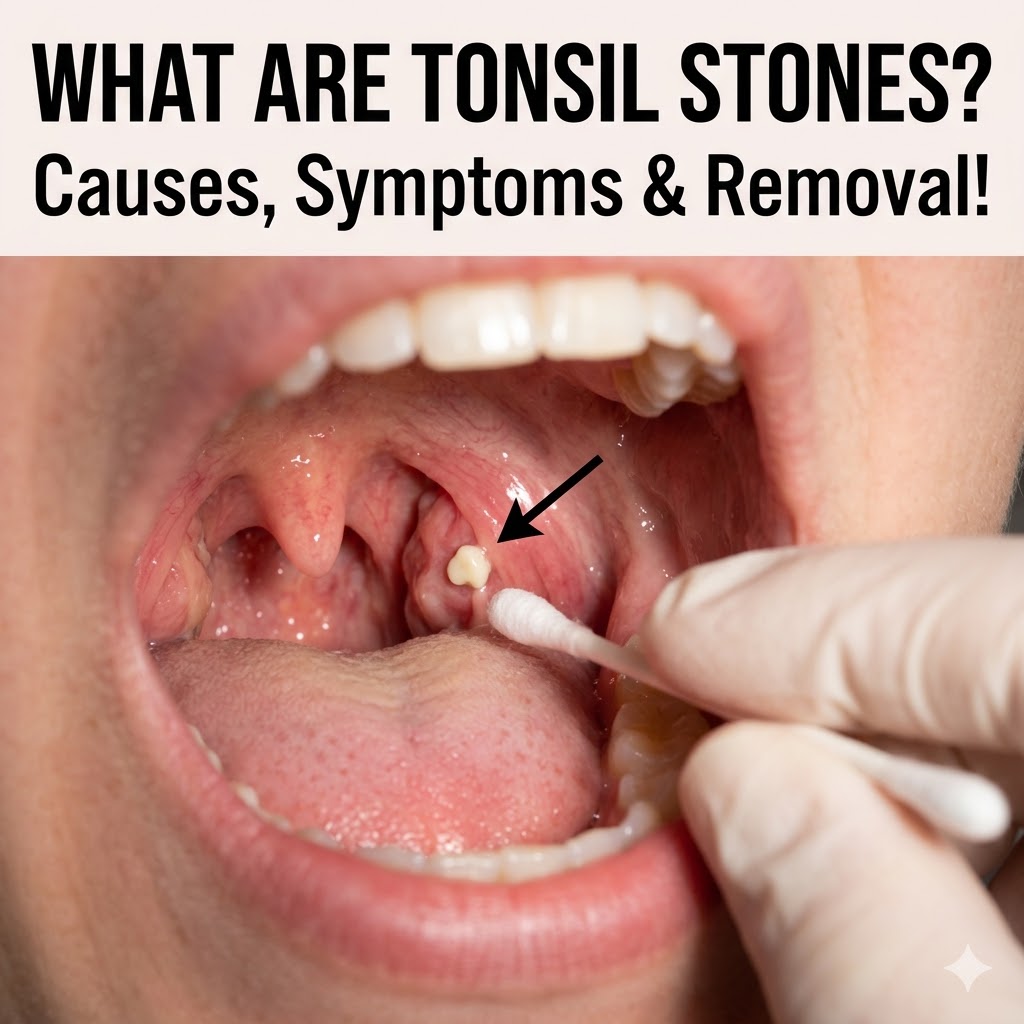
Have you ever felt a sudden, scratchy sensation at the back of your throat, accompanied by unusually bad breath that just will not go away? If you look closely in the mirror and spot small, white or yellowish pebbles lodged in the back of your mouth, you are likely dealing with tonsil stones.
While they might look alarming, these small formations are incredibly common and usually harmless. However, they can be a significant source of discomfort and self-consciousness. This comprehensive guide will break down exactly what tonsil stones are, why they form, how to spot them, and what you can do to get rid of them for good.
What Are Tonsil Stones?
Tonsil stones, known medically as tonsilloliths, are small, hard lumps that form in your tonsils. Your tonsils are the two gland-like structures located at the back of your throat, one on each side. They are part of your body’s immune system, acting as a first line of defense to trap bacteria and viruses that enter through your mouth.
To do this job effectively, tonsils are not perfectly smooth. They are filled with deep crevices, tunnels, and little pockets known as tonsillar crypts. Tonsil stones develop when various materials get caught in these crypts and harden over time.
The Formation Process: How Do They Develop?
The process of tonsil stone formation is gradual. It begins when microscopic debris gets trapped in the tonsillar crypts. This debris is usually a combination of several everyday materials:
-
Food particles: Tiny remnants of the food you eat can easily get lodged in the back of the throat.
-
Dead cells: Your mouth is constantly shedding dead skin and tissue cells, which can accumulate in the crypts.
-
Mucus: Post-nasal drip or regular mucus production can pool in these pockets.
-
Bacteria: Your mouth is home to a massive microbiome of bacteria. These bacteria naturally feed on the trapped food, dead cells, and mucus.
As the bacteria feed and multiply on this debris, the trapped materials begin to decompose. Over time, calcium and other minerals from your saliva and food naturally build up on this decaying matter. This process, known as calcification, hardens the debris into the white or yellowish pebbles we recognize as tonsil stones.
Recognizing the Signs: Common Symptoms
Many people have tiny tonsil stones without ever realizing it. Small stones often cause no symptoms at all and are simply swallowed naturally. However, when they grow larger or multiple stones form, you may begin to notice several distinct signs:
Severe Bad Breath (Halitosis)
This is the most common and often the most distressing symptom. Because tonsil stones are essentially balls of decomposing organic matter and bacteria, they emit a strong, sulfur-like odor. If you struggle with chronic bad breath despite excellent brushing and flossing habits, tonsil stones may be the hidden culprit.
A Scratchy or Sore Throat
As highlighted by medical professionals, one of the first physical sensations is a scratchy feeling at the back of the throat. This can easily be mistaken for the onset of a cold or a minor throat infection.
Difficulty Swallowing
If a stone grows large enough, or if your tonsils become inflamed as a reaction to the stone, you may feel a foreign object sensation when you swallow food or liquids.
Ear Pain
Because the tonsils and ears share complex nerve pathways, a stubborn tonsil stone can cause referred pain in your ear, even if your ear is perfectly healthy.
Visible White Bumps
If you shine a flashlight into the back of your throat and look in a mirror, you may be able to see the stones directly. They typically look like small, white or pale yellow specks nestled in the folds of your tonsils.
How to Remove Tonsil Stones Safely at Home
If your tonsil stones are small and accessible, you can often manage them at home. However, it is crucial to be extremely gentle, as tonsil tissue is delicate and bleeds easily.
Saltwater Gargles
Vigorously gargling with warm saltwater can help dislodge stones and soothe an irritated throat. Mix half a teaspoon of salt into a glass of warm water and gargle daily. This also alters the chemistry of your mouth, making it a less friendly environment for the bacteria that cause stones.
Use a Water Flosser
A water flosser on a very low, gentle setting can be used to flush out the crypts. Aim the stream of water carefully at the pocket containing the stone to wash out the debris. Never use a high-pressure setting, as this can severely damage the tonsil tissue or drive the stone deeper into the crypt.
Gentle Pressure
Some people successfully use a cotton swab to gently press on the tissue around the stone (not directly on it) to pop it out of the crypt. Always wash your hands thoroughly beforehand, use a clean mirror, and stop immediately if you experience pain or bleeding.
When to See a Medical Professional
While home removal works for many, there are times when you should consult a doctor or an Ear, Nose, and Throat (ENT) specialist. Seek medical advice if:
-
The stones are too large to remove yourself.
-
You experience severe pain, excessive bleeding, or swelling.
-
You suffer from recurrent tonsillitis or throat infections alongside the stones.
-
You cannot reach the stones, but you are experiencing chronic bad breath and discomfort.
For persistent and severe cases, an ENT may recommend medical interventions. This can range from professionally extracting the stones in the office to a tonsillectomy (the surgical removal of the tonsils), which is the only permanent cure for tonsil stones.
Preventive Measures for Long-Term Relief
The best way to deal with tonsil stones is to stop them from forming in the first place. Incorporating a few simple habits into your daily routine can make a massive difference.
-
Maintain flawless oral hygiene: Brush twice a day, floss daily, and scrape your tongue. A tongue scraper removes the bacteria at the back of your mouth that directly contributes to stone formation.
-
Stay hydrated: Drinking plenty of water throughout the day keeps your mouth moist, encouraging natural saliva production to wash away food particles and dead cells before they can settle into the crypts.
-
Use an oxygenating mouthwash: Mouthwashes containing chlorine dioxide or zinc can help neutralize the sulfur-producing bacteria that cause the foul smell associated with tonsil stones.
-
Quit smoking: Smoking alters the bacterial balance in your mouth and can increase tonsil inflammation, making the crypts larger and more prone to trapping debris.
By understanding the anatomy of your tonsils and maintaining a proactive approach to oral hygiene, you can successfully manage tonsil stones and keep your throat healthy, comfortable, and fresh.