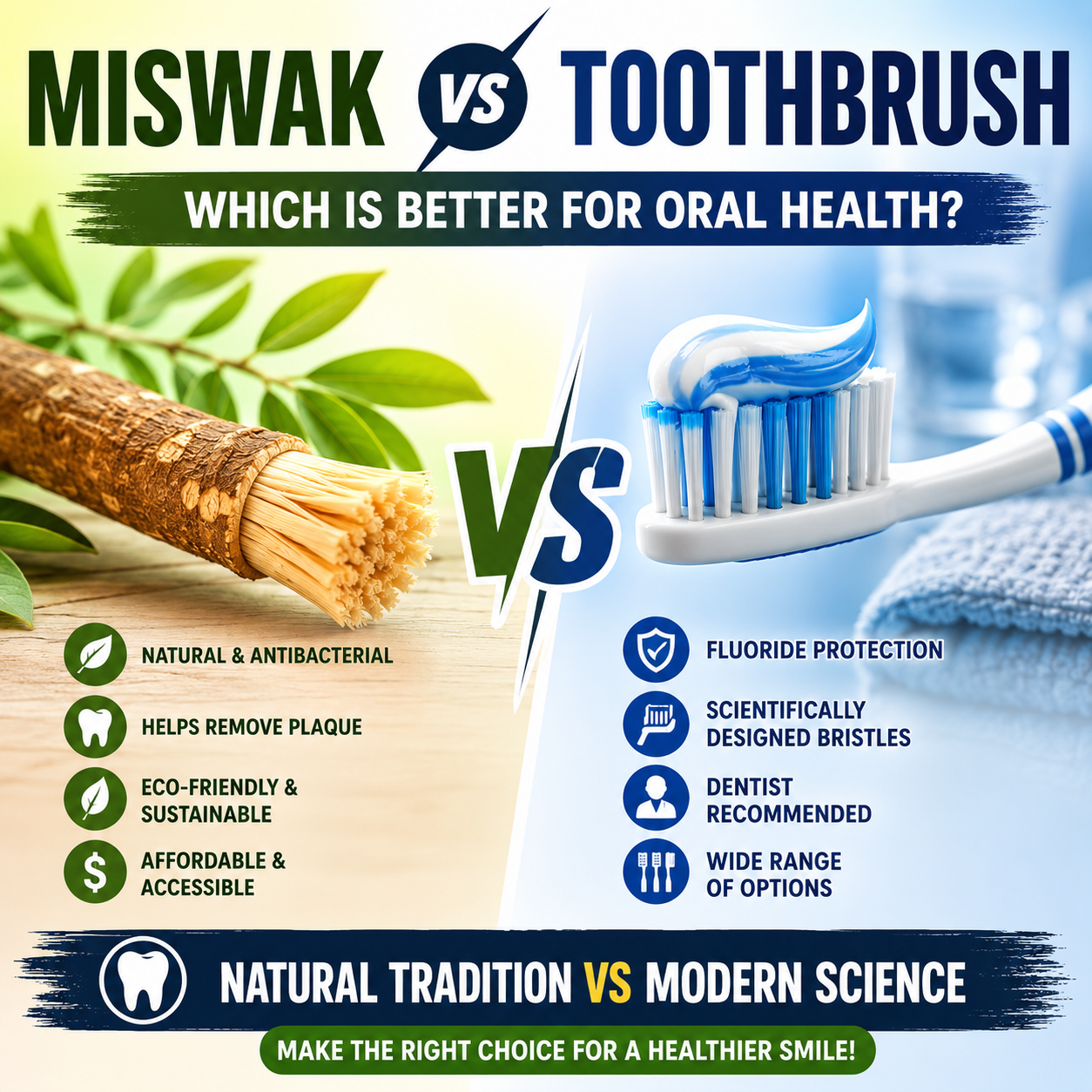
Maintaining good oral hygiene is essential for overall health. While modern toothbrushes have become the standard tool for cleaning teeth, an ancient alternative known as Miswak (Siwak) continues to gain popularity worldwide. Used for centuries in many cultures, particularly in the Middle East, Africa, and Asia, Miswak is a natural teeth-cleaning stick derived from the Salvadora persica tree.
As more people seek natural and eco-friendly health solutions, many wonder: Is Miswak better than a toothbrush? In this article, we’ll compare Miswak and traditional toothbrushes, explore their benefits, and help you determine which option may be best for your oral health.
What Is Miswak?
Miswak is a natural chewing stick made from the roots, twigs, or stems of the Salvadora persica tree. It has been used for over 7,000 years as a tool for oral hygiene and is highly valued in Islamic tradition.
To use Miswak, the end of the stick is softened and chewed until it forms bristle-like fibers. These fibers are then used to brush the teeth and gums.
Benefits of Using Miswak
1. Natural Antibacterial Properties
One of Miswak’s biggest advantages is its natural antibacterial effect. Research has shown that Miswak contains compounds that help inhibit the growth of harmful bacteria responsible for plaque buildup and gum disease.
These natural antimicrobial agents can contribute to a healthier mouth without the need for artificial chemicals.
2. Effective Plaque Removal
Several studies suggest that Miswak can be highly effective in removing dental plaque when used correctly. The natural fibers act similarly to toothbrush bristles, helping to clean tooth surfaces and reduce plaque accumulation.
Regular use may contribute to healthier gums and fresher breath.
3. Affordable and Accessible
Miswak is inexpensive compared to many modern dental products. In many countries, it is readily available in markets and pharmacies.
Since it does not require toothpaste or batteries, it remains one of the most cost-effective oral hygiene tools available.
4. Environmentally Friendly
Unlike plastic toothbrushes that contribute to environmental waste, Miswak is biodegradable and sustainable. As awareness of environmental issues grows, many consumers are choosing eco-friendly alternatives such as Miswak.
5. Convenient for Travel
Miswak requires no toothpaste, electricity, or water. This makes it a practical option for travelers, campers, and individuals who want a portable oral hygiene solution.
Benefits of Using a Traditional Toothbrush
1. Fluoride Protection
One major advantage of using a toothbrush with fluoride toothpaste is protection against tooth decay. Fluoride helps strengthen enamel and reduce cavities.
Since Miswak does not naturally provide fluoride in significant amounts, toothbrush users may have an advantage when it comes to cavity prevention.
2. Scientifically Designed Bristles
Modern toothbrushes are engineered to reach difficult areas between teeth and along the gumline. Electric toothbrushes further enhance cleaning efficiency through automated brushing motions.
This design allows users to achieve a thorough cleaning experience with proper technique.
3. Dentist Recommended
Most dental professionals recommend brushing twice daily with fluoride toothpaste and flossing regularly. Toothbrushes have been extensively studied and remain the standard recommendation in modern dentistry.
4. Variety of Options
Consumers can choose from manual toothbrushes, electric toothbrushes, soft-bristle models, and specialized brushes designed for orthodontic patients or individuals with sensitive gums.
Miswak vs. Toothbrush: A Detailed Comparison
Cleaning Effectiveness
Both Miswak and toothbrushes can effectively remove plaque when used correctly. However, technique plays a crucial role.
A properly used Miswak can provide excellent cleaning, while a toothbrush offers consistency and easier access to all tooth surfaces.
Antibacterial Benefits
Miswak naturally contains antibacterial compounds that help reduce harmful oral bacteria. Toothbrushes rely primarily on toothpaste ingredients for antimicrobial effects.
Fluoride Availability
Traditional toothbrushes paired with fluoride toothpaste offer stronger protection against cavities. This remains one of their most significant advantages.
Cost
Miswak is generally more affordable than toothbrushes and toothpaste combined.
Environmental Impact
Miswak is biodegradable and environmentally friendly. Plastic toothbrushes contribute significantly to landfill waste worldwide.
Convenience
Miswak is portable and does not require toothpaste or water. However, toothbrushes are easier for many people to use effectively.
What Does Science Say About Miswak?
Numerous scientific studies have examined the effectiveness of Miswak. Researchers have found that regular Miswak users often demonstrate lower plaque levels and healthier gums compared to some toothbrush users.
The World Health Organization (WHO) has also recognized Miswak as a beneficial oral hygiene tool. However, experts emphasize that proper usage technique is essential for achieving optimal results.
Improper use may fail to clean all tooth surfaces adequately.
Can You Use Both?
Absolutely.
Many dental professionals suggest combining the benefits of both methods. For example:
- Use a fluoride toothbrush twice daily.
- Use Miswak throughout the day for additional cleaning.
- Continue regular dental checkups.
- Floss daily for complete oral hygiene.
This combination allows individuals to enjoy the natural antibacterial properties of Miswak while still benefiting from fluoride protection.
Tips for Using Miswak Correctly
To maximize the benefits of Miswak:
- Cut off a small portion of the bark.
- Chew the tip until fibers separate.
- Brush gently in vertical motions.
- Rinse the fibers regularly.
- Trim used fibers every few days.
- Replace the Miswak stick when it becomes worn.
Proper maintenance helps ensure effective cleaning and hygiene.
Conclusion
The debate between Miswak and toothbrushes does not necessarily have a single winner. Both offer unique advantages for oral health.
Miswak provides natural antibacterial protection, effective plaque removal, affordability, and environmental benefits. Traditional toothbrushes excel in fluoride delivery, scientific design, and widespread dental endorsement.
For many people, the best solution may be incorporating both into their daily oral care routine. By combining modern dental science with traditional oral hygiene practices, individuals can achieve healthier teeth, stronger gums, and a brighter smile.
Whether you choose Miswak, a toothbrush, or both, consistency remains the most important factor in maintaining excellent oral health.