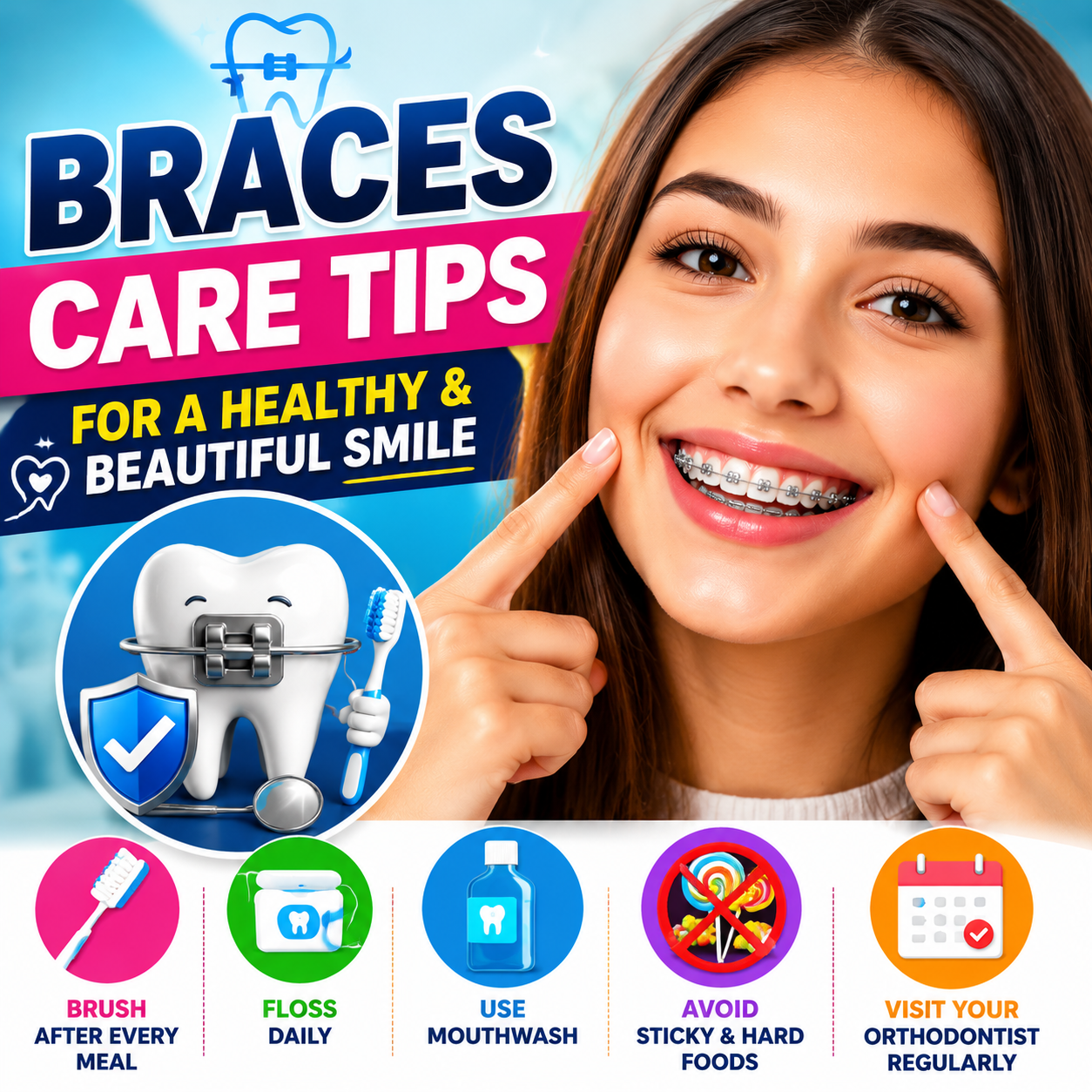
Braces are one of the most effective orthodontic treatments for correcting crooked teeth, overcrowding, gaps, and bite problems. Millions of people, including children, teenagers, and adults, choose braces to improve their smiles and oral health. However, wearing braces requires extra care and attention to keep your teeth and gums healthy throughout the treatment process.
If you recently got braces or are considering orthodontic treatment, understanding proper braces care is essential. In this guide, we’ll cover important braces tips, oral health recommendations, foods to avoid, and best practices to ensure successful treatment and a beautiful smile.
What Are Braces?
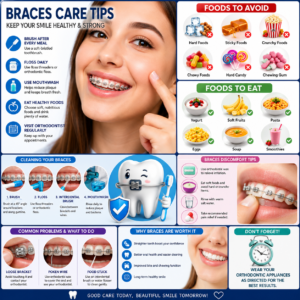
Braces are orthodontic devices designed to gradually move teeth into their correct positions. They consist of brackets attached to the teeth and wires that apply gentle pressure over time.
Orthodontists recommend braces to correct:
- Crooked teeth
- Overcrowded teeth
- Gaps between teeth
- Overbites
- Underbites
- Crossbites
- Jaw alignment issues
Properly aligned teeth not only improve appearance but also make it easier to clean your teeth, reducing the risk of cavities and gum disease.
Why Braces Are Important for Oral Health
Many people think braces are purely cosmetic, but they provide significant health benefits as well.
Improved Oral Hygiene
Straight teeth are easier to brush and floss. Crowded or overlapping teeth can trap food particles and plaque, increasing the risk of tooth decay.
Better Bite Function
Correcting bite issues helps improve chewing, speaking, and overall jaw function.
Reduced Risk of Gum Disease
When teeth are properly aligned, it becomes easier to maintain healthy gums and prevent inflammation.
Prevention of Tooth Wear
Misaligned teeth can cause uneven pressure during chewing, leading to excessive wear on certain teeth.
Essential Braces Care Tips
1. Brush After Every Meal
Food can easily get stuck around brackets and wires. Brushing after every meal helps remove plaque and food particles before they cause problems.
Use:
- A soft-bristled toothbrush
- Fluoride toothpaste
- An orthodontic toothbrush if recommended
Brush carefully around each bracket and along the gumline.
2. Floss Daily
Flossing with braces may seem challenging, but it’s crucial for maintaining oral health.
Helpful tools include:
- Floss threaders
- Orthodontic floss
- Water flossers
Daily flossing helps remove plaque from areas your toothbrush cannot reach.
3. Use Mouthwash
An antibacterial mouthwash can help reduce plaque buildup and keep your mouth fresh.
Choose a fluoride mouthwash to strengthen enamel and reduce cavity risk.
4. Stay Hydrated
Drinking water throughout the day helps wash away food particles and bacteria. Water also promotes saliva production, which naturally protects your teeth.
5. Attend Regular Orthodontic Appointments
Never skip scheduled orthodontic visits. These appointments allow your orthodontist to:
- Adjust wires
- Monitor tooth movement
- Check treatment progress
- Address any issues early
Regular checkups help ensure your treatment stays on track.
Foods to Avoid with Braces
Certain foods can damage brackets and wires, leading to longer treatment times and costly repairs.
Hard Foods
Avoid:
- Ice cubes
- Hard candies
- Nuts
- Popcorn kernels
Chewing hard foods can break brackets or bend wires.
Sticky Foods
Avoid:
- Caramel
- Chewing gum
- Taffy
- Sticky candies
Sticky foods can pull brackets off teeth and become trapped in braces.
Crunchy Foods
Avoid biting directly into:
- Apples
- Corn on the cob
- Carrots
Instead, cut these foods into small pieces before eating.
Sugary Foods and Drinks
Limit:
- Soda
- Sports drinks
- Candy
- Sweet snacks
Sugar contributes to plaque buildup and tooth decay, especially around brackets.
Best Foods to Eat with Braces
Eating braces-friendly foods can make treatment more comfortable.
Recommended foods include:
- Yogurt
- Mashed potatoes
- Soft fruits
- Pasta
- Rice
- Eggs
- Soup
- Smoothies
- Fish
- Soft vegetables
These foods are gentle on braces and help maintain proper nutrition.
Managing Braces Discomfort
It’s normal to experience mild discomfort after getting braces or after adjustments.
Use Orthodontic Wax
If brackets irritate your cheeks or lips, orthodontic wax can create a protective barrier.
Eat Soft Foods
Stick to softer foods for the first few days after adjustments.
Rinse with Warm Salt Water
A warm saltwater rinse can soothe irritated tissues and reduce discomfort.
Follow Professional Advice
If discomfort becomes severe or persistent, contact your orthodontist for guidance.
Common Braces Problems and Solutions
Loose Bracket
If a bracket becomes loose:
- Avoid touching it
- Contact your orthodontist
- Follow their instructions
Broken Wire
A broken wire can irritate the inside of your mouth.
Use orthodontic wax temporarily and schedule a repair appointment.
Food Stuck in Braces
Use:
- Interdental brushes
- Water flossers
- Dental picks approved by your orthodontist
Avoid using sharp objects that may damage your braces.
How Long Do Braces Stay On?
Treatment time varies depending on the complexity of the case.
Average treatment duration:
- Mild cases: 12–18 months
- Moderate cases: 18–24 months
- Complex cases: 24–36 months
Following your orthodontist’s instructions and maintaining good oral hygiene can help avoid unnecessary delays.
Life After Braces
Once your braces are removed, your orthodontist will likely recommend a retainer.
Retainers help:
- Maintain tooth alignment
- Prevent teeth from shifting
- Protect your investment in orthodontic treatment
Wearing your retainer as directed is essential for long-term results.
Tips for Maintaining a Healthy Smile During Orthodontic Treatment
To achieve the best outcome:
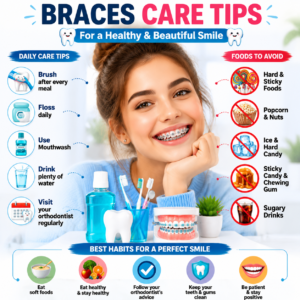
- Brush after every meal
- Floss daily
- Avoid damaging foods
- Attend orthodontic appointments
- Wear rubber bands if prescribed
- Use fluoride products
- Drink plenty of water
- Follow your orthodontist’s instructions
These habits can significantly improve your treatment experience and final results.
Conclusion
Braces are a powerful tool for improving both your smile and overall oral health. While orthodontic treatment requires dedication and proper care, the benefits are well worth the effort. By following essential braces care tips, maintaining excellent oral hygiene, and avoiding foods that can damage your braces, you can enjoy a smoother treatment journey and achieve the healthy, confident smile you’ve always wanted.
Whether you’re just starting your braces journey or already wearing them, these health tips will help you protect your teeth, prevent complications, and maximize the success of your orthodontic treatment.