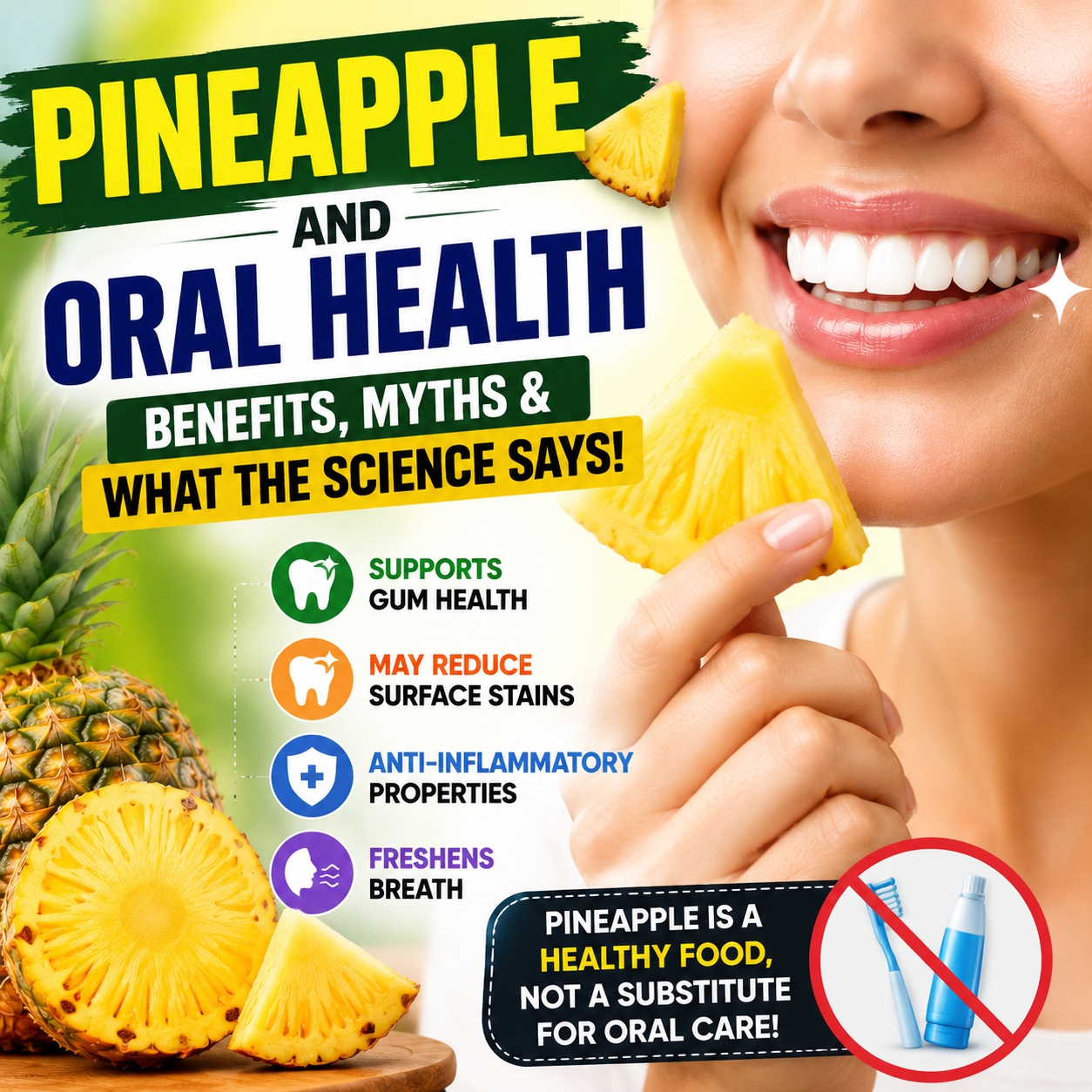
In recent years, social media platforms like TikTok and Instagram have been filled with videos claiming that pineapple can “whiten teeth,” “clean the mouth,” or even improve oral hygiene naturally. The video you shared appears to focus on pineapple, smiling, teeth, and dental health—especially in relation to orthodontics and braces.
But how much of this is actually true?
This article explores the real science behind pineapple and oral health, its benefits, limitations, and what dentists actually recommend for a healthy smile.
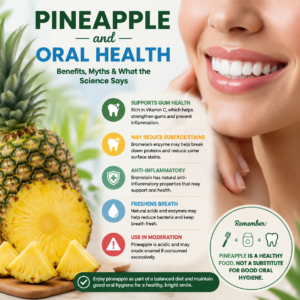
What Makes Pineapple Special for Oral Health?
Pineapple is a tropical fruit rich in vitamin C, antioxidants, and a unique enzyme called bromelain. This enzyme is what makes pineapple popular in oral health discussions.
Key nutrients in pineapple:
- Vitamin C (supports gums and collagen health)
- Antioxidants (fight inflammation)
- Bromelain enzyme (helps break down proteins)
Because of these properties, pineapple is often associated with improved oral hygiene and fresher breath.
Can Pineapple Really Whiten Teeth?
One of the biggest viral claims is that pineapple naturally whitens teeth. The truth is more complicated.
What bromelain does:
Bromelain is a proteolytic enzyme, meaning it breaks down proteins. In theory, it may help remove:
- Surface stains from food
- Plaque buildup proteins
- Some bacteria films on teeth
What it does NOT do:
- It does NOT bleach teeth like professional whitening treatments
- It does NOT permanently change tooth color
- It does NOT replace brushing or dental care
Dental reality:
Dentists agree that while pineapple may slightly reduce surface stains, the effect is minimal and temporary. Professional whitening treatments or good oral hygiene are far more effective.
Pineapple and Gum Health
Where pineapple actually shows more promise is in gum health.
Vitamin C plays a major role in:
- Strengthening gums
- Preventing bleeding gums
- Supporting healing after dental irritation
People with low vitamin C levels are more likely to experience gum inflammation or gingivitis. Eating pineapple can contribute to better gum health as part of a balanced diet.
However, it is important to remember that pineapple is acidic, which can irritate sensitive gums if consumed excessively.
Is Pineapple Safe for People with Braces?
If you wear braces, pineapple can be both helpful and tricky.
Benefits:
- Soft texture (when ripe) is easy to chew
- Nutrients support gum health during orthodontic treatment
- Natural sweetness reduces cravings for sugary snacks
Risks:
- High acidity can weaken enamel around brackets
- Sticky fibers may get trapped in braces
- Excess consumption can increase tooth sensitivity
Dentist recommendation:
If you have braces, it is better to:
- Eat pineapple in small, soft pieces
- Rinse your mouth with water afterward
- Avoid dried pineapple (very sticky and sugary)
Can Pineapple Clean Your Mouth Naturally?
Some viral videos suggest that pineapple acts like a “natural mouth cleaner.” This is misleading.
What pineapple can do:
- Temporarily reduce bacteria levels due to acidity
- Increase saliva flow (which helps wash the mouth)
- Provide a fresh feeling after eating
What it cannot do:
- Replace toothpaste or flossing
- Remove hardened plaque (tartar)
- Prevent cavities on its own
The only scientifically proven way to clean your mouth is:
- Brushing twice daily with fluoride toothpaste
- Flossing daily
- Regular dental checkups
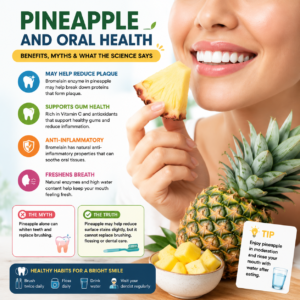
The Acid Problem: Hidden Risk of Pineapple
While pineapple has benefits, it also has a downside that many viral videos ignore: acidity.
Pineapple contains natural acids that can:
- Erode enamel over time
- Increase tooth sensitivity
- Make teeth more vulnerable to staining after eating
How to protect your teeth:
- Eat pineapple during meals (not alone as a snack)
- Rinse with water afterward
- Wait 30 minutes before brushing (to avoid enamel damage)
Pineapple vs. Dental Products: What Actually Works?
Let’s compare pineapple with real dental care methods:
| Method | Effectiveness | Purpose |
|---|---|---|
| Pineapple | Low | Mild stain removal, nutrition |
| Toothpaste (fluoride) | High | Cavity prevention |
| Dental floss | High | Plaque removal between teeth |
| Professional cleaning | Very High | Deep cleaning & tartar removal |
| Whitening treatment | Very High | Tooth color improvement |
Conclusion: Pineapple is a healthy food, not a dental treatment.
The Role of Diet in a Healthy Smile
Even though pineapple is not a miracle dental product, diet still plays a major role in oral health.
Foods that support teeth:
- Dairy products (calcium for enamel strength)
- Leafy greens (vitamins and minerals)
- Apples and carrots (natural cleaning effect)
- Water (cleans bacteria and food particles)
Foods to limit:
- Sugary snacks
- Carbonated drinks
- Sticky candies
- Excess acidic fruits
A balanced diet supports long-term dental health more than any single “superfruit.”
Expert Dentist Opinion
Dental professionals generally agree on three key points:
- Pineapple is healthy, but not a substitute for oral hygiene
- Bromelain may slightly help with surface cleaning
- Overuse can increase acid-related enamel damage
In short, pineapple is a supportive food—not a dental solution.
Final Verdict: Myth vs Reality
Myth:
“Eating pineapple will whiten your teeth and clean your mouth naturally.”
Reality:
- It may slightly reduce surface stains
- It supports gum health due to vitamin C
- It cannot replace brushing, flossing, or dental care
Conclusion: Should You Eat Pineapple for Your Smile?
Yes—but for the right reasons.
Pineapple is a nutritious fruit that can support gum health and contribute to a balanced diet. However, it should never be considered a replacement for proper dental hygiene or professional care.
If your goal is a brighter, healthier smile, the real formula is simple:
Good brushing habits + flossing + regular dentist visits + balanced diet = healthy teeth
Pineapple can be part of that lifestyle—but it is not the secret shortcut many viral videos suggest.