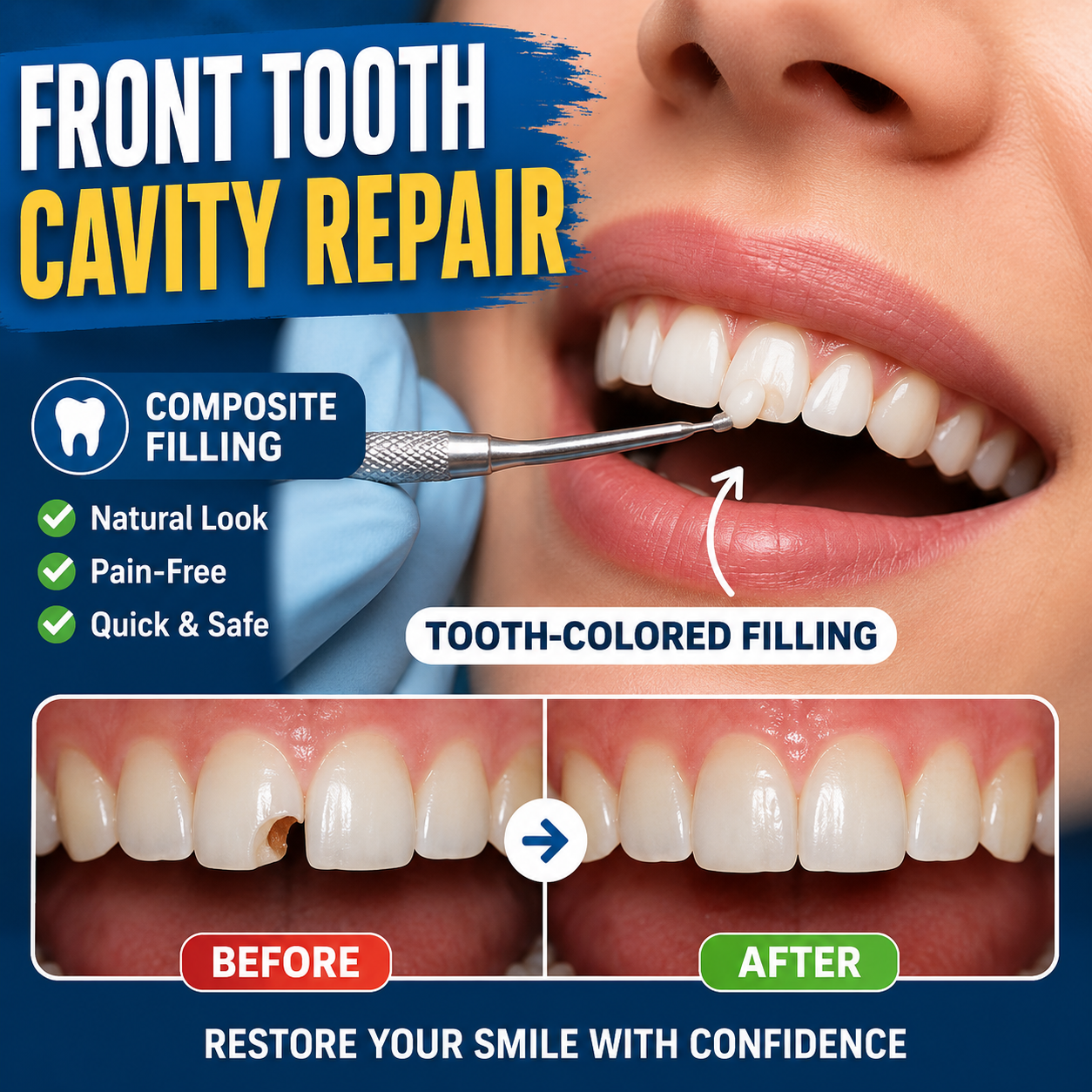
A Front Tooth Cavity Can Be Repaired Beautifully
Many people panic when they discover a cavity in one of their front teeth. Unlike cavities in the back teeth, damage to the front teeth is immediately visible when smiling, talking, or taking photos. Fortunately, modern dentistry offers effective and natural-looking solutions that can restore both the appearance and function of a damaged tooth.
One of the most common treatments for a front tooth cavity is a composite filling. This cosmetic dental procedure allows dentists to remove decay and rebuild the tooth using a tooth-colored material that blends seamlessly with the surrounding teeth.
In this article, we’ll explain how front tooth cavities develop, how composite fillings work, their benefits, and what you can expect during treatment.
What Causes Cavities in Front Teeth?
A cavity, also known as dental caries, occurs when bacteria in the mouth produce acids that gradually erode tooth enamel. While cavities are more common in molars, they can also develop in front teeth.
Several factors increase the risk of front tooth cavities:
- Poor oral hygiene
- Frequent consumption of sugary foods and drinks
- Acidic beverages such as soda and energy drinks
- Dry mouth
- Smoking and tobacco use
- Inadequate fluoride exposure
- Existing enamel defects or cracks
Front teeth may also be vulnerable to cavities near the gum line, especially when plaque accumulates in areas that are difficult to clean properly.
Signs You May Have a Front Tooth Cavity
Recognizing the early signs of tooth decay can help prevent more serious damage.
Common symptoms include:
- White, brown, or black spots on the tooth
- Visible holes or pits
- Increased sensitivity to hot or cold foods
- Pain when eating sweets
- Rough or damaged tooth surfaces
- Discoloration between teeth
- Mild toothache
In some cases, a cavity may not cause noticeable symptoms until it has progressed significantly. Regular dental checkups are essential for early detection.
What Is a Composite Filling?
A composite filling is a tooth-colored restorative material made from a mixture of resin and fine glass particles. Dentists use composite fillings to repair cavities, chips, cracks, and minor cosmetic imperfections.
Unlike traditional silver amalgam fillings, composite fillings are designed to closely match the natural shade of your teeth.
This makes them an ideal choice for restoring front teeth where appearance is especially important.
How Dentists Repair a Front Tooth Cavity
The process of treating a front tooth cavity with a composite filling is usually quick and comfortable.
1. Examination and Diagnosis
The dentist examines the tooth and may take dental X-rays to determine the extent of decay.
2. Local Anesthesia
If necessary, a local anesthetic is applied to ensure the procedure is pain-free.
3. Removal of Decay
The dentist carefully removes the decayed portion of the tooth while preserving as much healthy tooth structure as possible.
4. Tooth Preparation
The area is cleaned and prepared for the filling material.
5. Application of Composite Resin
The composite material is applied in layers. Each layer is hardened using a special blue curing light.
6. Shaping and Polishing
Once the cavity is filled, the dentist shapes and polishes the restoration to match the natural contours of the tooth.
The final result is a smooth, natural-looking tooth that blends almost invisibly with the surrounding teeth.
Benefits of Composite Fillings for Front Teeth
Composite fillings have become one of the most popular restorative options in modern dentistry.
Natural Appearance
The biggest advantage is aesthetics. Composite resin can be color-matched to the patient’s natural teeth, making the repair virtually undetectable.
Minimally Invasive
Dentists can preserve more healthy tooth structure compared to some traditional restoration methods.
Strong Bonding
Composite materials bond directly to the tooth surface, helping strengthen the remaining tooth structure.
Quick Treatment
Most front tooth fillings can be completed in a single dental visit.
Versatility
Composite resin can repair cavities, chips, gaps, and minor cosmetic flaws.
How Long Do Composite Fillings Last?
With proper care, composite fillings can last between 5 and 10 years or longer.
The lifespan depends on several factors:
- Oral hygiene habits
- Diet
- Teeth grinding or clenching
- Filling size
- Regular dental maintenance
Routine dental checkups allow dentists to monitor the condition of fillings and identify any issues early.
Caring for a Composite Filling
After treatment, maintaining good oral hygiene is essential.
Follow these tips:
Brush Twice Daily
Use a fluoride toothpaste and a soft-bristled toothbrush.
Floss Every Day
Flossing removes plaque and food particles between teeth.
Limit Sugary Foods
Reducing sugar intake helps prevent new cavities from forming.
Avoid Using Teeth as Tools
Do not use your teeth to open packages or bite hard objects.
Visit Your Dentist Regularly
Professional cleanings and examinations help keep your teeth healthy.
Can Front Tooth Cavities Be Prevented?
Yes. Most cavities can be prevented through consistent oral care and healthy lifestyle habits.
Prevention strategies include:
- Brushing for two minutes twice daily
- Daily flossing
- Drinking plenty of water
- Limiting sugary snacks
- Using fluoride products
- Scheduling regular dental checkups
- Receiving professional cleanings
Early intervention is always easier and less expensive than treating advanced decay.
Composite Fillings vs. Veneers
Many people confuse composite fillings with veneers.
While both can improve appearance, they serve different purposes.
Composite Fillings
- Treat cavities and tooth damage
- Restore function
- Less expensive
- Often completed in one visit
Veneers
- Primarily cosmetic
- Cover the front surface of teeth
- Used for discoloration, shape correction, and smile enhancement
- Usually require more preparation
For a front tooth cavity, a composite filling is typically the preferred treatment.
Final Thoughts
A cavity in a front tooth may seem alarming, but modern dentistry makes repair easier and more natural-looking than ever before. Composite fillings allow dentists to remove decay, restore tooth strength, and recreate a beautiful smile in a single appointment.
If you notice discoloration, sensitivity, or visible damage to a front tooth, don’t delay treatment. Early intervention can prevent further decay and help preserve your natural tooth for years to come.
With proper oral hygiene, regular dental visits, and healthy habits, you can protect your teeth and enjoy a confident, healthy smile for life.