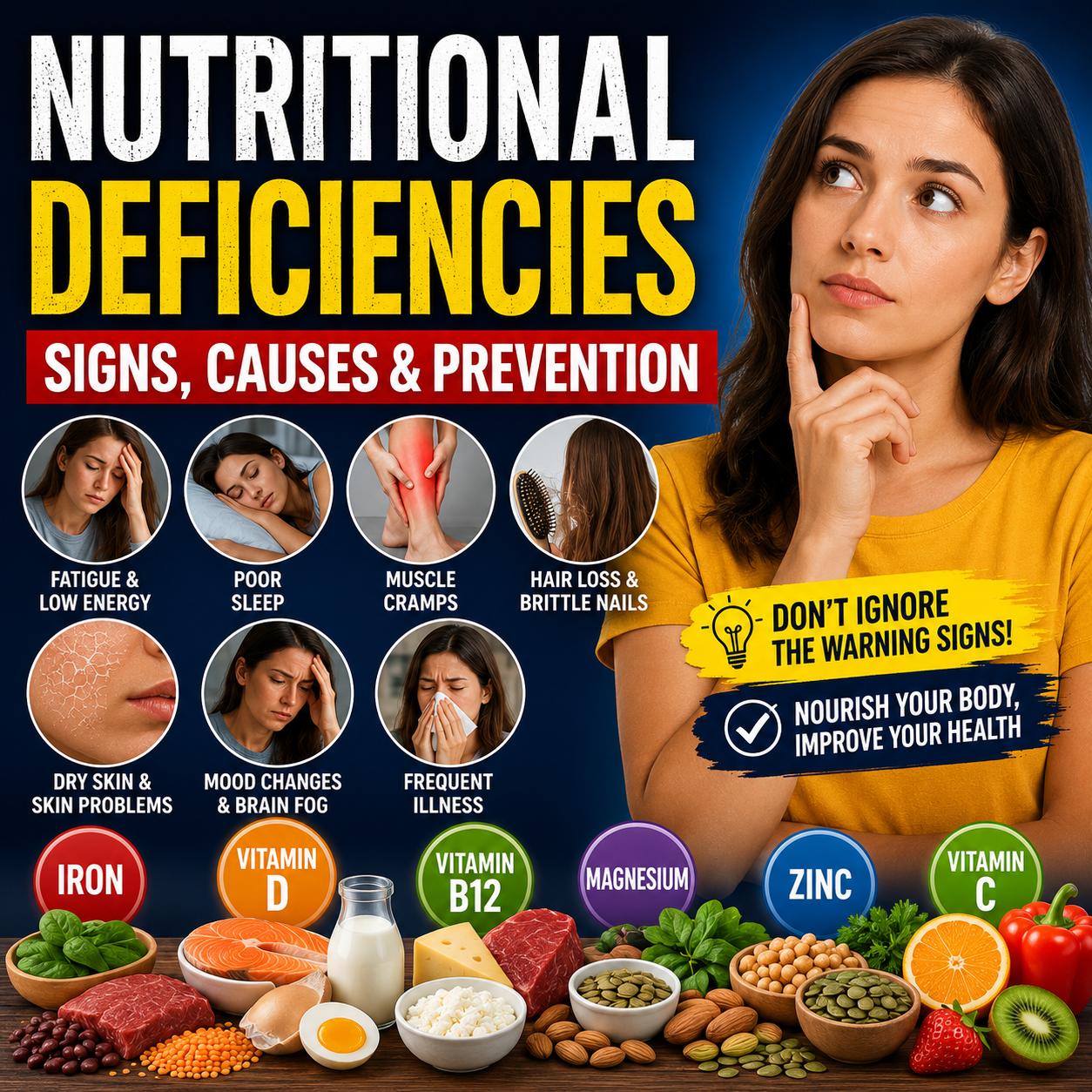
Nutritional deficiencies are more common than many people realize. Even people who eat regularly can suffer from a lack of essential vitamins and minerals. These deficiencies can affect energy levels, mood, sleep quality, immune function, skin health, and overall well-being. Unfortunately, many symptoms are often ignored or mistaken for other health issues.
Understanding the signs of nutritional deficiencies can help you identify potential problems early and make dietary changes before they become serious. In this article, we’ll explore the most common nutritional deficiencies, their symptoms, causes, and practical ways to prevent them.
What Are Nutritional Deficiencies?
A nutritional deficiency occurs when the body does not receive enough of a specific nutrient needed for normal function. Nutrients include vitamins, minerals, proteins, healthy fats, and other essential compounds that support growth, metabolism, and health.
When nutrient levels become too low, the body begins to show warning signs. These symptoms may develop gradually and can affect multiple systems throughout the body.
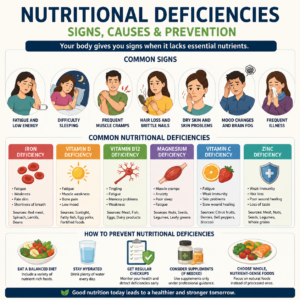
Common Signs of Nutritional Deficiencies
1. Fatigue and Low Energy
Constant tiredness is one of the most common signs of nutrient deficiency. While many factors can cause fatigue, deficiencies in iron, vitamin B12, vitamin D, and magnesium are frequently linked to low energy levels.
Possible Causes:
- Iron deficiency anemia
- Vitamin B12 deficiency
- Vitamin D deficiency
- Poor dietary intake
Foods That Help:
- Lean red meat
- Eggs
- Fish
- Dark leafy greens
- Fortified cereals
2. Difficulty Sleeping
Poor sleep quality may be related to deficiencies in magnesium, vitamin D, or certain B vitamins.
Magnesium plays an important role in relaxation and nervous system regulation. Low levels may contribute to insomnia, restlessness, or difficulty staying asleep.
Foods Rich in Magnesium:
- Pumpkin seeds
- Almonds
- Spinach
- Avocados
- Black beans
3. Frequent Muscle Cramps
Muscle cramps are often associated with dehydration, but nutrient deficiencies can also be responsible.
Common nutrient deficiencies linked to muscle cramps include:
- Magnesium
- Potassium
- Calcium
- Vitamin D
Maintaining proper electrolyte balance is essential for healthy muscle function.
4. Hair Loss and Brittle Nails
Healthy hair and nails require adequate nutrition. Deficiencies in biotin, iron, zinc, and protein can contribute to hair thinning and weak nails.
Nutrients for Hair Health:
- Biotin
- Zinc
- Iron
- Protein
- Omega-3 fatty acids
Best Food Sources:
- Eggs
- Salmon
- Nuts
- Seeds
- Legumes
5. Dry Skin and Skin Problems
Skin health often reflects internal nutritional status. Deficiencies in vitamins A, C, E, and essential fatty acids can result in dry, flaky, or irritated skin.
Vitamin C is particularly important because it supports collagen production, helping maintain skin elasticity and repair.
Skin-Friendly Foods:
- Citrus fruits
- Sweet potatoes
- Carrots
- Nuts
- Fatty fish
6. Mood Changes and Brain Fog
The brain relies on nutrients to function properly. Deficiencies can negatively affect concentration, memory, and mood.
Vitamin B12 deficiency, in particular, has been associated with:
- Brain fog
- Depression
- Poor memory
- Difficulty concentrating
Omega-3 fatty acids also play a major role in supporting brain health and emotional well-being.
7. Frequent Illness
If you seem to catch every cold or infection, your immune system may not be getting the nutrients it needs.
Key nutrients that support immunity include:
- Vitamin C
- Vitamin D
- Zinc
- Selenium
A weakened immune response may increase susceptibility to infections and slow recovery.

Most Common Nutritional Deficiencies Worldwide
Iron Deficiency
Iron deficiency is the most common nutritional deficiency globally. It can lead to anemia, causing fatigue, weakness, pale skin, and shortness of breath.
Iron-Rich Foods:
- Red meat
- Liver
- Spinach
- Lentils
- Beans
Vitamin D Deficiency
Vitamin D deficiency affects millions of people worldwide, especially those who spend little time outdoors.
Symptoms may include:
- Fatigue
- Muscle weakness
- Bone pain
- Low mood
Sources of Vitamin D:
- Sunlight exposure
- Fatty fish
- Egg yolks
- Fortified dairy products
Vitamin B12 Deficiency
Vitamin B12 is essential for nerve function and red blood cell production.
Common symptoms include:
- Tingling sensations
- Fatigue
- Memory problems
- Weakness
Vegetarians and vegans are at higher risk because B12 is primarily found in animal-based foods.
Magnesium Deficiency
Magnesium supports more than 300 biochemical processes in the body.
Low magnesium levels may contribute to:
- Muscle cramps
- Anxiety
- Poor sleep
- Fatigue
Causes of Nutritional Deficiencies
Several factors can increase the risk of deficiencies:
Poor Diet
A diet high in processed foods and low in nutrient-dense foods often lacks essential vitamins and minerals.
Digestive Disorders
Conditions such as:
- Crohn’s disease
- Celiac disease
- Ulcerative colitis
can reduce nutrient absorption.
Aging
As people age, nutrient absorption becomes less efficient, increasing the risk of deficiencies.
Certain Medications
Some medications may interfere with nutrient absorption or increase nutrient loss.
Restricted Diets
Strict vegetarian, vegan, or low-calorie diets may increase the likelihood of specific nutrient deficiencies if not carefully planned.
How to Prevent Nutritional Deficiencies
Eat a Balanced Diet
Focus on consuming a variety of whole foods, including:
- Fruits
- Vegetables
- Lean proteins
- Whole grains
- Healthy fats
Prioritize Nutrient-Dense Foods
Choose foods rich in vitamins and minerals rather than heavily processed alternatives.
Stay Hydrated
Proper hydration supports nutrient transport and overall health.
Get Regular Health Checkups
Blood tests can help identify deficiencies before symptoms become severe.
Consider Supplements When Necessary
Some individuals may benefit from supplements, especially if they have diagnosed deficiencies or dietary restrictions. Always consult a healthcare professional before starting supplementation.
Conclusion
Nutritional deficiencies can affect nearly every aspect of health, from energy levels and sleep quality to immune function and mental clarity. Symptoms such as fatigue, muscle cramps, dry skin, hair loss, and frequent illness may be warning signs that your body lacks essential nutrients.
By eating a balanced diet rich in whole foods, monitoring your health, and addressing deficiencies early, you can support long-term wellness and improve your quality of life. Recognizing the signs of nutritional deficiencies is the first step toward better health and a stronger, more energized body.