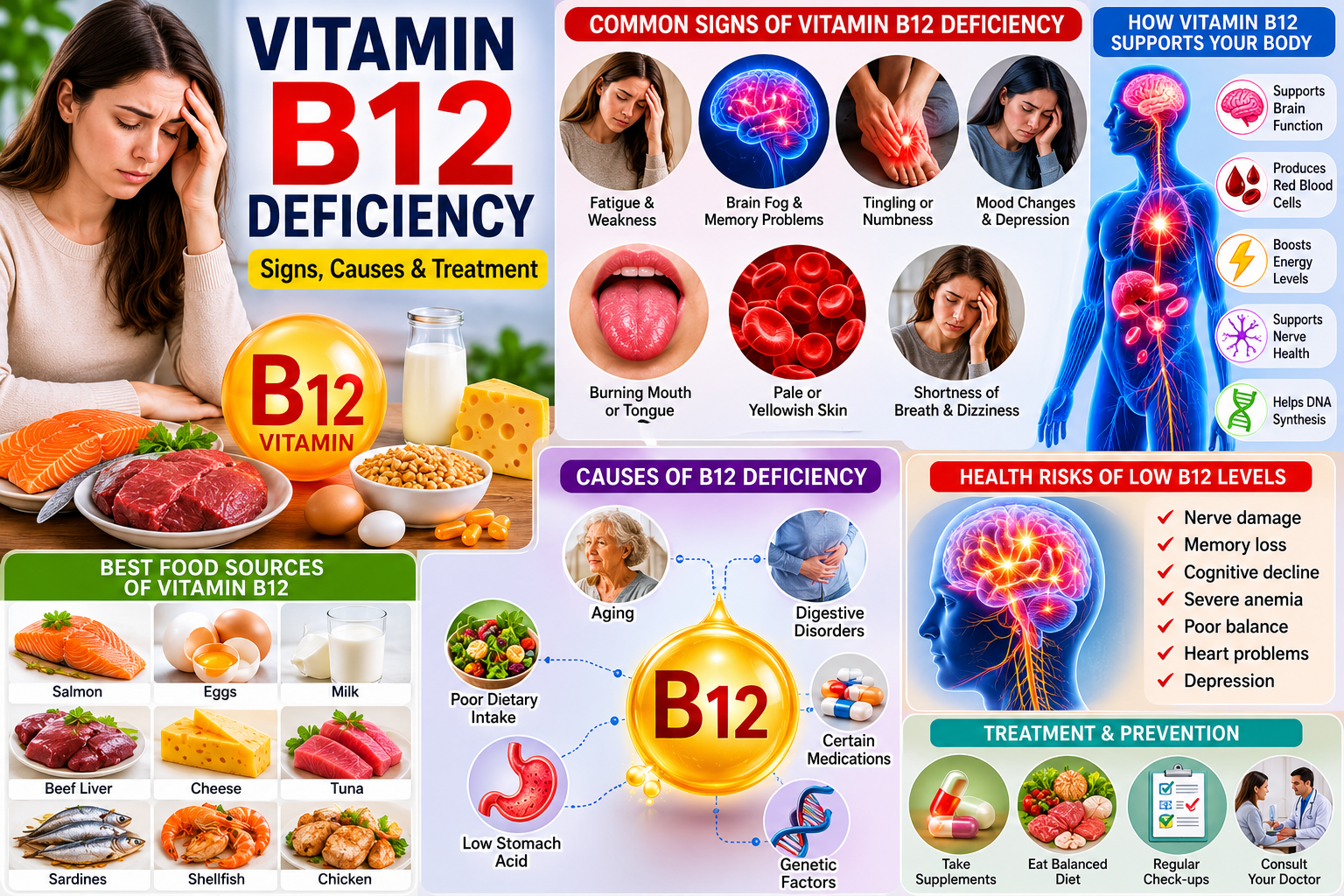
Are You Deficient in Vitamin B12? Important Symptoms You Should Never Ignore
Vitamin B12 is one of the most important nutrients your body needs for energy production, brain function, nerve health, and red blood cell formation. Yet millions of people around the world suffer from vitamin B12 deficiency without even realizing it. Because the symptoms often develop slowly, many people mistake them for normal aging, stress, or other health conditions.
If you constantly feel tired, experience memory problems, or notice unusual sensations in your hands and feet, your body may be trying to tell you that it needs more vitamin B12.
In this article, we’ll explore the common signs of vitamin B12 deficiency, its causes, potential health risks, and the best ways to restore healthy B12 levels.
What Is Vitamin B12?
Vitamin B12, also known as cobalamin, is a water-soluble vitamin that plays a crucial role in several bodily functions, including:
- Producing healthy red blood cells
- Supporting brain and nervous system function
- Helping DNA production
- Converting food into energy
- Maintaining cognitive health
Unlike many other vitamins, vitamin B12 is primarily found in animal-based foods, making deficiency more common among vegetarians, vegans, and older adults.
Common Signs of Vitamin B12 Deficiency
1. Chronic Fatigue and Weakness
One of the earliest and most common symptoms of vitamin B12 deficiency is persistent fatigue. Since B12 helps produce red blood cells that carry oxygen throughout the body, low levels can leave you feeling exhausted even after getting enough sleep.
People often describe this fatigue as:
- Constant tiredness
- Lack of energy
- Difficulty concentrating
- Reduced physical performance
2. Brain Fog and Memory Problems
Vitamin B12 is essential for healthy brain function. Deficiency can affect cognitive performance and may lead to:
- Memory loss
- Difficulty focusing
- Confusion
- Mental fogginess
In severe cases, prolonged deficiency may contribute to neurological damage and increase the risk of cognitive decline.
3. Tingling or Numbness in Hands and Feet
One of the most recognizable symptoms of vitamin B12 deficiency is nerve-related discomfort.
You may experience:
- Pins and needles sensations
- Numbness in fingers or toes
- Burning sensations
- Reduced coordination
These symptoms occur because vitamin B12 helps maintain the protective covering around nerves called myelin.
4. Mood Changes and Depression
Research suggests that low vitamin B12 levels may affect mood-regulating chemicals in the brain.
Some people with deficiency report:
- Depression
- Anxiety
- Irritability
- Mood swings
Improving B12 levels may help support emotional well-being and mental health.
5. Burning Mouth or Tongue
A lesser-known sign of vitamin B12 deficiency is a burning sensation in the mouth or tongue.
Symptoms may include:
- Swollen tongue
- Smooth or shiny tongue appearance
- Mouth discomfort
- Altered taste sensations
If you notice these symptoms, it may be worth discussing vitamin B12 testing with your healthcare provider.
6. Pale or Yellowish Skin
Vitamin B12 deficiency can interfere with red blood cell production, leading to anemia.
As a result, some people develop:
- Pale skin
- Yellowish skin tone
- Shortness of breath
- Dizziness
These symptoms often occur because the body struggles to transport oxygen efficiently.
What Causes Vitamin B12 Deficiency?
Several factors can contribute to low vitamin B12 levels.
Poor Dietary Intake
People who avoid animal products may not consume enough vitamin B12 naturally.
Foods rich in B12 include:
- Beef
- Fish
- Eggs
- Dairy products
- Poultry
- Shellfish
Vegans and strict vegetarians are at a higher risk of deficiency unless they consume fortified foods or supplements.
Aging
As people age, the stomach produces less acid, making it harder to absorb vitamin B12 from food.
This is one reason why deficiency becomes increasingly common after age 50.
Digestive Disorders
Certain medical conditions can interfere with vitamin B12 absorption, including:
- Crohn’s disease
- Celiac disease
- Gastritis
- Pernicious anemia
These conditions may prevent the body from absorbing enough nutrients from food.
Medications
Some medications may reduce vitamin B12 absorption over time, including:
- Acid-reducing drugs
- Proton pump inhibitors
- Metformin for diabetes
Long-term use may increase deficiency risk.
Health Risks of Untreated Vitamin B12 Deficiency
Ignoring vitamin B12 deficiency can have serious consequences.
Potential complications include:
- Permanent nerve damage
- Cognitive decline
- Memory impairment
- Difficulty walking
- Severe anemia
- Increased risk of falls in older adults
The earlier deficiency is identified and treated, the better the chances of preventing long-term damage.
Best Food Sources of Vitamin B12
To maintain healthy levels, include B12-rich foods in your diet whenever possible.
Excellent sources include:
Animal-Based Foods
- Beef liver
- Salmon
- Tuna
- Sardines
- Eggs
- Milk
- Cheese
- Yogurt
Fortified Foods
For vegetarians and vegans:
- Fortified plant milks
- Fortified breakfast cereals
- Nutritional yeast
- Fortified meat alternatives
Reading nutrition labels can help ensure adequate intake.
Should You Take a Vitamin B12 Supplement?
For many people, supplements can be an effective way to maintain healthy B12 levels.
Supplements may be particularly beneficial for:
- Adults over 50
- Vegetarians
- Vegans
- Individuals with digestive disorders
- People taking medications that affect absorption
Vitamin B12 supplements are available as:
- Tablets
- Capsules
- Sublingual drops
- Injections (for severe deficiency)
Always consult a healthcare professional before beginning supplementation.
How Is Vitamin B12 Deficiency Diagnosed?
A simple blood test can determine your vitamin B12 levels.
Your healthcare provider may also evaluate:
- Complete blood count (CBC)
- Methylmalonic acid (MMA)
- Homocysteine levels
These tests can help identify deficiency before serious complications occur.
Final Thoughts
Vitamin B12 deficiency is more common than many people realize, and its symptoms can affect nearly every part of the body. Persistent fatigue, memory issues, numbness, burning mouth sensations, and mood changes may all be warning signs that your body needs more vitamin B12.
Fortunately, deficiency can often be corrected through dietary improvements, supplementation, and proper medical guidance. Paying attention to these early warning signs can help protect your brain, nerves, and overall health for years to come.
If you suspect you may have a vitamin B12 deficiency, consider speaking with a healthcare professional and requesting appropriate testing. Early detection is the key to maintaining optimal health and preventing long-term complications.