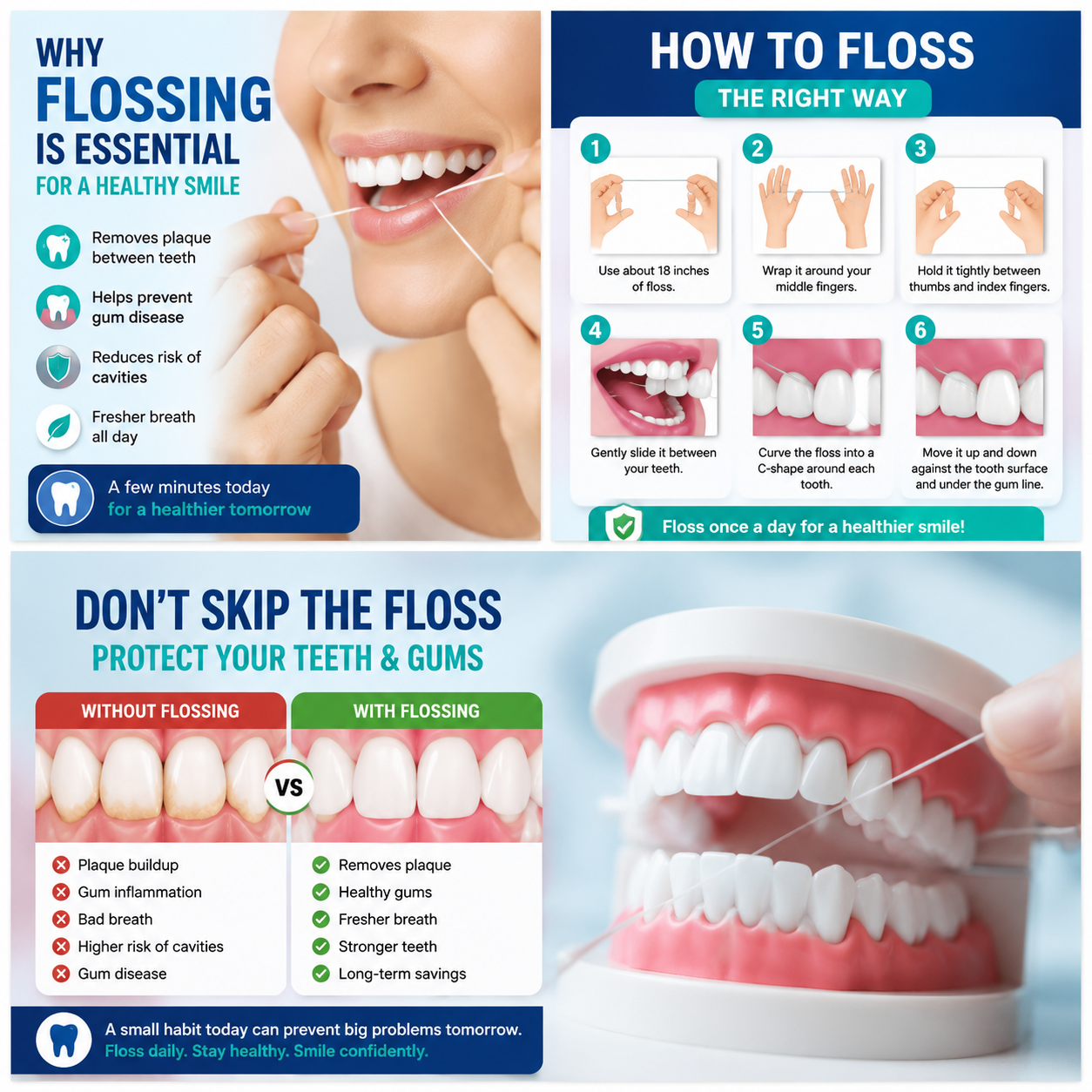
A bright smile is more than just attractive — it is a sign of good health. While most people understand the importance of brushing their teeth twice a day, many still underestimate the power of flossing. Dentists and health organizations like the NHS consistently emphasize that flossing is not optional — it is essential.
If you want healthier gums, fresher breath, and stronger teeth, understanding the importance of flossing can completely transform your oral hygiene routine. In this article, we’ll explore why flossing matters, how to do it correctly, and the long-term benefits for your smile and overall health.
Why Brushing Alone Is Not Enough
Brushing your teeth removes plaque and food debris from the surface of your teeth. However, toothbrush bristles cannot effectively reach the tight spaces between teeth or just below the gum line.
These hidden areas are where bacteria thrive. When plaque builds up between teeth, it can lead to:
- Gum inflammation (gingivitis)
- Bleeding gums
- Persistent bad breath
- Cavities between teeth
- Gum disease (periodontitis)
Flossing cleans approximately 35% of your tooth surface that brushing alone cannot reach. Without flossing, you are leaving a significant portion of your teeth vulnerable to decay.
What Happens If You Don’t Floss?
Skipping flossing may not show immediate consequences, but over time, the damage can become serious.
1. Gum Disease
When plaque is not removed, it hardens into tartar. Tartar irritates the gums and causes inflammation. Early-stage gum disease (gingivitis) can progress into periodontitis, a severe condition that may lead to tooth loss.
2. Tooth Decay Between Teeth
Cavities often form in areas where food particles remain trapped. These interproximal cavities are common among people who do not floss regularly.
3. Bad Breath (Halitosis)
Food debris stuck between teeth creates an ideal environment for bacteria. These bacteria release unpleasant odors, causing chronic bad breath.
4. Higher Dental Costs
Preventive care is always more affordable than treatment. Regular flossing reduces the risk of expensive procedures like fillings, deep cleanings, or gum surgery.
The Correct Way to Floss
Flossing incorrectly can irritate your gums, so proper technique is important.
Step-by-Step Flossing Guide:
- Use about 18 inches of floss.
- Wrap most of it around your middle fingers.
- Hold the floss tightly between your thumbs and index fingers.
- Gently slide it between your teeth using a back-and-forth motion.
- Curve the floss into a C-shape around each tooth.
- Move it up and down against the tooth surface and under the gum line.
- Use a clean section of floss for each tooth.
Avoid snapping the floss into your gums, as this can cause injury.
How Often Should You Floss?
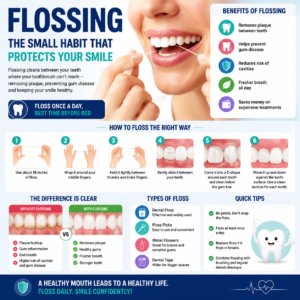
Dentists recommend flossing at least once per day. The best time to floss is before bedtime to remove the day’s accumulated plaque and food particles.
Consistency is more important than perfection. Even if you are new to flossing, starting today will make a noticeable difference in your gum health within a few weeks.
Signs That You Need to Floss More
If you notice any of the following symptoms, your gums may be asking for better care:
- Bleeding when brushing or flossing
- Red or swollen gums
- Gum tenderness
- Persistent bad breath
- Food frequently stuck between teeth
Bleeding during the first few days of flossing is common if you haven’t flossed regularly. However, if bleeding continues after two weeks, consult your dentist.
Types of Floss You Can Use
There are several flossing options available:
1. Traditional Dental Floss
Available in waxed and unwaxed forms. Waxed floss slides more easily between tight teeth.
2. Dental Tape
Wider and flatter than traditional floss — ideal for people with larger gaps.
3. Floss Picks
Convenient and portable. Great for beginners.
4. Water Flossers
Use a stream of water to remove plaque and debris. Especially helpful for people with braces, implants, or sensitive gums.
Choose the method that feels comfortable for you. The best floss is the one you will use daily.
The Connection Between Oral Health and Overall Health
Oral health is closely linked to general health. Research shows that gum disease may be associated with:
- Heart disease
- Diabetes complications
- Respiratory infections
- Pregnancy complications
Bacteria from gum infections can enter the bloodstream and affect other parts of the body. By flossing daily, you are not only protecting your smile but also supporting your overall health.
Flossing for Children and Teenagers
Teaching children proper flossing habits early helps prevent cavities and builds lifelong oral hygiene routines.
Parents should assist children with flossing until they develop the dexterity to do it properly — usually around age 10. For teenagers with braces, floss threaders or water flossers are highly recommended.
Common Myths About Flossing
Myth 1: Flossing Makes Gums Bleed, So It’s Harmful
Fact: Healthy gums do not bleed easily. Bleeding is often a sign of inflammation caused by plaque buildup.
Myth 2: Mouthwash Can Replace Floss
Fact: Mouthwash can kill bacteria but cannot physically remove plaque stuck between teeth.
Myth 3: If My Teeth Feel Clean, I Don’t Need to Floss
Fact: Plaque is invisible and sticky. You cannot rely on feeling alone.
How Long Does It Take to See Results?
With consistent flossing:
- Bleeding gums often improve within 7–14 days.
- Bad breath can improve within a few days.
- Gum inflammation decreases noticeably within weeks.
- Long-term cavity risk significantly reduces.
Flossing is a small daily habit with powerful long-term benefits.
Dentist-Recommended Oral Care Routine
For optimal dental health, follow this routine:
- Brush twice daily with fluoride toothpaste.
- Floss once daily.
- Use mouthwash if recommended.
- Visit your dentist every 6 months.
- Limit sugary snacks and drinks.
This combination dramatically lowers the risk of dental problems.
Final Thoughts: A Simple Habit That Protects Your Smile
Flossing may seem like a minor step, but it plays a major role in maintaining healthy teeth and gums. Just a few minutes each day can prevent gum disease, cavities, bad breath, and costly dental treatments.
If you care about your smile, your health, and your confidence, make flossing a non-negotiable part of your daily routine.
Your future self — and your dentist — will thank you.