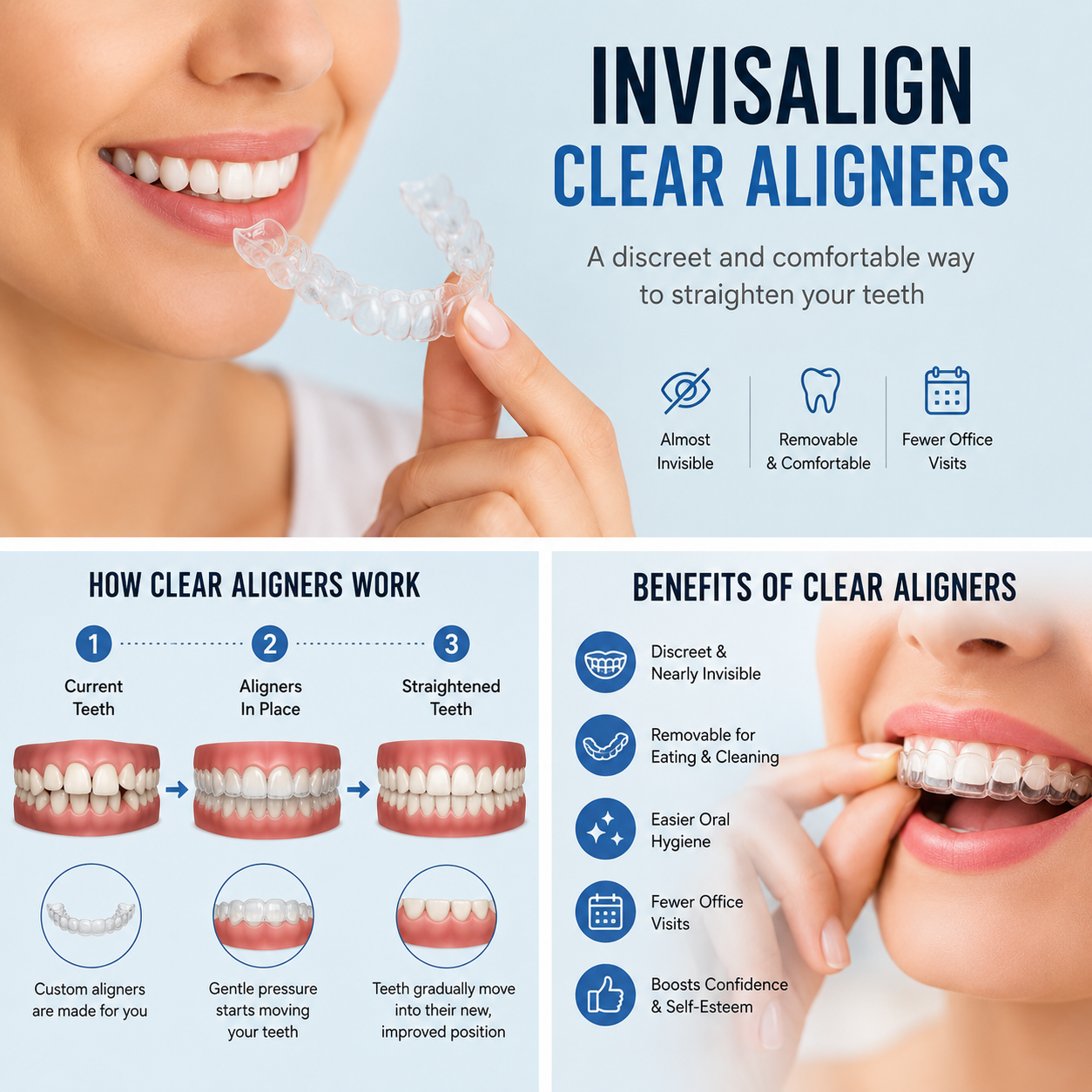
A straighter smile is something many people want, but not everyone wants traditional metal braces. This is one reason why Invisalign and other clear aligner treatments have become so popular. They are discreet, removable, and designed to fit into everyday life with less disruption than fixed braces.
Clear aligners are thin, transparent trays that fit closely over your teeth. Instead of using brackets and wires, they apply gentle, controlled pressure to move your teeth little by little. For many patients, this makes teeth straightening feel more modern, convenient, and confidence-friendly.
However, clear aligners are still a form of orthodontic treatment. That means they should be planned carefully, monitored professionally, and worn exactly as instructed. When used correctly, they can help close gaps, improve crowding, and create a more balanced smile.
What Are Invisalign and Clear Aligners?
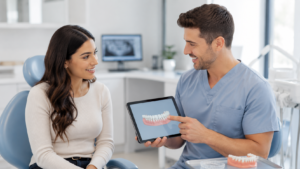
Invisalign is one of the best-known brands of clear aligners. The term “clear aligners” refers more generally to transparent, removable trays used to move teeth into better positions. These aligners are custom-made for each patient based on their current teeth and their planned final smile.
The aligners are almost invisible when worn, which makes them especially popular with adults and teens who want a discreet option. Since they can be removed, patients can eat, brush, and floss more normally compared with fixed braces.
Clear aligners are commonly used for mild to moderate orthodontic concerns such as small gaps, slightly crooked teeth, mild crowding, and certain bite issues. More complex cases may still require fixed braces or a combined treatment approach.
How Do Clear Aligners Move Teeth?
Clear aligner treatment works through a series of trays. Each tray is slightly different from the one before it. When you wear a new aligner, it applies gentle pressure to specific teeth. Over time, this pressure encourages the teeth to move gradually into the planned position.
Patients usually change to a new aligner every one to two weeks, depending on the treatment plan provided by their dentist or orthodontist. Each stage moves the teeth only a small amount. This slow, controlled process helps guide the teeth safely and predictably.
A digital treatment plan is often created before treatment begins. With Invisalign, this may include a ClinCheck-style preview, which shows the expected movement of the teeth from start to finish. This can help patients understand what their smile may look like after treatment.
How Many Hours a Day Should You Wear Aligners?
Consistency is one of the most important parts of successful clear aligner treatment. Most patients are told to wear their aligners for around 20 to 22 hours per day, or as directed by their provider.
This means aligners should usually only be removed for eating, drinking anything other than water, brushing, and flossing. If aligners are left out for too long, the teeth may not move as planned. This can delay treatment, make trays feel tight, or require extra refinement aligners later.
A good routine is to put your aligners straight back in after meals and cleaning. The more disciplined you are with wear time, the more likely your treatment will stay on track.
Can You Eat Normally With Invisalign?
One of the biggest advantages of clear aligners is that you can remove them before eating. This means there are usually fewer food restrictions compared with traditional braces. Sticky, hard, or chewy foods are not as much of a problem because there are no brackets or wires that can break during meals.
However, aligners should not be worn while eating. Food can stain, crack, or damage the trays. Hot drinks can also warp the plastic. Water is usually the safest drink while aligners are in place.
After eating, it is best to brush your teeth before putting the aligners back in. If brushing is not possible, rinse your mouth well and clean your aligners as soon as you can. This helps reduce the risk of plaque buildup, bad breath, staining, and tooth decay.
How Long Does Invisalign Treatment Take?
Treatment time varies from person to person. Some minor cases may take only a few months, while more complex cases can take a year or longer. The exact timeline depends on several factors, including how much the teeth need to move, whether the bite needs correction, and how consistently the aligners are worn.
Some people may notice visible changes within the first few weeks. However, the full result takes time because teeth must move safely through the bone and gum tissues. Rushing treatment or skipping trays can affect the final outcome.
After the main aligner treatment is complete, many patients need retainers. Retainers help keep the teeth in their new position and prevent them from shifting back.
What Problems Can Clear Aligners Fix?
Clear aligners can often help with:
- Small gaps between teeth
- Mild to moderate crowding
- Slightly crooked teeth
- Some overbite, underbite, or crossbite concerns
- Smile alignment before cosmetic dental work
They are not suitable for every case. Severe crowding, major bite problems, rotated teeth, or complex jaw issues may require braces or specialist orthodontic care. This is why a professional assessment is important before starting treatment.
A dentist or orthodontist will check your teeth, gums, bite, bone health, and overall oral condition before recommending aligners. Healthy gums and teeth are essential because orthodontic movement can make existing dental problems worse if they are not treated first.
Are Clear Aligners Better Than Braces?
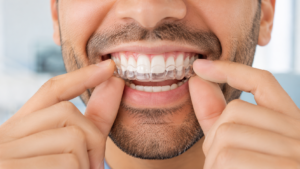
Clear aligners and braces both have advantages. Clear aligners are discreet, removable, and often easier for eating and cleaning. Braces are fixed in place, so they do not depend as much on patient discipline. They can also be better for certain complex tooth movements.
The best option depends on your teeth, your bite, your lifestyle, and your goals. Someone who wants a nearly invisible treatment and can commit to wearing trays for most of the day may be a good aligner candidate. Someone with a more complex case may get better results with braces.
Neither option is automatically “better” for everyone. The right treatment is the one that safely delivers the best result for your individual smile.
Tips for Getting the Best Invisalign Results
To get the most from clear aligner treatment, follow your provider’s instructions carefully. Wear your aligners for the recommended number of hours each day. Change trays only when instructed. Keep your aligners clean, and always store them in their case when they are not in your mouth.
Good oral hygiene is also essential. Brush and floss daily, especially before putting aligners back in after meals. Avoid drinking sugary or acidic drinks while wearing aligners, because liquid can become trapped against the teeth.
Attend your check-ups so your dentist or orthodontist can monitor your progress. If an aligner does not fit properly, feels unusually painful, or gets lost or damaged, contact your provider for advice.
Why Professional Supervision Matters
Clear aligners may look simple, but moving teeth is a medical and dental process. Teeth are connected to bone, gums, nerves, and the bite system. If treatment is not planned properly, it can cause discomfort, poor results, gum problems, bite issues, or unwanted tooth movement.
Professional supervision helps ensure that the aligners are moving teeth safely and that your oral health is protected throughout treatment. A dentist or orthodontist can also make adjustments if your teeth do not move exactly as predicted.
Conclusion
Invisalign and clear aligners can be an excellent way to straighten teeth discreetly and comfortably. They work by using a series of custom-made trays that move teeth little by little over time. They can close gaps, reduce mild crowding, and improve the appearance of your smile without the look of traditional braces.
The key to success is consistency. Wear your aligners as directed, keep your teeth clean, attend your check-ups, and follow your provider’s advice. With the right plan and good habits, clear aligners can help you achieve a healthier, straighter, and more confident smile.